

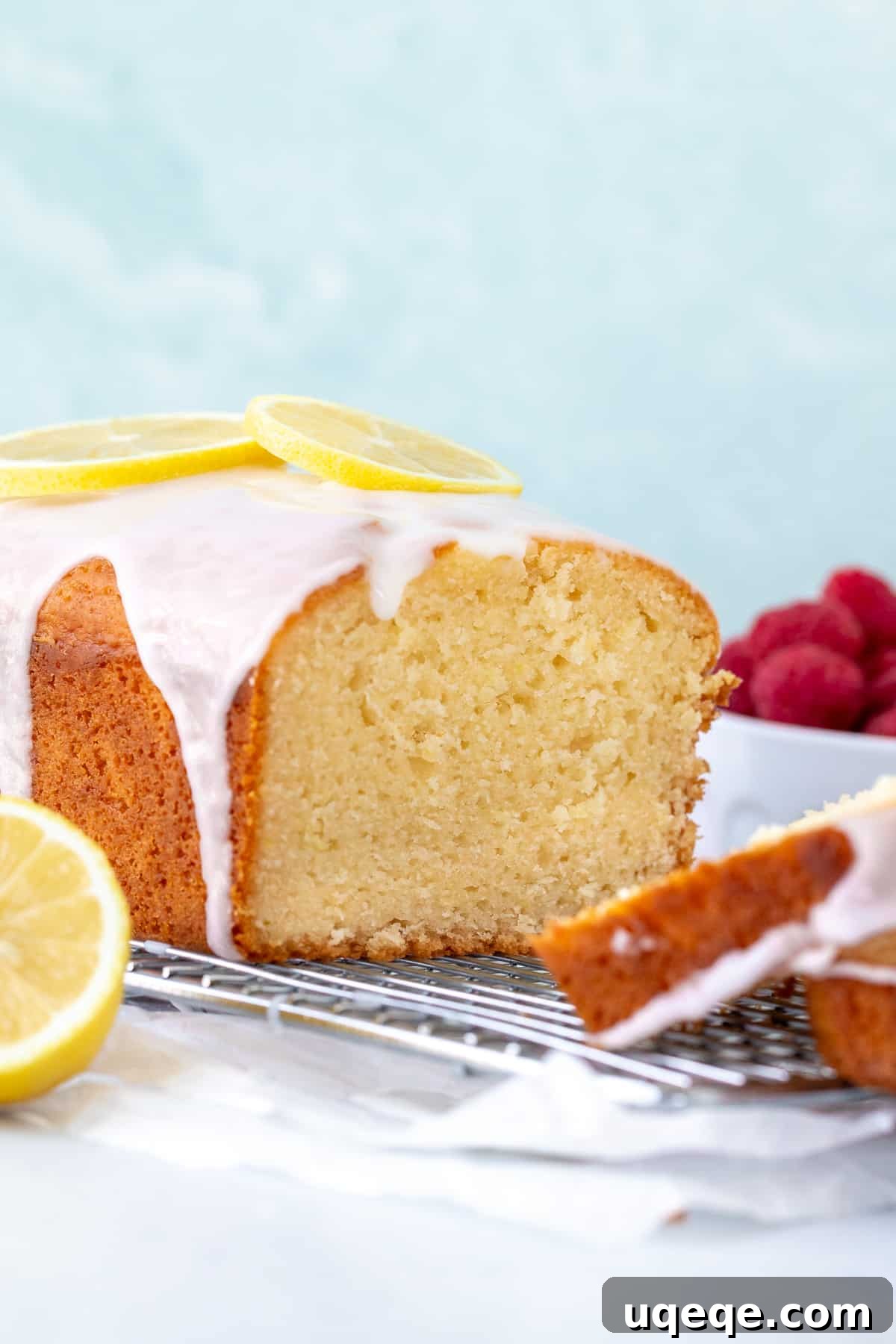
Welcome to your new favorite lemon loaf recipe! This incredibly moist and tender lemon loaf boasts beautiful golden edges and an intense, authentic lemon flavor that will brighten any day. Crowned with a sweet and tangy lemon glaze, it’s an effortless dessert or breakfast treat that outshines any store-bought version, including the famous Starbucks lemon loaf. Enjoy it with your morning coffee, as an afternoon pick-me-up, or a simple, stress-free dessert.
**This recipe was updated on February 26, 2024, with new photos and a slightly refined method to ensure an even more moist and tender lemon loaf.**
If you’re searching for a taste of pure sunshine and happiness in baked good form, look no further than this delightful lemon loaf. I’ve spent countless hours perfecting lemon bread recipes, and I can confidently say this one is softer, more moist, and utterly more delicious than any you’ve encountered before. The vibrant lemon flavor is perfectly balanced – bright and zesty without being overly sour – making each bite a truly exquisite experience. The texture is so tender it practically melts in your mouth, leaving you craving another slice.
While many might seek a “copycat” recipe for the well-known Starbucks lemon loaf, I consider this creation to be a significant upgrade. Often, the Starbucks version can be a bit heavy or even greasy, with a lemon flavor that sometimes leans towards artificial. My recipe, however, focuses on natural, fresh ingredients to deliver an unparalleled taste and texture. It’s truly the best homemade lemon loaf, crafted to perfection for those who appreciate genuine flavor and a wonderfully moist crumb.

Why This Glazed Lemon Loaf Will Be Your Go-To Recipe
This isn’t just another lemon bread recipe; it’s a meticulously developed creation designed to deliver consistent perfection every time. Here’s why this glazed lemon loaf stands out:
- Unrivaled Moisture: Thanks to a strategic blend of butter, oil, and sour cream, this loaf remains incredibly moist and tender for days. No dry, crumbly slices here!
- Authentic Lemon Flavor: We utilize fresh lemon zest, fresh lemon juice, and a touch of lemon extract to create a vibrant, natural lemon taste that’s bright and refreshing, not artificial.
- Perfectly Balanced Sweetness: The loaf itself is perfectly sweet, complemented by the tangy-sweet lemon glaze, creating a harmonious flavor profile that’s simply irresistible.
- Effortless Elegance: Despite its gourmet taste, this recipe is surprisingly simple to follow, making it accessible for bakers of all skill levels. The result is a beautiful loaf that looks as impressive as it tastes.
- Better Than Store-Bought: Forget the disappointment of overly sweet or dry commercial lemon loaves. This homemade version offers a superior flavor and texture that truly elevates the classic treat.
Key Ingredients for Your Perfect Lemon Loaf
To achieve this level of lemon loaf perfection, we rely on a few key ingredients working in harmony. Each plays a crucial role in delivering that signature moist crumb and vibrant flavor. Always aim for high-quality, fresh ingredients for the best results.
- Butter and Oil: This dynamic duo is essential. Butter provides rich flavor and a delicate crumb, while vegetable or canola oil ensures the loaf remains incredibly moist and tender for longer, preventing it from drying out over time. It’s the secret to that lasting freshness.
- Eggs: Two large, room-temperature eggs contribute significantly to the loaf’s tenderness and structure. Using room-temperature eggs helps them incorporate more evenly into the batter, leading to a smoother texture.
- Sour Cream: This ingredient is a game-changer for moisture. Sour cream adds an incredible richness and a slight tang that complements the lemon beautifully, resulting in an exceptionally tender and moist loaf. If sour cream isn’t available, plain Greek yogurt can be used as a substitute, offering a similar moisture and richness.
- Fresh Lemon Zest, Lemon Juice, and Lemon Extract: For that genuinely bright and natural lemon flavor, a combination is key. It’s imperative to use freshly squeezed lemon juice, as bottled juice can be overly acidic and tart, lacking the nuanced flavor of fresh lemons. Zest your lemons first, before juicing them, to capture all those aromatic oils. The lemon extract, while optional, provides an extra “punch” of intense lemon flavor, elevating the overall citrus profile without adding extra liquid. You’ll likely need 2-3 medium-sized lemons for both the loaf and the glaze.
- All-Purpose Flour: The foundation of our loaf, providing structure.
- Granulated Sugar: Sweetens the loaf and helps with tenderization. For a less sweet loaf, you can reduce the amount slightly.
- Baking Powder: Our leavening agent, ensuring a beautiful rise and light texture.
- Salt: Enhances all the other flavors, balancing the sweetness and brightness.
- Vanilla Extract: A subtle complement to the lemon, adding depth and warmth to the overall flavor.
Making the Best Glazed Lemon Loaf: A Step-by-Step Guide
Crafting this delicious lemon loaf is a straightforward process. Follow these detailed steps to ensure a perfect, bakery-quality result every single time.
-
Prepare Your Pan and Preheat Oven: Begin by preheating your oven to 350°F (180°C). Next, prepare a 9×5 inch (23×13 cm) or an 8.5×4.5 inch (21.6×11.4 cm) loaf pan. I highly recommend lining the pan with parchment paper. This simple step makes lifting the baked and cooled loaf out of the pan incredibly easy, preventing any sticking. You can line the entire pan with a single large piece, ensuring it hangs over the sides for handles, or line just the bottom and grease the exposed vertical sides.
- Important Pan Note: This recipe yields a generous amount of batter. An 8×4 inch loaf pan is too small and will likely overflow. If using a 9×5 inch pan, the loaf might be slightly shorter, and the baking time could be marginally less.
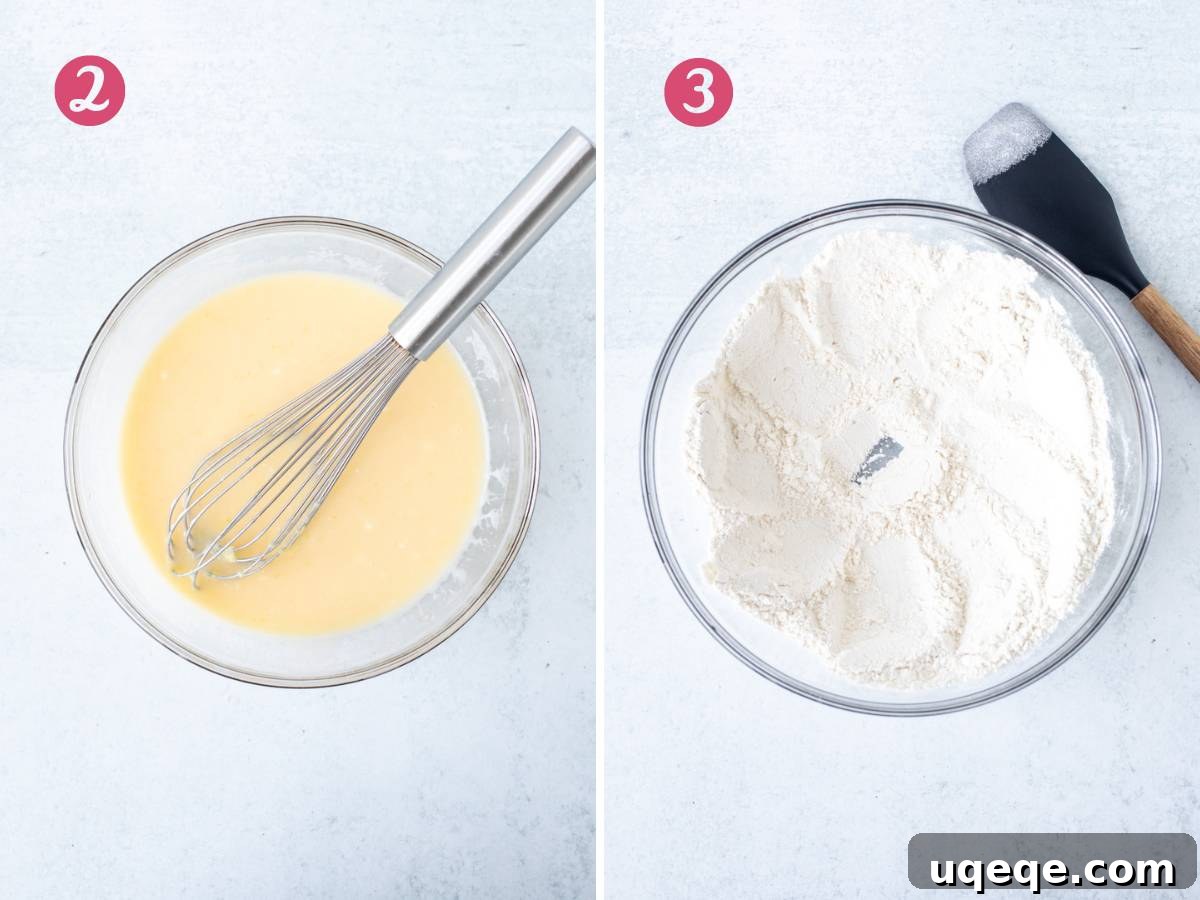
- Whisk Wet Ingredients and Sugar: In a medium-sized bowl, combine the melted butter (ensure it’s cooled slightly), vegetable oil, granulated sugar, room-temperature eggs, vanilla extract, lemon extract, fresh lemon zest, fresh lemon juice, and room-temperature sour cream. Whisk these ingredients together thoroughly until the sugar begins to dissolve and the mixture is smooth, with no visible streaks of egg or lumps of sour cream. This ensures a uniform batter.
-
Combine Dry Ingredients: In a separate, larger bowl, whisk together the all-purpose flour, baking powder, and salt. Use a whisk to thoroughly combine them, ensuring the leavening agent is evenly distributed. Once mixed, create a “well” in the center of the dry ingredients, forming a hollow space ready to receive the wet mixture.

-
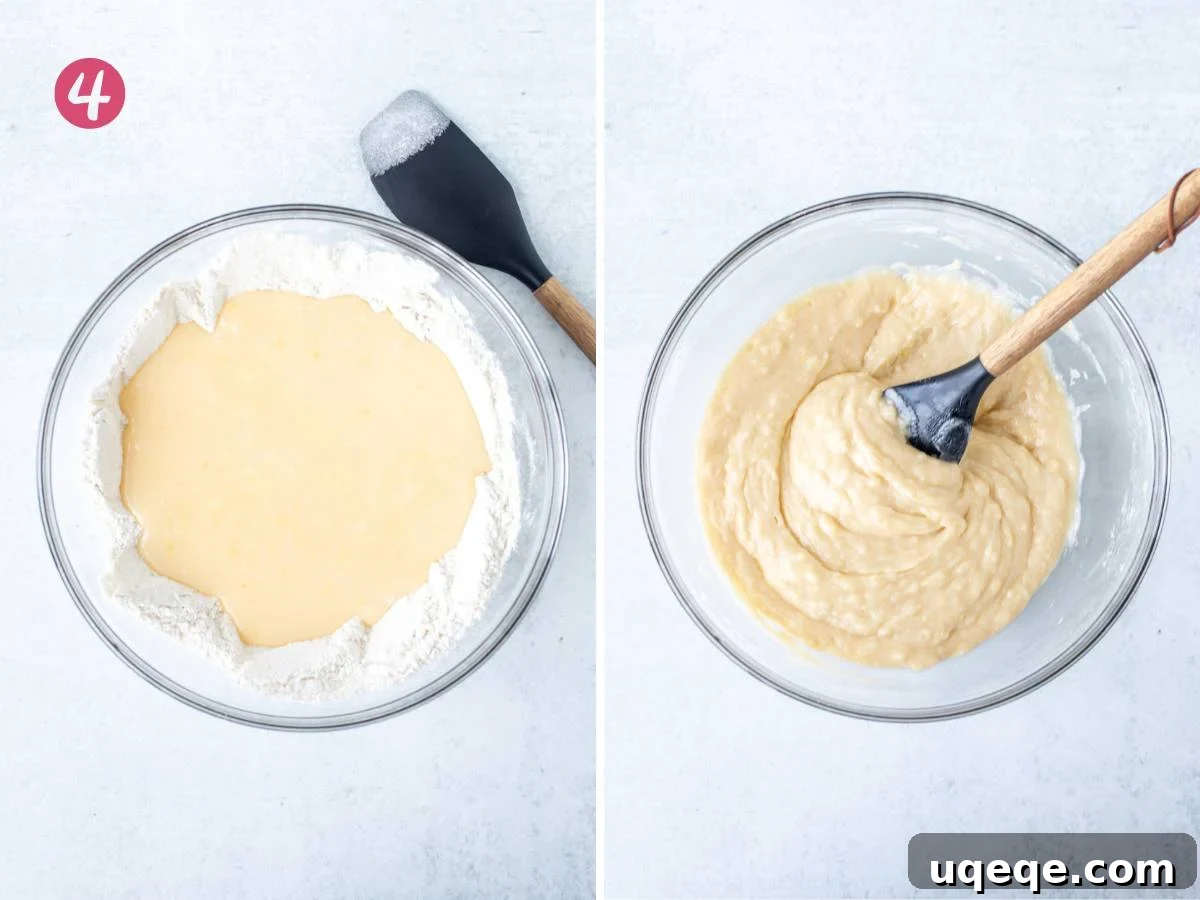
Gently Fold Batter Together: Pour the whisked wet ingredients directly into the well you created in the dry ingredients. Using a rubber spatula or a wooden spoon, gently begin to fold the ingredients together. Mix just until no large streaks or lumps of flour remain. A few swift whisks with a wire whisk can help break up any stubborn large lumps. Be careful not to overmix the batter; overmixing develops gluten, which can lead to a tough and dry loaf. The final batter will be thick, and it’s perfectly normal to see a few small lumps, as shown in the photo below.
- Transfer to Pan and Smooth: Carefully pour the thick batter into your prepared loaf pan. Use your spatula to gently smooth out the top of the batter, ensuring it’s even for a beautiful rise and golden crust.
-
Bake to Golden Perfection: Place the loaf pan in the center of your preheated oven. Bake for approximately 50-60 minutes if using an 8.5×4.5 inch pan, or about 45-55 minutes if using a 9×5 inch pan. Baking times can vary slightly depending on your oven.
- Checking for Doneness: Around the 40-minute mark, check on your loaf. If the top is already a rich golden brown, carefully tent a piece of aluminum foil over it to prevent over-browning. The loaf is done when the top looks set and a wooden skewer or toothpick inserted into the center comes out clean or with only a few moist crumbs attached, but no wet batter. If in doubt, bake for an additional 2-5 minutes.
- Cooling the Loaf: Once baked, remove the loaf from the oven and let it cool in the pan for at least 30 minutes. This allows the loaf to set properly and prevents it from crumbling. After 30 minutes, carefully lift the loaf out of the pan using the parchment paper overhang and transfer it to a wire rack to cool completely. It is absolutely crucial that the loaf is 100% cooled before glazing.
Crafting the Perfect Lemon Glaze
The bright, tangy lemon glaze is the crowning jewel of this lemon loaf. It’s incredibly simple to make, but timing is everything. Once your lemon loaf has fully cooled (this is critical!), it’s time to prepare the glaze.
- Whisk Ingredients: In a small bowl, whisk together the freshly squeezed lemon juice (start with 2 tablespoons) and the powdered sugar (start with 1 cup). Continue whisking until the mixture is smooth and lump-free.
- Adjust Consistency: The ideal glaze should be thick and opaque white, but still thin enough to drizzle beautifully. If your glaze is too thick, add a tiny bit more lemon juice (1/2 teaspoon at a time). If it’s too thin, whisk in a little more powdered sugar (1 tablespoon at a time). Adjust until you reach the desired consistency.
- Glaze the Loaf: Once the loaf is completely cool and the glaze is ready, pour the glaze evenly over the top of the loaf. Let it slowly drizzle down the sides, creating a beautiful, elegant finish. The glaze will set as it dries, locking in that extra burst of lemon flavor and sweetness. If you glaze a warm loaf, the glaze will simply melt and absorb, which is still delicious but won’t give you that pretty, set topping.

Make Ahead & Freezing Tips for Lemon Loaf
While baked goods are often best enjoyed fresh, this lemon loaf is so incredibly moist thanks to the butter, oil, and sour cream that it holds up beautifully for several days. It also freezes exceptionally well, making it perfect for meal prep or having a delicious treat on hand.
Storage Instructions
- Room Temperature: Store the glazed lemon loaf in an airtight container at room temperature for up to 3-4 days. The glaze acts as a protective layer, helping to keep it fresh.
- Refrigerator: For slightly longer storage, you can keep the lemon loaf in an airtight container in the fridge for up to 5-7 days. Bring it to room temperature before serving for the best texture and flavor.
Freezing Lemon Loaf
Freezing your lemon loaf is a fantastic way to extend its shelf life without compromising on taste or texture. Follow these steps for perfect results:
- Ensure Complete Cooling: Make absolutely sure the loaf is 100% cooled before freezing. Any residual warmth will create condensation, leading to an icy texture.
- Do Not Glaze Before Freezing: It is best to freeze the loaf without the glaze. While it can technically be frozen glazed, the glaze often becomes a bit messy and loses its smooth texture upon thawing. You can easily prepare fresh glaze after thawing.
- Wrap Tightly: Once completely cool, remove the loaf from the pan. Wrap it very tightly in at least two layers of plastic wrap, ensuring all sides and seams are fully covered. This prevents freezer burn.
- Further Protection: For an extra layer of protection, place the wrapped loaf into a freezer-safe bag, an airtight freezer container, or wrap it again in aluminum foil.
- Freeze: The lemon loaf can be frozen for up to 3 months.
- Thawing Process: When you’re ready to enjoy, transfer the frozen loaf to the refrigerator and let it thaw overnight. Do not thaw the loaf on the counter or in the microwave directly from frozen. Thawing at room temperature or in the microwave can cause the loaf to become gummy or soggy in texture. Once thawed in the fridge, you can then let it sit on the counter for about 30-60 minutes to come to room temperature before serving for optimal enjoyment.
After the loaf has fully thawed and reached your desired serving temperature, you can prepare and add the fresh lemon glaze. This method ensures your frozen lemon loaf tastes just as fresh and delicious as it did on baking day!
Frequently Asked Questions (FAQs)
Here are answers to some common questions about making the best glazed lemon loaf:
- Can I use bottled lemon juice? While technically possible, I strongly advise against it for this recipe. Freshly squeezed lemon juice and zest are crucial for the vibrant, natural, and non-artificial lemon flavor that makes this loaf truly stand out. Bottled juice often tastes sharper and lacks the essential oils found in fresh zest.
- My loaf top cracked during baking, is that normal? Yes, it’s very common and completely normal for loaf cakes and quick breads to develop a crack down the center as they bake. This is usually a sign of a good rise and a tender crumb. The glaze will beautifully cover any cracks.
- What if I don’t have lemon extract? Lemon extract amplifies the lemon flavor beautifully. If you don’t have it, you can omit it. To ensure a strong lemon flavor, I recommend adding an extra tablespoon of fresh lemon zest to the batter.
- How do I know my eggs and sour cream are at room temperature? For eggs, they should not feel cold to the touch. You can quickly bring them to room temperature by placing them in a bowl of warm (not hot) water for about 10-15 minutes. For sour cream, measure it out and let it sit on the counter for about 30 minutes before mixing. Room temperature ingredients emulsify better, leading to a smoother, more uniform batter and a finer crumb.
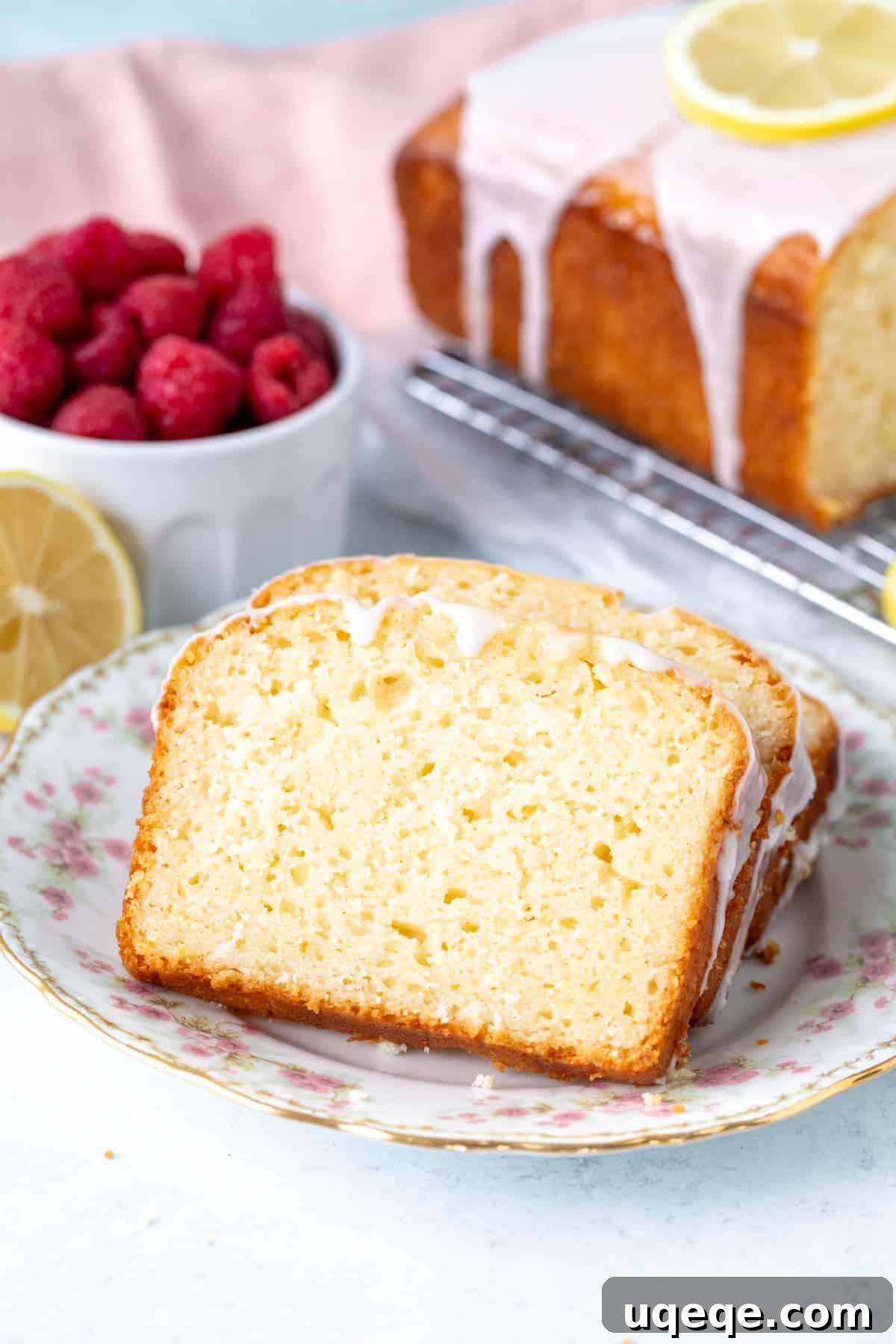
Whether you bake it for a special breakfast, a delightful coffee break, or an elegant dessert, this homemade glazed lemon loaf is an absolute must-have in your baking repertoire. It truly is bright, happy sunshine in baked good form – a simple pleasure that delivers immense satisfaction with every zesty, tender bite.
For more sensational lemon desserts and treats, be sure to try:
- Lemon Cupcakes with Zesty Lemon Buttercream Frosting
- Irresistible Lemon Blueberry Cake with Cream Cheese Frosting
- Tangy Lemon Brownies – Also known as Lemonies or Blondies

Glazed Lemon Loaf
Fiona Dowling
20
1
1 20
10 Slices
Rate Recipe
Print Recipe
Equipment
-
9×5 inch (23 x 13 cm) loaf pan or an 8 1/2 x 4 1/2 inch loaf pan
Ingredients
For the Loaf
- 1/4 cup unsalted butter (56 grams) , melted and cooled slightly
- 1/3 cup vegetable oil (80 ml) , or canola oil
- 1 1/4 cup granulated sugar (250 grams) , use 1 cup (200 grams) for a less sweet loaf
- 2 large eggs , room temperature
- 2 tablespoons lemon zest
- 1 teaspoon vanilla extract
- 1 teaspoon lemon extract
- 3 tablespoons lemon juice (45 ml) , freshly squeezed
- 1 cup sour cream (240 ml) , room temperature
- 2 cups all-purpose flour (250 grams)
- 3 teaspoons baking powder
- 1/4 teaspoon salt
For the Glaze
- 2-3 tablespoons lemon juice (30-45 ml) , freshly squeezed
- 1 – 2 cups powdered sugar (110-220 grams) , AKA icing sugar
Instructions
For the Loaf
-
Preheat the oven to 350°F (180°C). Line a 9 x 5 inch (23 x 13 cm) or an 8 1/2 x 4 1/2 inch (21.6 x 11.4 cm) loaf pan with parchment paper, allowing it to overhang for easy removal, or line the bottom and grease any exposed sides.
-
In a medium bowl, whisk together the melted butter (cooled slightly), oil, sugar, eggs, vanilla extract, lemon extract, lemon zest, lemon juice, and sour cream. Whisk until smooth and well combined, ensuring no lumps of egg or sour cream remain.
-
In a large bowl, whisk together the flour, baking powder, and salt. Create a well in the center of the dry ingredients.
-
Pour the wet ingredients into the well of the dry ingredients. Gently fold them together with a rubber spatula or wooden spoon until just combined. You can use a wire whisk for a few quick stirs to remove any large lumps, but avoid overmixing. The batter will be thick.
-
Pour the batter evenly into the prepared loaf pan and smooth the top with your spatula.
-
Bake in the preheated oven for about 50-60 minutes if using an 8 1/2 x 4 1/2 inch pan, or 45-55 minutes if using a 9 x 5 inch pan. Check at 40 minutes; if the top is already golden, loosely tent with aluminum foil. The loaf is done when a toothpick inserted into the center comes out clean or with a few moist crumbs.
-
Remove from the oven and let cool in the pan for at least 30 minutes. Then, carefully remove the loaf from the pan and transfer it to a wire rack to cool completely before glazing.
For the Lemon Glaze
-
Once the loaf is completely cool, whisk together 2 tablespoons of fresh lemon juice and 1 cup of powdered sugar in a small bowl. Add a little extra powdered sugar or lemon juice as needed, until the glaze is thick, white, and still thin enough to drizzle smoothly.
-
Pour the prepared glaze over the cooled loaf, allowing it to elegantly drizzle down the sides. Let the glaze set for about 15-30 minutes before slicing and serving.
Notes
- Lemons: You will typically need about 3 medium-sized, fresh lemons to acquire enough zest and juice for both the loaf and the glaze. Always prioritize fresh lemons over bottled juice for superior flavor.
- Lemon Extract: Find lemon extract in the baking aisle alongside vanilla extract. Although optional, it significantly enhances the lemon flavor. If you choose to omit it, consider adding an extra tablespoon of fresh lemon zest to compensate.
- Room Temperature Ingredients: For optimal results, ensure your eggs and sour cream are at room temperature. Take them out of the refrigerator, measure the sour cream, and let them sit on the counter for about 30 minutes before you begin mixing. For quicker warming of eggs, place them in a bowl of warm (not hot) water for 10 minutes.
- Storage: Store the glazed lemon loaf in an airtight container at room temperature or in the refrigerator for 3-4 days to maintain its moisture and freshness.
- Nutrition: The provided nutritional details are an estimate only. They are based on one slice, assuming the loaf is cut into 10 uniform slices and all the glaze is used. Individual results may vary.
Nutrition Information
Calories: 426kcal
,
Carbohydrates: 69g
,
Protein: 5g
,
Fat: 16g
,
Saturated Fat: 6g
,
Polyunsaturated Fat: 4g
,
Monounsaturated Fat: 4g
,
Trans Fat: 0.2g
,
Cholesterol: 63mg
,
Sodium: 83mg
,
Potassium: 274mg
,
Fiber: 1g
,
Sugar: 45g
,
Vitamin A: 344IU
,
Vitamin C: 31mg
,
Calcium: 93mg
,
Iron: 2mg
Love this recipe? Please rate and leave a comment below!
Your feedback helps us grow and inspires more delicious recipes.