
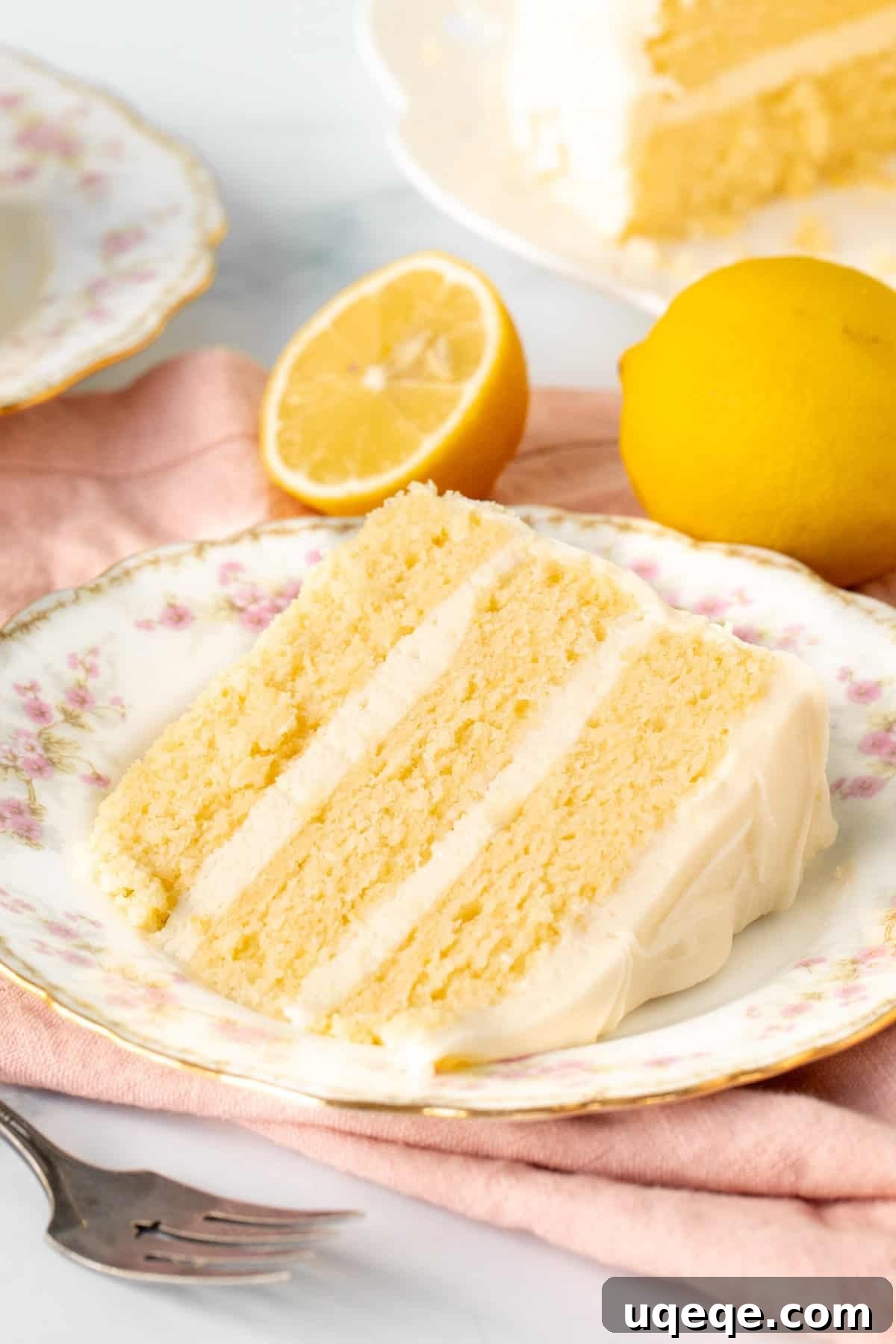
Get ready to bake a show-stopping dessert that’s bursting with vibrant flavor! This exquisite **lemon layer cake** promises a delightful culinary experience, featuring perfectly moist and fluffy cake layers with an incredibly tender crumb. Each bite delivers a bright, refreshing lemon flavor that is sunshine-y and inviting, without being overly sour. Crowned with a luxurious, creamy lemon buttercream, this cake strikes the ideal balance—not too sweet, not too tart, just pure lemon bliss. Its beautiful presentation makes it an impeccable choice for any spring gathering, summer celebration, or simply when you crave a truly special treat.
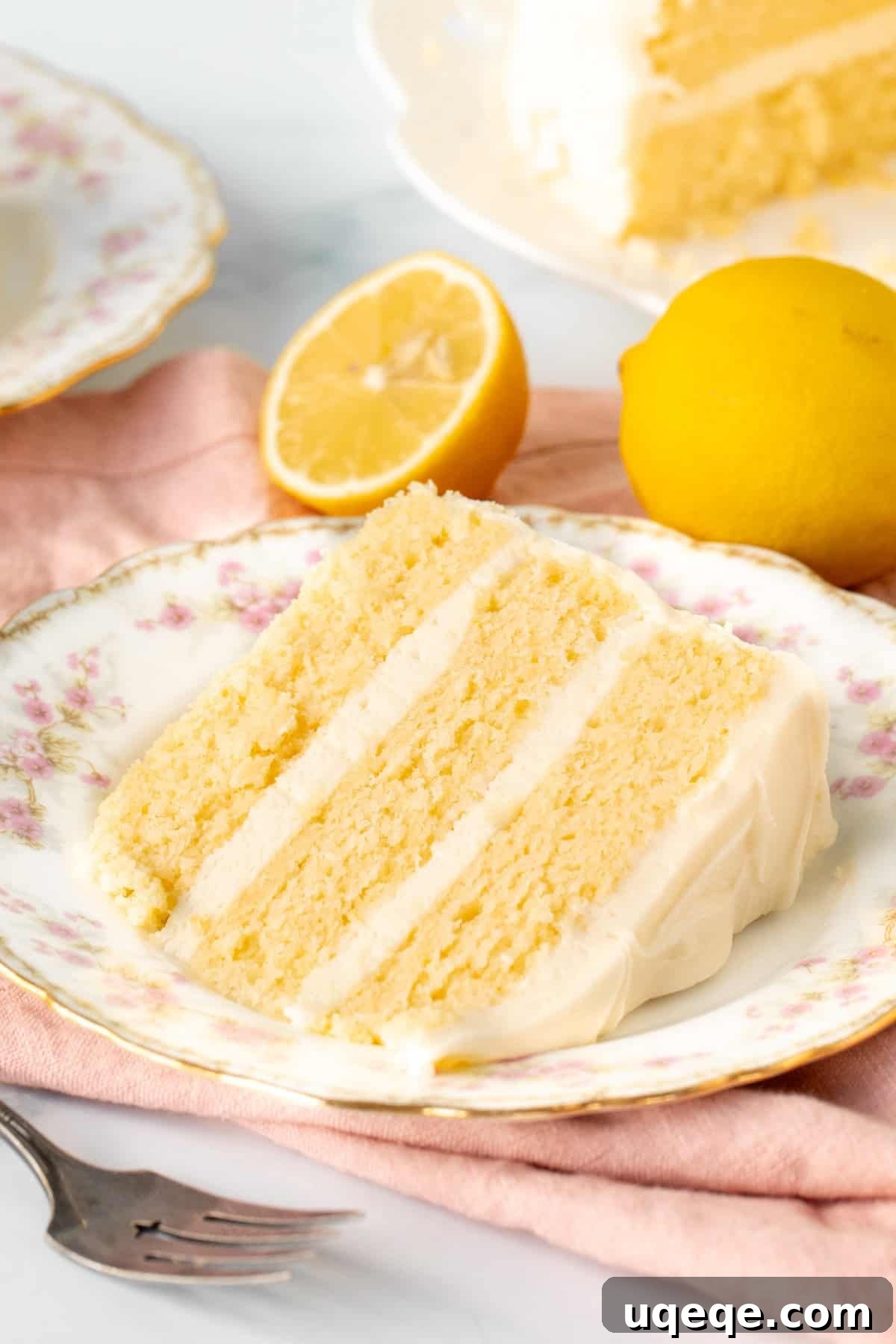
Why This Lemon Layer Cake Will Be Your New Favorite Recipe
Imagine a cake that stands tall, captivating eyes with its elegant appearance, and then completely wins over taste buds with its incredible flavor and texture. This lemon layer cake is precisely that. It’s more than just a dessert; it’s a celebration of fresh, zesty lemon. Here’s why this recipe truly shines:
- Unrivaled Moistness & Fluffiness: The unique combination of butter and oil in the batter ensures an incredibly moist crumb that remains tender and soft for days, without any hint of greasiness. It’s the secret to a cake that never tastes dry.
- Authentic, Bright Lemon Flavor: We harness the power of both fresh lemon zest and juice to infuse every layer with a genuine, vibrant lemon taste. This isn’t an artificial lemon flavor; it’s the real deal, like a burst of sunshine in every bite.
- Perfectly Balanced Lemon Buttercream: The frosting is a revelation! It’s creamy, smooth, and made with a clever touch of cream cheese to perfectly cut through the sweetness. This creates a harmonious flavor profile that complements the cake without being overwhelmingly sugary.
- Visually Stunning Presentation: With its multiple layers and beautifully swirled frosting, this cake is an absolute showstopper. It’s perfect for impressing guests at gatherings, birthdays, or any special event.
- Ideal for Spring & Summer: The refreshing lemon notes make it the quintessential dessert for warmer months. It’s light enough for a picnic and elegant enough for a formal dinner.
If you adore other bright lemon treats like classic lemon loaf or tangy lemon bars, you’ll find this lemon layer cake to be the ultimate indulgence for when you desire something truly extraordinary.
Essential Ingredients for Your Lemon Masterpiece
Crafting the perfect lemon layer cake begins with understanding the role of each ingredient. Quality and preparation truly make a difference. Here’s a closer look at the key components:
- Butter and Oil: The Duo for Ultimate Moistness. This recipe cleverly combines both unsalted butter and neutral oil (like vegetable or canola). Butter provides an unparalleled rich flavor that elevates the cake, while oil ensures exceptional moisture and keeps the cake fresh and tender for an extended period. This dynamic pairing delivers the best of both worlds: a flavorful cake that remains incredibly moist without feeling greasy.
- Fresh Lemon Zest and Lemon Juice: The Heart of the Flavor. For that irresistible, bright lemon essence, fresh lemons are non-negotiable. The zest contains concentrated lemon oils, providing intense citrus aroma and flavor. Freshly squeezed lemon juice adds tang and moisture. Crucially, avoid bottled lemon juice; its flavor is often too sharp, artificial, and lacks the nuanced brightness of fresh lemons. You’ll typically need about 3 large or 4 medium lemons for this recipe to get enough zest and juice.
- Whole Milk: For a Tender and Rich Crumb. Whole milk is essential for contributing to the cake’s tender crumb and luscious moisture. While some recipes call for buttermilk, I found that whole milk achieves a perfectly moist cake without unnecessary complications. It’s important to use *whole* milk, as lower-fat varieties (like skim milk) lack the necessary fat content to impart the desired tenderness and richness.
- Sifted All-Purpose Flour: The Foundation of a Fluffy Texture. Proper flour measurement and sifting are paramount for a light and airy cake. Too much flour can lead to a dense, dry cake, while lumpy flour can cause overmixing of the batter, resulting in a tough crumb. Sifting ensures the flour is aerated and evenly distributed, leading to a consistently fluffy cake.
- Granulated Sugar: Not just for sweetness, sugar also contributes to the cake’s moistness and tender texture.
- Baking Powder & Baking Soda: These leavening agents work in harmony with the acidic lemon juice and milk to create a beautifully risen, light cake.
- Large Eggs: At room temperature, eggs emulsify better with the other ingredients, creating a smoother batter and a finer crumb. They provide structure and richness.
- Vanilla Extract: A touch of vanilla complements and enhances the lemon flavor, adding depth and warmth to the overall profile.
Expert Tips for Baking the Perfect Lemon Layer Cake
Achieving a bakery-quality lemon layer cake at home is entirely possible with a few simple techniques and careful attention to detail. Follow these expert tips for consistent success:
- Bring Ingredients to Room Temperature: This is arguably one of the most crucial tips for baking any cake. Ensure your butter, eggs, and milk are all at room temperature before you begin. Room temperature ingredients emulsify more effectively, creating a smoother, more uniform batter that traps air better. This leads to a lighter, fluffier cake with a superior texture.
- Measure Flour Accurately: Avoid scooping flour directly from the bag with your measuring cup, as this compacts it and can lead to using too much. Instead, fluff the flour with a spoon, then gently spoon it into your measuring cup and level it off with a straight edge (like a knife). For ultimate precision, weigh your flour using a kitchen scale.
- Don’t Skip Sifting the Dry Ingredients: Sifting flour, baking powder, baking soda, and salt together not only removes any lumps but also aerates the dry ingredients. This helps them incorporate more smoothly into the wet ingredients, preventing overmixing and contributing to a tender crumb.
- Cream Butter, Oil, Sugar, and Zest Thoroughly: The “creaming” step is vital for aerating the batter. Beat these ingredients for at least 2-3 minutes until the mixture is light, fluffy, and pale in color. Adding the lemon zest at this stage allows its oils to infuse deeply into the fat, maximizing the lemon flavor throughout the cake.
- Add Eggs One at a Time: Incorporating eggs individually and scraping down the bowl after each addition ensures they are fully emulsified into the butter mixture. This prevents the batter from separating and contributes to a consistent, smooth texture.
- Alternate Wet and Dry Ingredients: When combining the flour mixture and milk mixture into the creamed butter, alternate between them (e.g., 1/3 dry, 1/2 wet, 1/3 dry, 1/2 wet, 1/3 dry). This method helps prevent overmixing the gluten in the flour, which can result in a tough cake. Mix only until just combined, with no visible streaks of flour.
- Proper Pan Preparation: Always line the bottom of your cake pans with parchment paper rounds and generously grease and flour the sides. This ensures your cakes release cleanly and effortlessly after baking and cooling, preventing sticking and frustration.
- Avoid Over-Baking: Keep a close eye on your cakes in the oven. Bake only until a toothpick inserted into the center comes out clean or with a few moist crumbs attached. Over-baking can quickly lead to a dry cake.
- Cool Cakes Completely: Resist the urge to frost warm cakes! Allow your cake layers to cool completely in their pans for at least 20 minutes before inverting them onto wire racks to finish cooling. Attempting to frost warm cakes will cause your buttercream to melt and slide off.
Step-by-Step Guide to Baking Your Lemon Layer Cake
Below, you’ll find comprehensive step-by-step instructions to guide you through creating this exquisite lemon layer cake. While the full printable recipe is at the bottom of the page, these detailed steps, accompanied by visual cues, will ensure your baking journey is smooth and successful. Let’s get baking!
Part 1: Preparing the Lemon Cake Layers
- Prepare Your Pans and Oven: Preheat your oven to a steady 350°F (175°C). Prepare three 8-inch round cake pans by lining the bottoms with parchment paper rounds. Then, generously grease and flour the sides of each pan. This dual approach ensures your delicate cake layers will release perfectly every time.
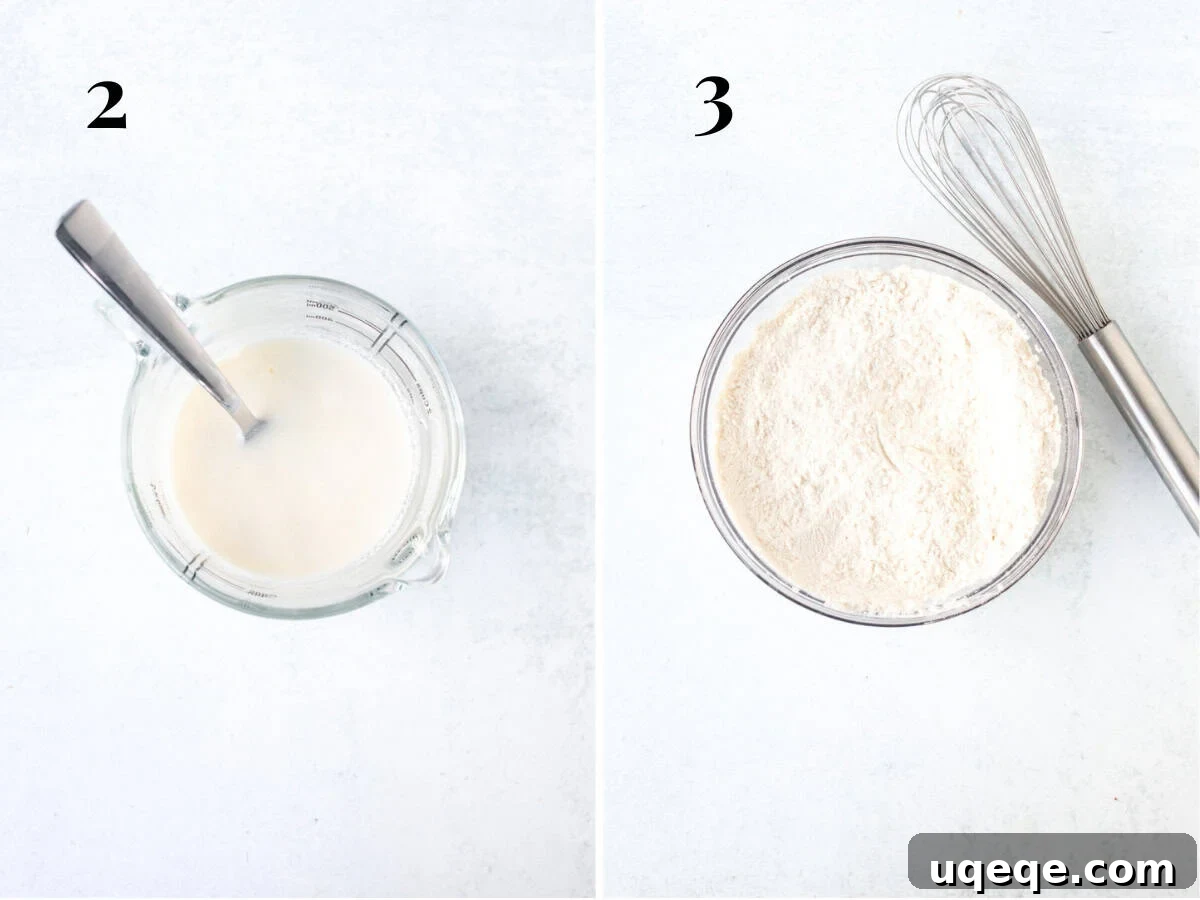
- Combine Lemon Juice and Milk: In a small bowl or liquid measuring jug, whisk together the fresh lemon juice and whole milk. Set this mixture aside; it will slightly curdle, creating a homemade ‘buttermilk’ effect that adds to the cake’s tenderness.
- Sift Dry Ingredients: In a medium-sized bowl, sift together the all-purpose flour, baking powder, baking soda, and salt. Sifting removes lumps and aerates the mixture, contributing to a lighter cake. Whisk these dry ingredients thoroughly to ensure they are evenly combined.
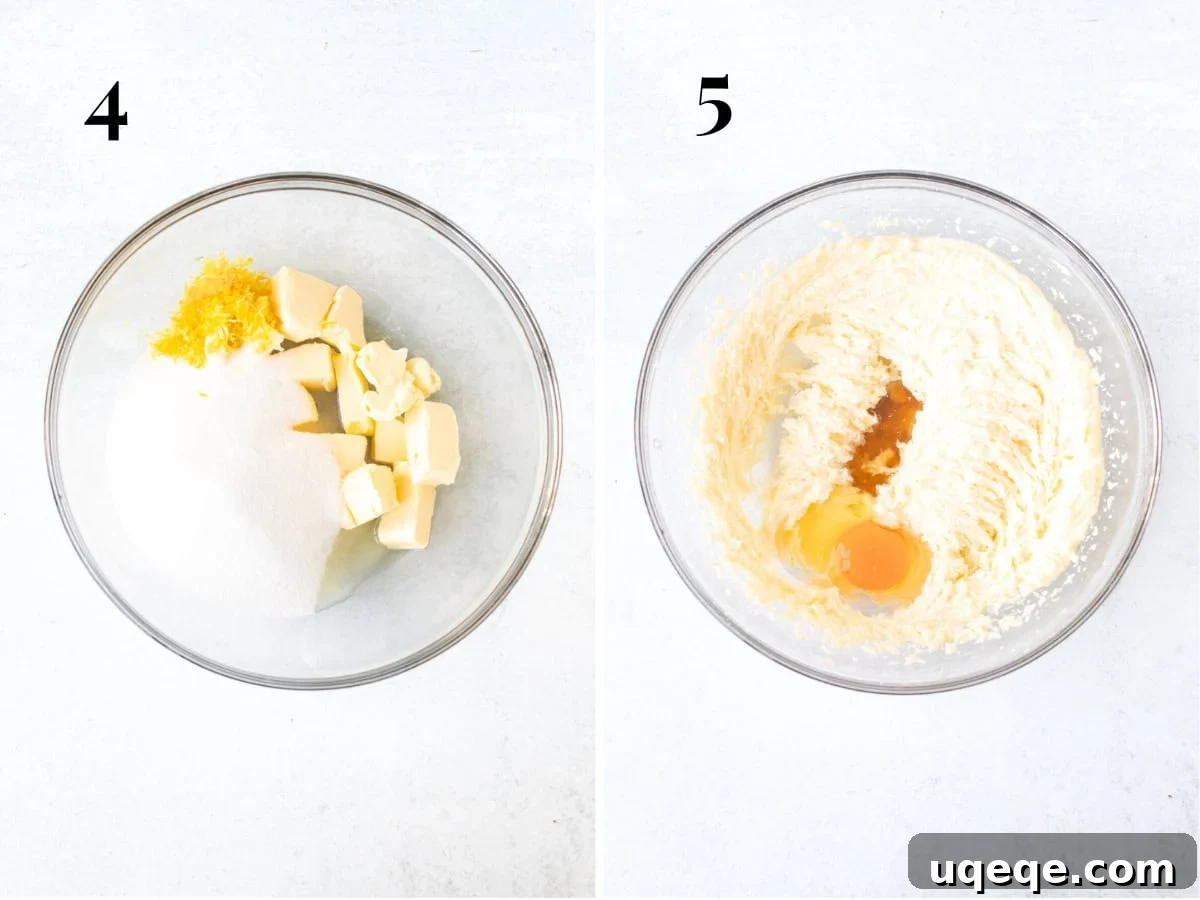
- Cream Butter, Oil, Sugar, and Zest: In a separate, large mixing bowl, combine the softened unsalted butter, vegetable oil, granulated sugar, and fresh lemon zest. Beat these ingredients together with an electric mixer on medium-high speed for about 2-3 minutes. The mixture should become light, pale, and fluffy, a crucial step for incorporating air into your cake batter. Adding the lemon zest here allows the oils to permeate the fat, enhancing the lemon flavor.
- Incorporate Vanilla and Eggs: Add the vanilla extract to the creamed mixture. Then, beat in the large eggs one at a time, ensuring each egg is fully incorporated before adding the next. After each addition, turn off the mixer and use a rubber spatula to scrape down the sides and bottom of the bowl. This prevents overmixing and ensures all ingredients are well combined.
- Alternate Wet and Dry Mixtures: With the mixer on low speed, begin adding the dry ingredient mixture and the milk-lemon juice mixture to the butter mixture, alternating between them. Start with approximately one-third of the dry ingredients, followed by half of the milk-lemon juice mixture. Repeat with another third of the dry ingredients, then the remaining milk-lemon juice mixture. Finally, mix in the last third of the dry ingredients. Mix only until just combined and no streaks of flour are visible. Avoid overmixing to keep the cake tender. A few gentle stirs by hand at the end can help prevent overworking the batter.
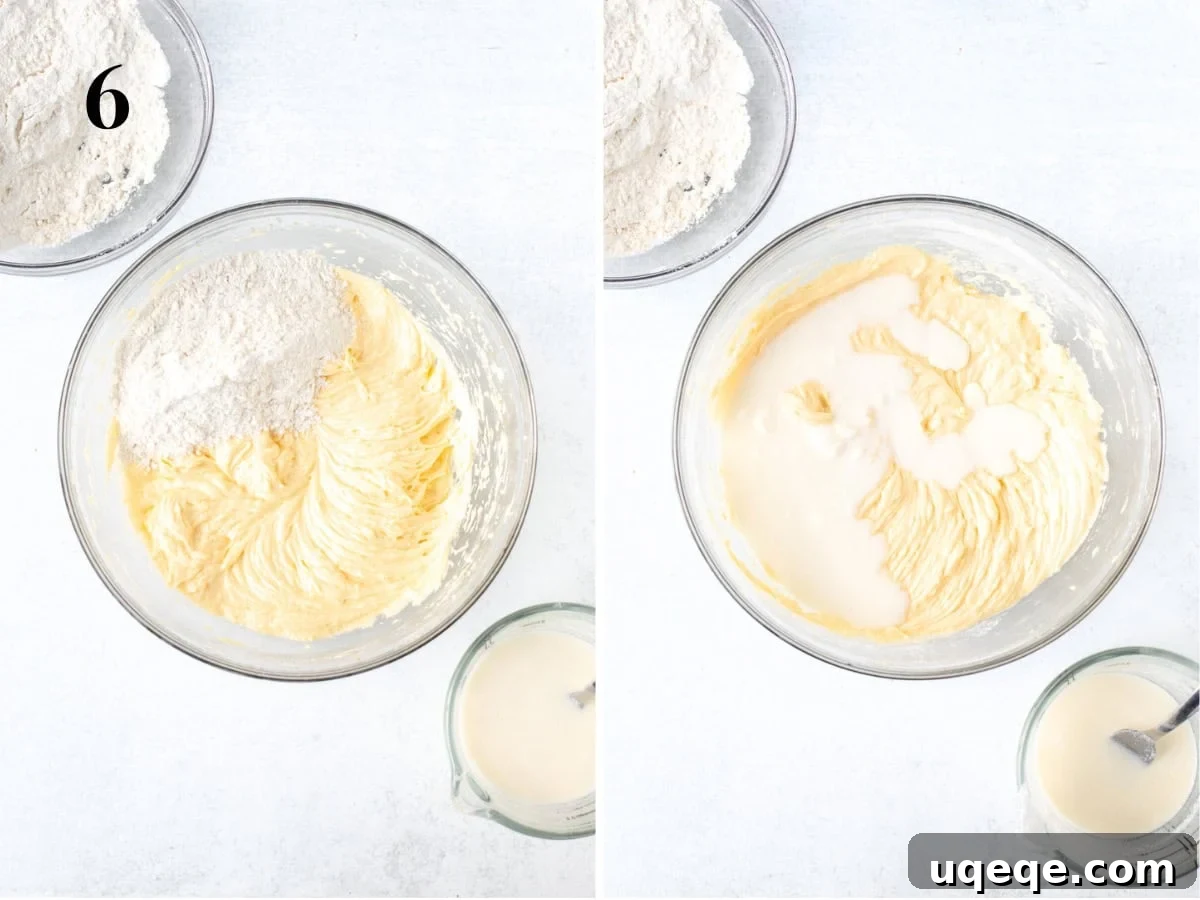
- Distribute Batter Evenly: Pour the prepared cake batter into your three lined and greased 8-inch pans, distributing it as evenly as possible. You can use a kitchen scale for precise distribution if desired. Gently smooth the tops with a spatula.
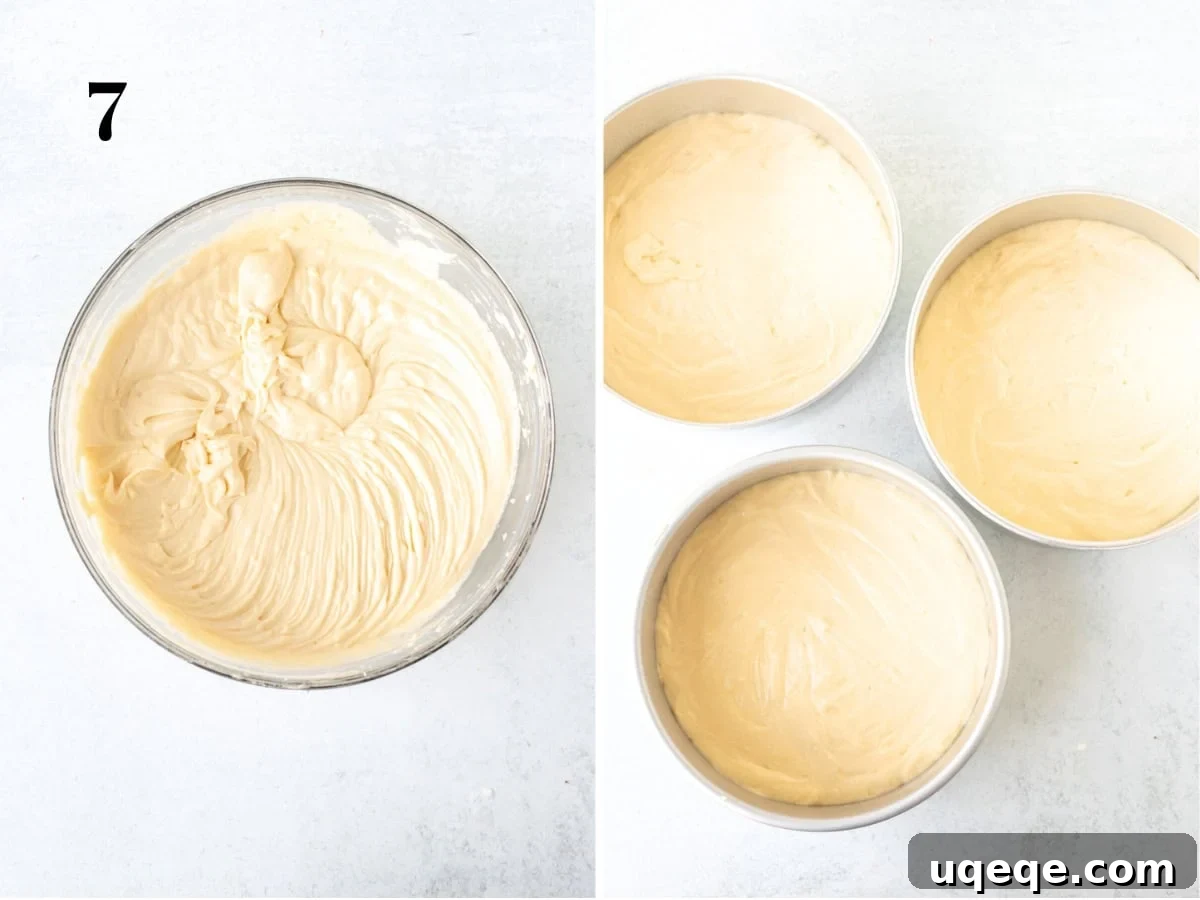
- Bake to Perfection: Place the cake pans on the middle rack of your preheated oven, ensuring all pans are on the same level for even heat distribution. Bake for approximately 20-25 minutes. The cakes are done when the tops look set, the edges begin to pull away slightly from the sides of the pan, and a toothpick inserted into the center comes out clean or with a few moist crumbs (no gooey batter).
- Cooling the Layers: Allow the baked cakes to cool in their pans for at least 20 minutes on a wire rack. This allows the cakes to set properly and prevents them from breaking when you invert them. After 20 minutes, carefully invert the cakes onto wire racks to cool completely before frosting. This step is crucial for achieving a neat, professional-looking frosted cake.
Crafting the Dreamy Lemon Buttercream Frosting
This cake is generously adorned with a truly irresistible lemon buttercream frosting. What makes it special is a hint of cream cheese, which perfectly mellows the sweetness of traditional buttercream without turning it into a full-blown cream cheese frosting. The result is a velvety, tangy, and rich frosting that perfectly complements the bright lemon cake. For the best results, pay attention to these details:
- Butter Temperature: Your unsalted butter should be softened, but still slightly cool to the touch. If it’s too warm, the frosting will be too soft and difficult to work with. If it’s too cold, it won’t cream properly.
- Sift Powdered Sugar: Powdered sugar often contains lumps, which can lead to a grainy frosting. Sifting it before adding to the butter will ensure a silky-smooth, lump-free buttercream.
- Cream Cheese Selection: Always use full-fat, brick-style cream cheese, not the spreadable kind from a tub. Spreadable cream cheese has a higher water content and will make your frosting too thin.
- Fresh Lemon Juice is Key: Just like with the cake, freshly squeezed lemon juice is essential for a bright, authentic flavor in the frosting.
- Adjusting Consistency: Have a tablespoon or two of heavy whipping cream on hand. You can add it gradually if the frosting is too thick, helping you achieve that perfect, spreadable consistency. Alternatively, if you prefer not to use cream cheese, you can substitute it with an additional 1/4 cup (56 grams) of softened unsalted butter.
Part 2: Assembling Your Stunning Lemon Layer Cake
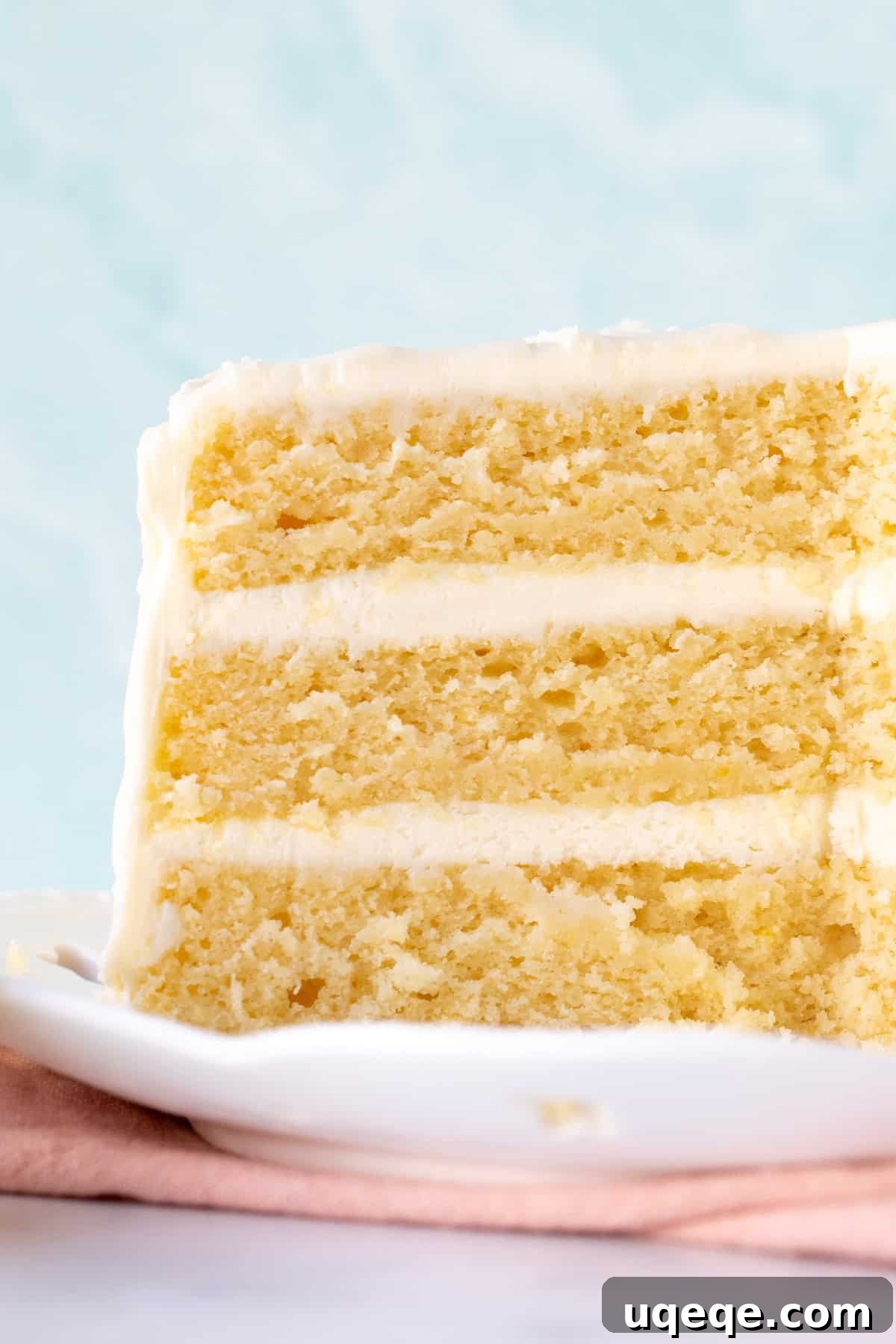
- Ensure Layers Are Cool and Level: Before assembling, confirm that your cake layers are completely cool to the touch. If the tops of your cake layers are domed, use a serrated knife to carefully level them. This creates flat surfaces, ensuring a stable and even cake structure.
- First Layer of Frosting: Place one cooled, leveled cake layer on your serving plate or cake stand. Spread about 3/4 to 1 cup of lemon buttercream evenly over the top.
- Second Layer and Frosting: Carefully place the second cake layer on top of the first, aligning it gently. Spread another 3/4 to 1 cup of frosting over this layer.
- Final Layer and Crumb Coat (Optional but Recommended): Position the third and final cake layer on top. At this point, you can apply a thin, even layer of frosting over the entire cake (top and sides). This is called a “crumb coat” and helps to trap any loose crumbs, ensuring your final layer of frosting is smooth and crumb-free. Chill the cake in the refrigerator for 15-20 minutes after the crumb coat.
- Final Frosting: Once the crumb coat is set (or if you skipped it), apply the remaining lemon buttercream to the sides and top of the cake. Use an offset spatula or a cake scraper to achieve smooth sides, and create decorative swirls on top for an elegant finish. You can garnish with additional lemon zest or thin lemon slices if desired.
- Serve with Precision: When you’re ready to serve, use a thin, sharp knife to slice the cake. A warm knife (run under hot water and wiped dry) can help create cleaner slices. Avoid using a dull table knife, as it can tear the cake.
Frequently Asked Questions About Lemon Layer Cake
This versatile recipe can be adapted for different pan sizes. For a 9×13 inch (23×33 cm) sheet cake, the bake time will be approximately 40-45 minutes. You’ll want to divide the frosting recipe in half, as less frosting is needed for a single-layer cake. If you prefer a two-layer round cake, use two 9-inch (23 cm) round pans. The bake time for two 9-inch layers will be around 25-30 minutes.
Absolutely! The cake layers can be prepared a day in advance. After baking, allow them to cool completely. Once cool, wrap each layer individually and tightly in plastic wrap, then store them in an airtight container at room temperature overnight. Prepare the frosting and assemble the cake on the day you plan to serve it for the freshest taste and appearance. This is a great time-saving tip for entertaining!
Yes, this cake freezes beautifully! Baked and cooled cake layers can be individually wrapped tightly in multiple layers of plastic wrap (to prevent freezer burn and sticking), and then placed in a freezer bag or an airtight freezer-safe container. For extra protection, you can wrap them again in aluminum foil. They can be frozen for up to 2 months. Thaw them overnight in the refrigerator before frosting and assembling. Frosted leftovers can also be wrapped tightly and frozen, then thawed in the fridge when you’re ready for another slice.
To get the most zest, use a microplane grater or the fine side of a box grater. Gently grate only the bright yellow outer layer, rotating the lemon as you go. Stop when you see the white pith underneath, as the pith is bitter and can impart an unpleasant taste to your cake. Zest before you juice the lemons, as it’s much easier to zest a firm, whole lemon.
Sticking is often due to insufficient pan preparation or trying to remove the cake before it’s adequately cooled. Ensure you grease your pans thoroughly with butter or non-stick spray, then flour them generously, tapping out any excess. Always use parchment paper rounds on the bottom. Let cakes cool in the pan for the recommended time (at least 20 minutes) to firm up before attempting to invert them onto a cooling rack. A thin knife run carefully around the edges can also help loosen stubborn cakes.
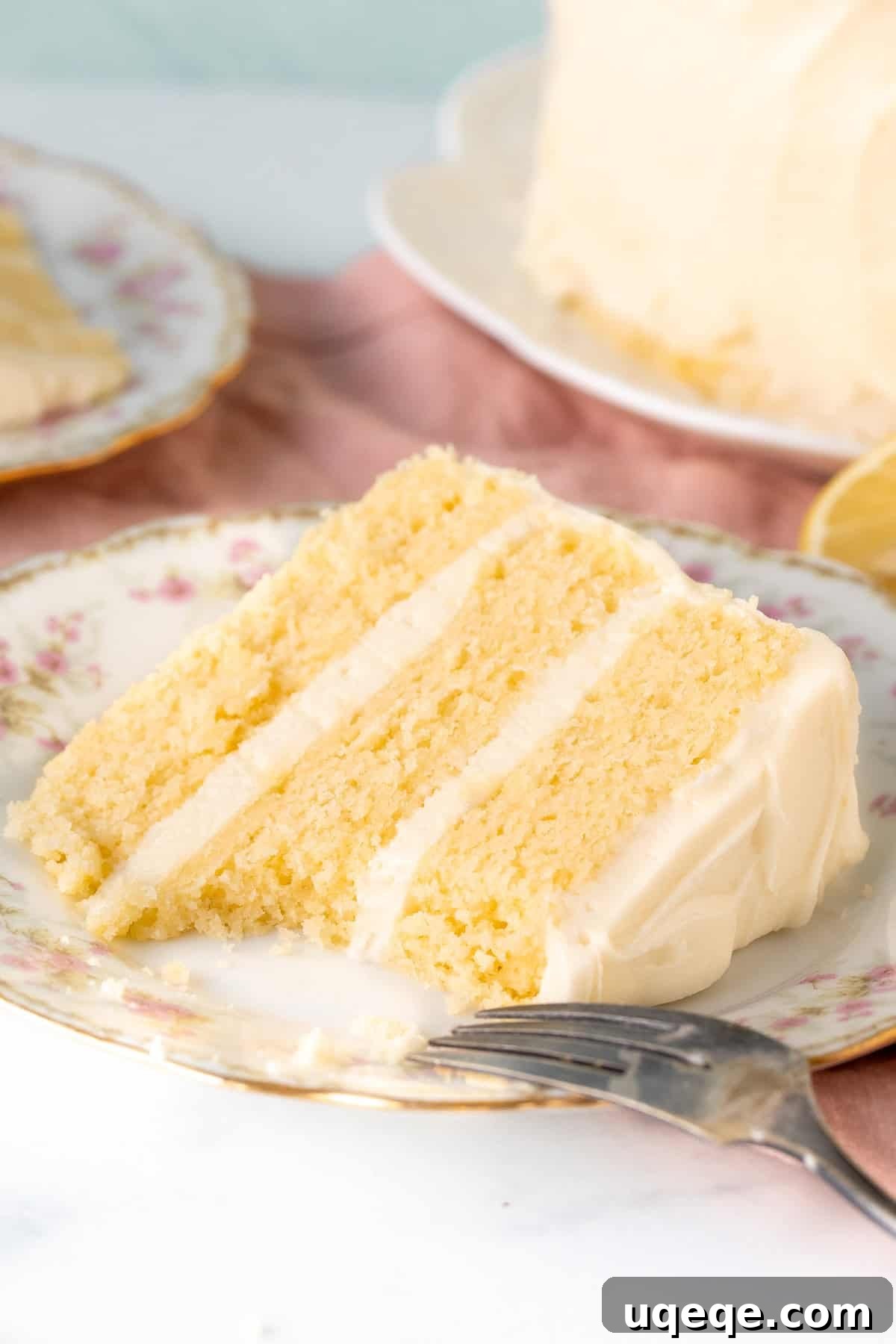
This lemon layer cake, with its moist, fluffy texture and perfectly balanced bright lemon flavor, is more than just a recipe – it’s an invitation to create something truly delicious and beautiful. Whether you’re celebrating a special occasion, hosting a spring brunch, or simply want to brighten your day, this cake is guaranteed to be a hit. Get ready to bake, decorate, and savor every delightful slice!
Craving More Lemon? Explore These Delightful Desserts:
- Creamy Lemon Pie: A silky, tangy pie with a buttery crust.
- Lemon Blueberry Cake: The perfect marriage of sweet berries and zesty lemon.
- Lemon Poppy Seed Cake: A classic flavor combination with a delightful texture.
Lemon Layer Cake Recipe
This delicious lemon layer cake is moist and fluffy with a tender crumb and bright lemon flavor. It’s decorated with creamy lemon buttercream that’s not too sweet or too tart. This cake looks beautiful and is perfect for spring and summer.
By: Fiona Dowling
Prep Time: 45 mins | Cook Time: 25 mins | Cooling Time: 1 hr | Total Time: 2 hrs 10 mins
Yields: 12 slices
Equipment:
- 3 8-inch (20 cm) cake pans
- Electric mixer (stand or hand-held)
- Mixing bowls
- Measuring cups and spoons
- Rubber spatula
- Wire cooling racks
Ingredients
Lemon Cake
- 3/4 cup whole milk (180 ml)
- 6 tablespoons lemon juice (90 ml), freshly squeezed (not from a bottle)
- 2 3/4 cup all-purpose flour (343 grams), carefully measured and sifted
- 2 teaspoons baking powder
- 1/2 teaspoon baking soda
- 1/2 teaspoon salt
- 3/4 cup unsalted butter (168 grams), softened to room temperature
- 1/4 cup vegetable oil (60 ml), or canola oil
- 1 3/4 cup granulated sugar (350 grams)
- 2 teaspoons vanilla extract
- 3 large eggs, at room temperature
- Zest of 2 large lemons (about 2 tablespoons)
Lemon Frosting
- 1 1/2 cups unsalted butter (340 grams), softened but still slightly cool to the touch
- 2 ounces full-fat cream cheese (56 grams), brick style (or substitute with an additional 1/4 cup butter)
- 4 1/2 – 5 1/2 cups powdered sugar (495-605 grams), sifted
- 2 tablespoons lemon juice (30 ml), freshly squeezed
- 1/4 teaspoon salt
- 1-2 tablespoons whipping cream (15-30 ml), as needed for consistency
- Zest of 1 large lemon (optional, for extra flavor)
Instructions
Lemon Cake
- Preheat the oven to 350°F (180°C). Line the bottom of three 8-inch (20 cm) round cake pans with parchment paper rounds. Generously grease and flour the sides of each pan. This prevents sticking.
- In a small measuring jug or bowl, whisk together the whole milk and fresh lemon juice. Set aside.
- In a separate medium bowl, sift together the all-purpose flour, baking powder, baking soda, and salt. Whisk well to combine evenly. Set aside.
- In a large mixing bowl, using an electric mixer, beat together the softened unsalted butter, vegetable oil, granulated sugar, and lemon zest until light, pale, and fluffy. This should take about 2-3 minutes.
- Add the vanilla extract to the butter mixture. Then, beat in the large eggs one at a time, ensuring each egg is fully incorporated before adding the next. Scrape down the sides and bottom of the bowl with a spatula after each egg addition.
- With the mixer on low speed, gradually add the dry ingredients and the milk-lemon juice mixture to the wet mixture, alternating between them. Start by adding 1/3 of the dry ingredients, mix briefly, then add 1/2 of the milk mixture. Follow with another 1/3 of the dry ingredients, then the remaining 1/2 of the milk mixture. Finally, mix in the last 1/3 of the dry ingredients. Mix only until just combined and no streaks of flour remain. Do not overmix.
- Evenly distribute the cake batter among the three prepared cake pans. Gently smooth the tops with a spatula.
- Bake in the preheated oven for 20-25 minutes, or until the cake tops are set, the sides begin to pull away from the pans, and a toothpick inserted into the center comes out clean or with a few moist crumbs.
- Allow the cakes to cool in their pans on a wire rack for at least 20 minutes before carefully inverting them onto the wire racks to cool completely. This prevents the cakes from breaking.
Lemon Frosting
- In a large bowl, using an electric mixer, beat the softened butter until it is creamy and smooth (about 1-2 minutes).
- Add the cream cheese and beat until fully combined and smooth.
- Add 3 cups of the sifted powdered sugar, along with the fresh lemon juice and salt. Start the mixer on low speed to incorporate the ingredients, then increase to medium-high and beat until light and fluffy.
- Turn off the mixer and scrape down the sides and bottom of the bowl. Gradually add the remaining powdered sugar (about 1/2 cup at a time), beating well after each addition. If the frosting becomes too thick, add whipping cream 1 tablespoon at a time until the desired smooth, spreadable consistency is reached. Adjust powdered sugar to achieve desired sweetness and consistency.
Assembly
- Ensure all cake layers are completely cooled. If any layers have a slight dome, use a serrated knife to carefully level the tops for a flat, stable surface.
- Place one cake layer on your desired serving plate or cake stand. Spread about 3/4 to 1 cup of lemon frosting evenly over the top.
- Carefully place the second cake layer on top and spread another 3/4 to 1 cup of frosting.
- Place the third cake layer on top. Apply a thin layer of frosting (crumb coat) over the entire cake, covering the top and sides. This step helps seal in crumbs. Chill the cake in the refrigerator for 15-20 minutes to set the crumb coat.
- Once the crumb coat is firm, apply the remaining frosting to the top and sides of the cake. Use an offset spatula or cake scraper to smooth the sides, and create decorative swirls or patterns on the top.
- When ready to serve, slice the cake with a thin, sharp knife for clean cuts. Enjoy!
Notes
- For a Two Layer Cake: This batter can be baked in two 9-inch (23 cm) round cake pans. The bake time will be slightly longer, approximately 25-30 minutes.
- Lemons & Zest: You will need about 3 large or 4 medium lemons for this recipe. Always zest the lemons before squeezing out the juice. You can typically get about 2 tablespoons of zest from 1 large lemon and around 6 tablespoons of juice from 2-3 lemons.
- Room Temperature Ingredients: For optimal results, ensure your butter, eggs, and milk for the cake batter are at room temperature. For the frosting, the butter and cream cheese should be softened but still slightly cool to the touch.
- Make Ahead Tips: Cake layers can be baked and cooled completely the day before serving. Wrap them tightly in plastic wrap and store at room temperature or in the fridge overnight. Prepare the frosting and assemble the cake on the day you plan to serve. Unfrosted cake layers can also be wrapped tightly and frozen for up to 2 months; thaw in the fridge before frosting.
- Storage: Store leftover lemon layer cake in an airtight container in the refrigerator for up to 4 days. While delicious, fresh cake is always best enjoyed within 2-3 days.
- Nutrition: The following details are an estimate only, based on one slice (assuming 12 uniform slices), and account for all frosting used without trimming cake layers. Individual results may vary.
Nutrition Information (per slice)
Calories: 1009 kcal
Carbohydrates: 153g
Protein: 6g
Fat: 44g
Saturated Fat: 25g
Polyunsaturated Fat: 4g
Monounsaturated Fat: 11g
Trans Fat: 1g
Cholesterol: 162mg
Sodium: 244mg
Potassium: 175mg
Fiber: 1g
Sugar: 128g
Vitamin A: 1261 IU
Vitamin C: 4mg
Calcium: 79mg
Iron: 2mg