
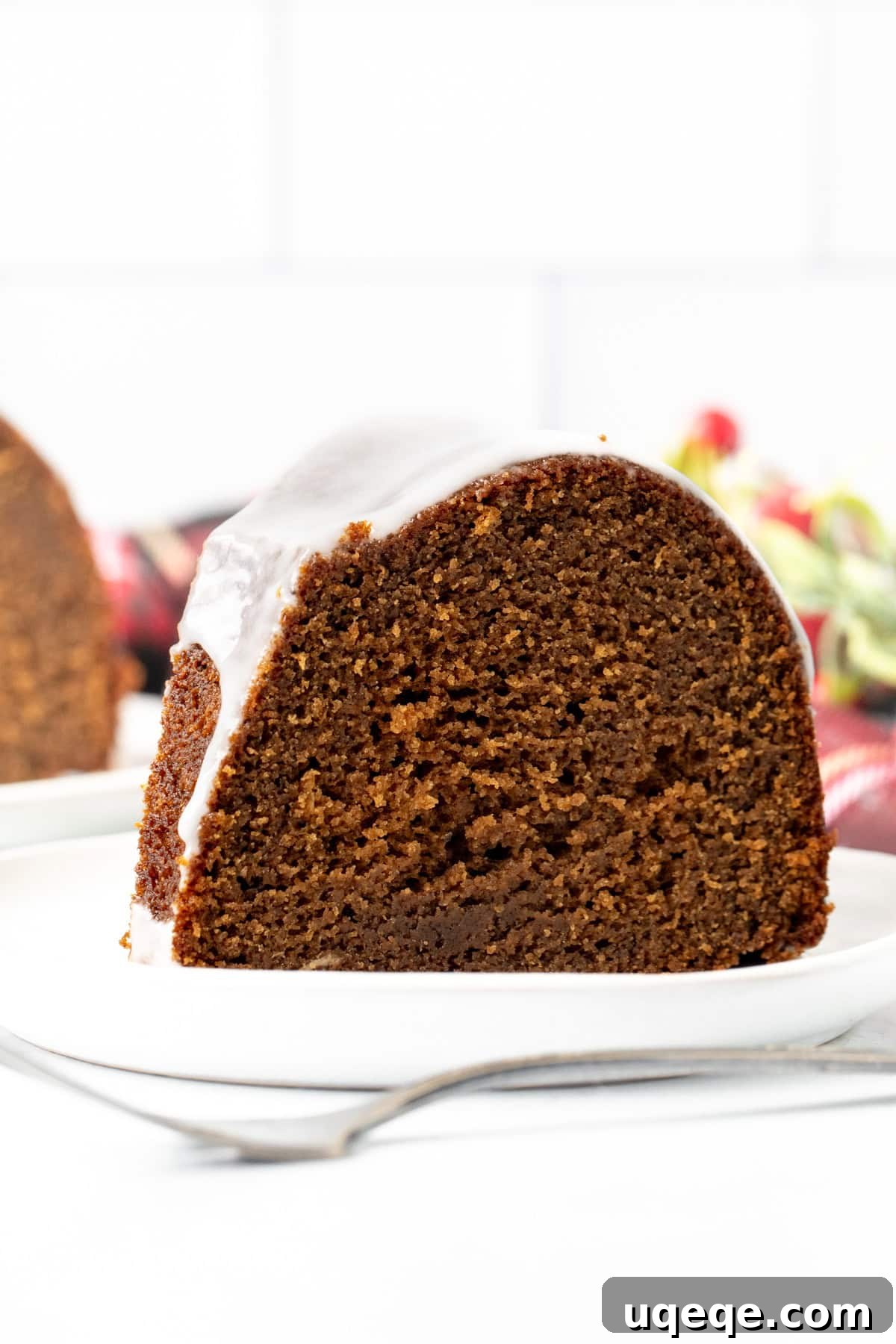
This gingerbread bundt cake is a holiday marvel – incredibly moist, bursting with rich ginger molasses flavor, and elegantly finished with a sweet, tangy lemon glaze. It’s the quintessential simple yet stunning Christmas dessert that evokes warmth and coziness with every bite. If you’re searching for a festive treat that stands out from typical holiday cookies, this bundt cake is your answer, guaranteed to impress with its tender crumb and rich, aromatic spices.
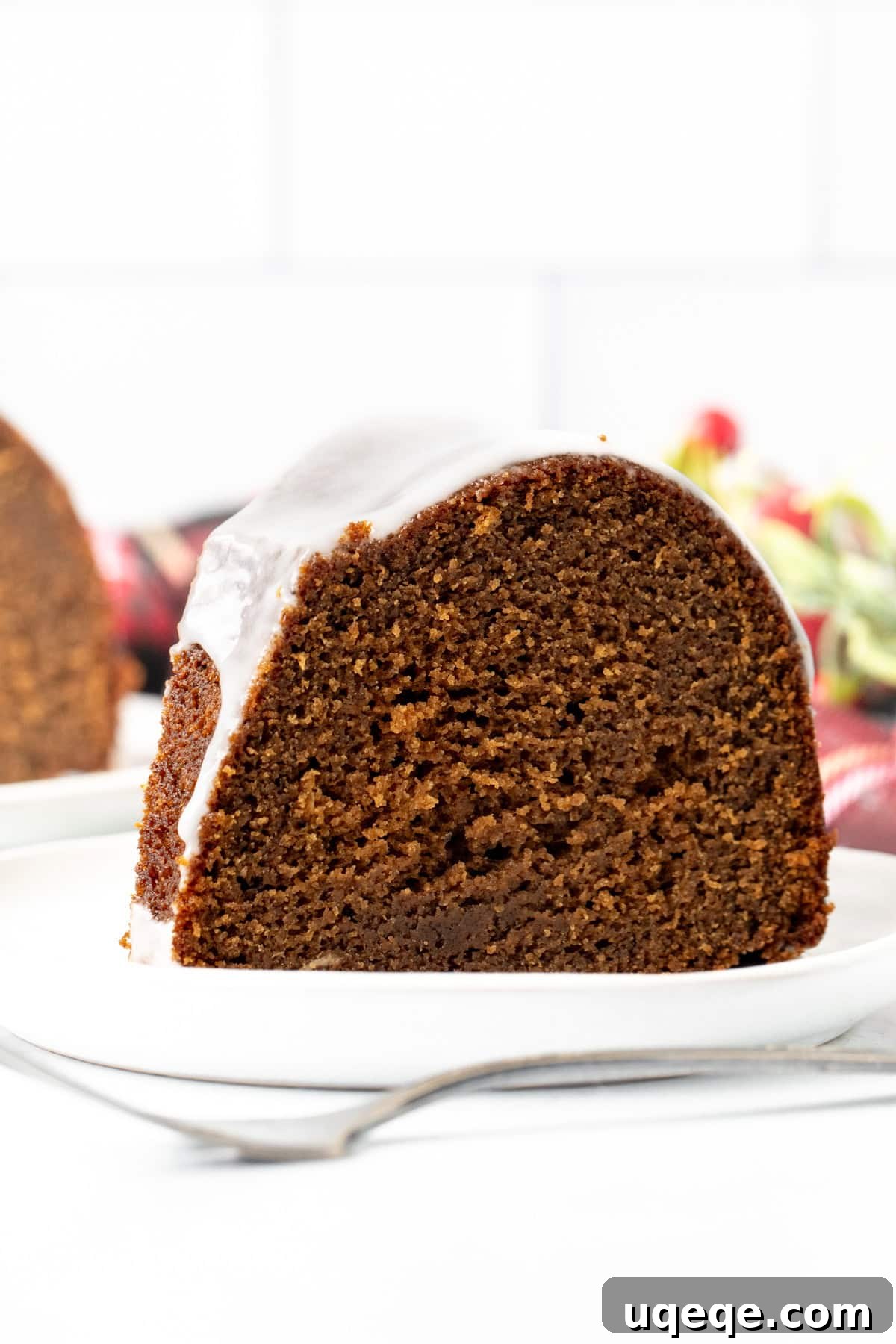
The Ultimate Gingerbread Bundt Cake for Your Holiday Table
While gingerbread cookies often steal the spotlight during Christmas, this gingerbread bundt cake deserves a prime spot in your holiday baking repertoire. It’s a true celebration of classic holiday flavors, featuring a harmonious blend of warm spices like ginger, cinnamon, nutmeg, and cloves, combined with the deep, earthy notes of molasses, the comforting sweetness of brown sugar, and a hint of vanilla. The result is a cake with an irresistibly moist and tender crumb that beautifully complements its robust flavor profile. Drizzled with a bright lemon glaze, it’s not only a treat for the palate but also a stunning centerpiece for any festive gathering. Elegant, straightforward, and perfectly balanced in sweetness, this cake truly tastes like Christmas.
Why This Gingerbread Bundt Cake is a Holiday Must-Have
Gingerbread has been a cherished part of holiday traditions for centuries, with its origins tracing back to ancient spice routes. The addition of molasses, particularly, gives gingerbread its signature dark hue and complex, deeply spiced flavor that evokes warmth and comfort. Bundt cakes, on the other hand, offer an effortless elegance with their distinctive fluted designs, making them ideal for impressive yet approachable desserts. This recipe marries the best of both worlds, offering a cake that is both rich in tradition and stunning in presentation, perfect for impressing guests without extensive decorating.
What sets this particular gingerbread bundt cake apart is its unparalleled moistness, achieved through a thoughtful combination of ingredients and precise baking techniques. We’ve carefully balanced the rich flavor of butter with a touch of vegetable oil for long-lasting moisture, ensuring your cake stays tender and delicious for days, avoiding any dryness often found in holiday bakes. The medley of classic gingerbread spices—ground ginger, cinnamon, nutmeg, and cloves—creates that comforting, nostalgic aroma and taste synonymous with the holiday season. The bright lemon zest is a secret weapon, cutting through the richness and adding a vibrant, refreshing lift that makes every bite truly unforgettable and prevents the flavors from becoming too heavy.
Mastering Your Gingerbread Bundt Cake: Essential Baking Tips
Achieving the perfect gingerbread bundt cake requires attention to detail. Reading through these tips will ensure your baking experience is smooth and successful, leading to a perfectly moist, flavorful, and beautiful cake every time.
- Preheat Your Oven Properly: Always preheat your oven to the specified 350°F (180°C) before you begin mixing your ingredients. A consistent oven temperature from the start is crucial for even baking and proper cake rise. For bundt cakes, I often prepare the pan just before the batter is ready to go in. This method helps prevent the pan release from settling or sliding to the bottom of the pan, leading to a cleaner and easier release of your cake.
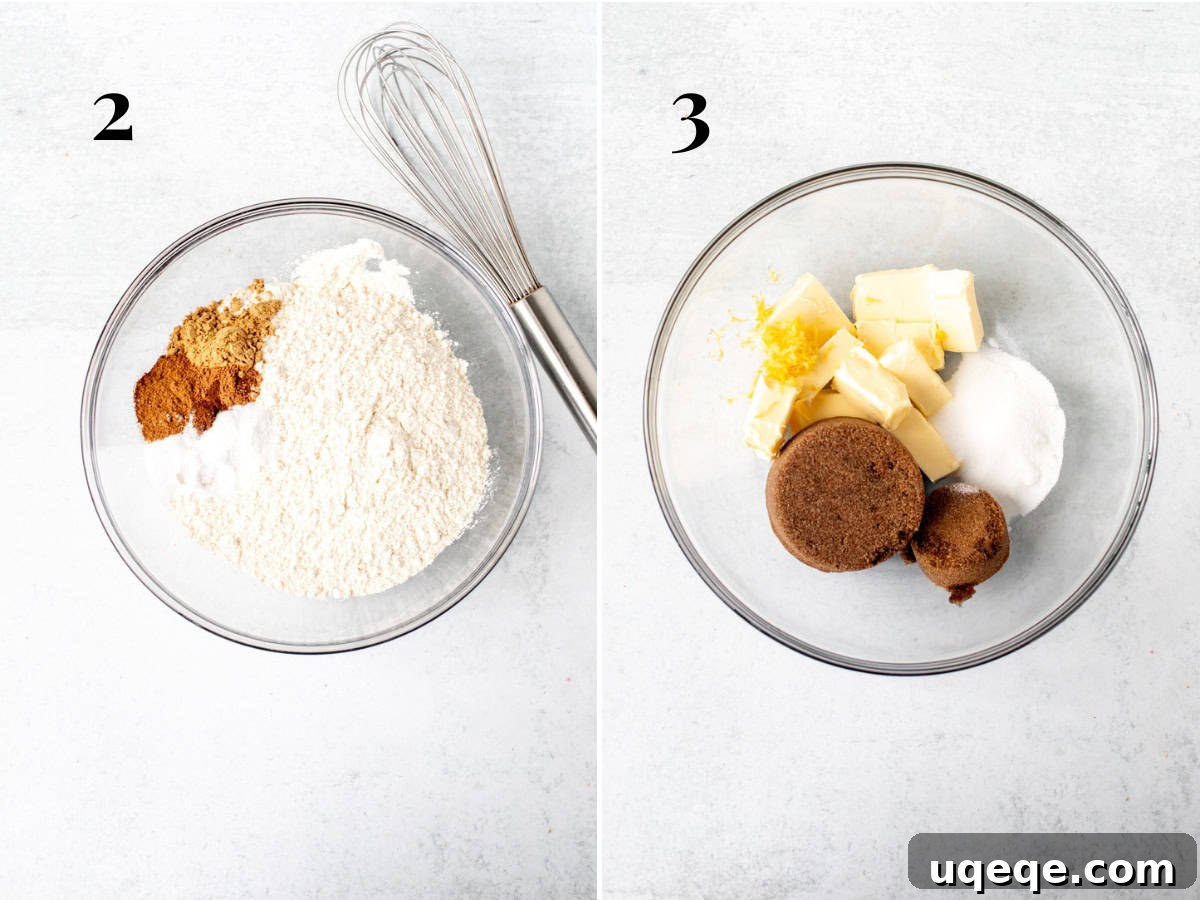
- Combine Dry Ingredients Thoroughly: In a large bowl, meticulously whisk together your all-purpose flour, baking powder, baking soda, ground ginger, cinnamon, ground nutmeg, ground cloves, and salt. This cake features a generous amount of spices to deliver that quintessential, robust gingerbread flavor, so ensuring they are evenly distributed is key for a consistent taste and aroma throughout every slice of the cake.
- Creaming Butter, Sugars, and Lemon Zest: In a separate large mixing bowl, cream together the softened unsalted butter, both packed brown sugar (for moisture and deep caramel notes) and granulated sugar, along with the fresh lemon zest, until the mixture is light, fluffy, and pale in color. The act of creaming incorporates air, contributing significantly to the cake’s tender texture and overall rise. The lemon zest, though subtle, plays a significant role in brightening the overall flavor profile, preventing the rich molasses and spices from becoming too heavy or cloying.
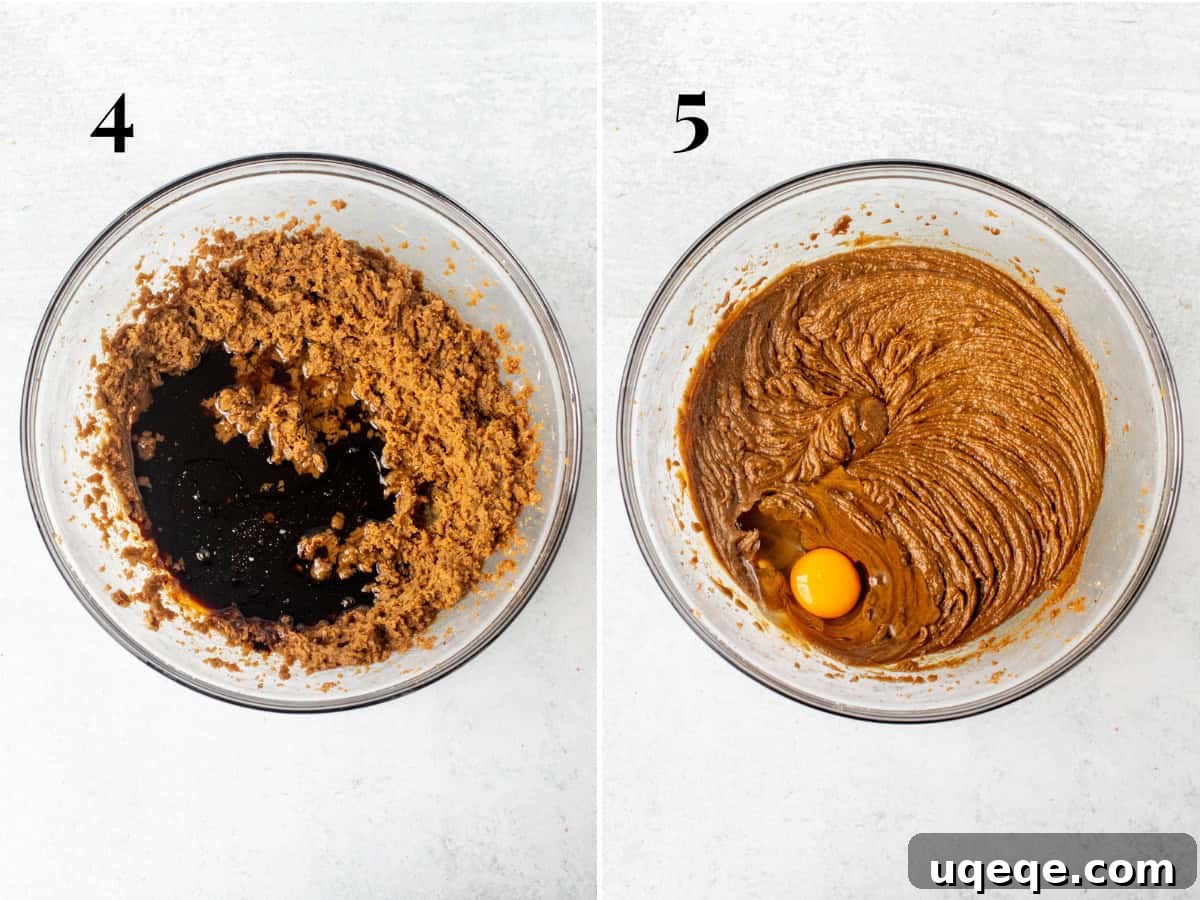
- Incorporating Liquid Sweeteners and Flavorings: Beat the vegetable oil (or canola oil), unsulphured molasses, and vanilla extract into your creamed butter mixture until everything is well combined and uniform in color. This recipe strategically uses a combination of butter for its unparalleled rich flavor and a small amount of oil to significantly enhance and prolong the cake’s moistness, keeping it fresh for longer. It’s absolutely vital to use unsulphured molasses, as blackstrap molasses is far too bitter and strong for baking with and will overpower the delicate balance of spices and sweetness in this gingerbread bundt cake.
- Adding Eggs One at a Time: Gradually add the large eggs, beating them into the butter mixture one at a time. Ensure each egg is fully incorporated into the batter before adding the next. This method helps create a smooth emulsion, preventing the batter from curdling and promoting a more stable cake structure. Adding eggs individually also helps avoid overmixing the batter, which can activate too much gluten and ultimately lead to a tough or dry cake.
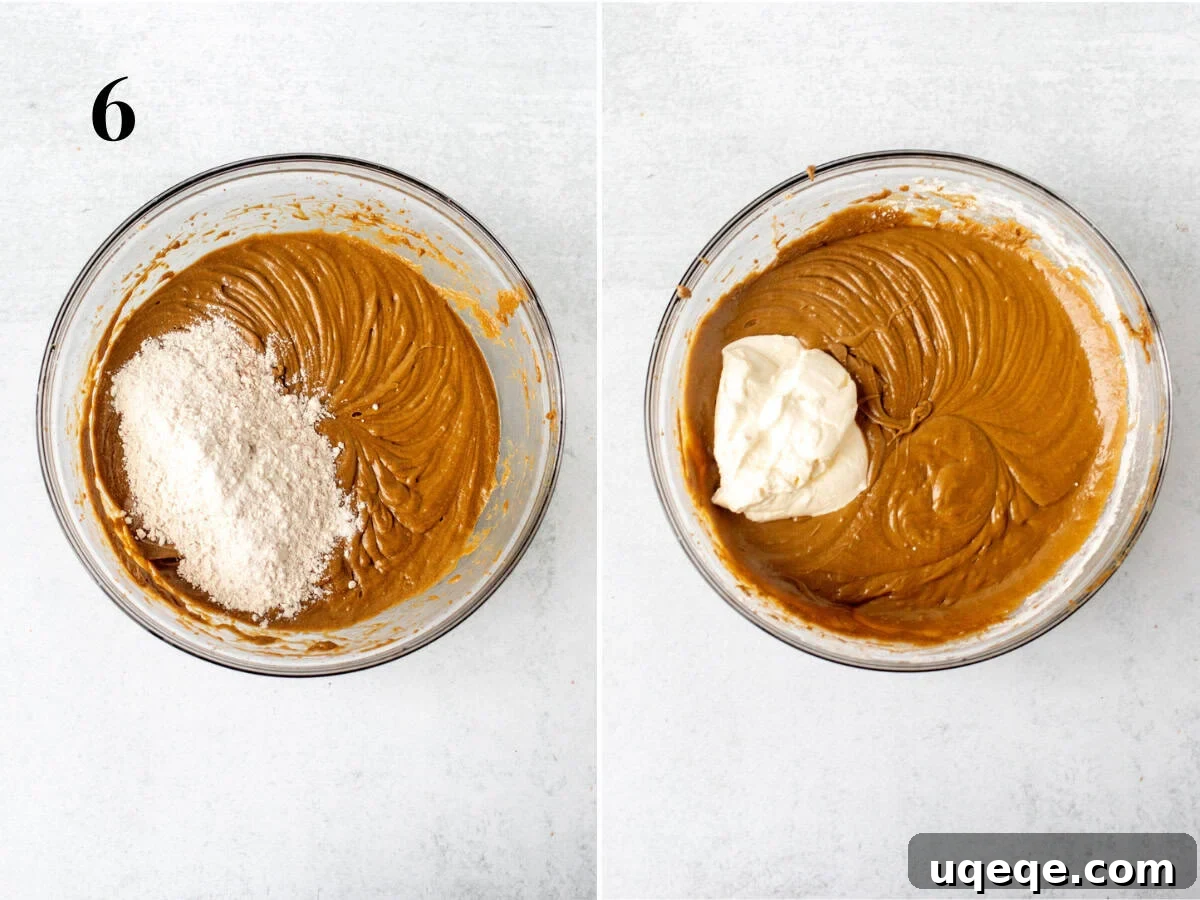
- Alternating Dry and Wet Additions: With your electric mixer set to a low speed, gently incorporate about one-third of the dry ingredient mixture into the wet butter mixture. Mix just until no dry streaks of flour remain. Immediately after, whisk in all of the sour cream into the butter mixture until it is fully incorporated and the batter is smooth. This alternating process of adding dry and wet ingredients in stages is a crucial technique for developing a uniform, tender crumb and minimizing gluten development, which prevents the cake from becoming dense or rubbery.
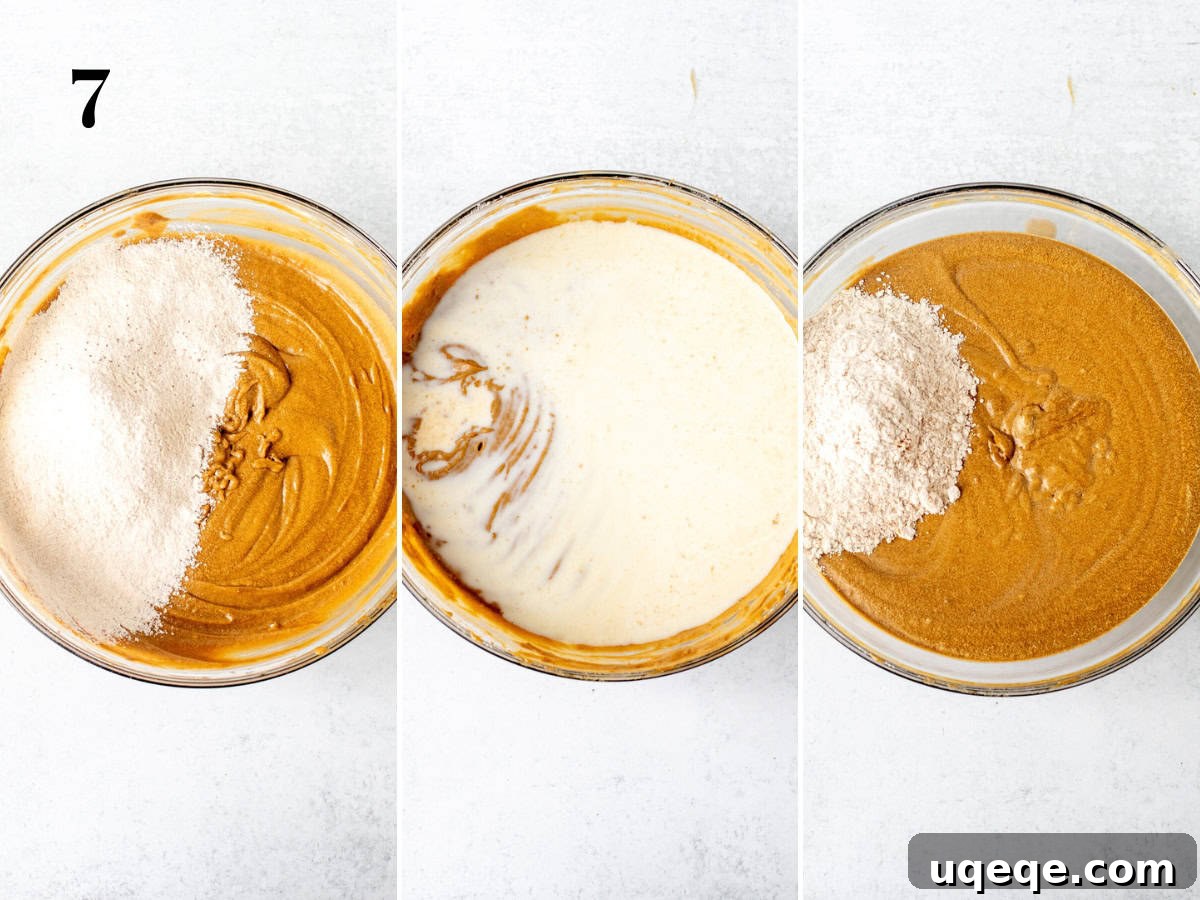
- Finishing the Batter with Care: Next, add another one-third of the dry ingredients and mix until just combined. Then, whisk in all of the milk (whole milk or 2% is highly recommended for best results due to its fat content, which adds richness and moisture). Finally, gently mix in the remaining dry ingredients. For this last addition, I highly recommend switching from your electric mixer to mixing by hand with a wire whisk or a sturdy spatula. This gives you significantly more control and dramatically reduces the risk of overmixing, which can activate too much gluten and result in a dry, tough cake. The strategic combination of both sour cream and milk is a dynamic duo, working synergistically to make this gingerbread bundt cake incredibly moist, rich, and tender.
- Preparing the Bundt Pan for Success: Proper pan preparation is absolutely paramount for a successful bundt cake that releases cleanly and beautifully. I strongly recommend using a high-quality commercial pan release product rather than just a simple non-stick cooking spray, even if you are using a non-stick pan. Ensure you thoroughly coat every single crack, crevice, and intricate detail of the pan to guarantee an even and easy release of your cake. Commercial pan release sprays or pastes can be purchased at most specialty baking stores or conveniently online.
- Homemade Pan Release: For a reliable and effective homemade version, combine equal parts softened unsalted butter (or shortening), all-purpose flour, and vegetable oil (I typically make a batch with 1/2 cup of each ingredient). Beat them together vigorously until the mixture is completely smooth and lump-free. Brush a generous, even layer onto the entire interior surface of your bundt pan, paying extra attention to any detailed patterns. This homemade pan release mixture can be stored in an airtight container in the fridge for several weeks, making it a convenient option for future baking projects.
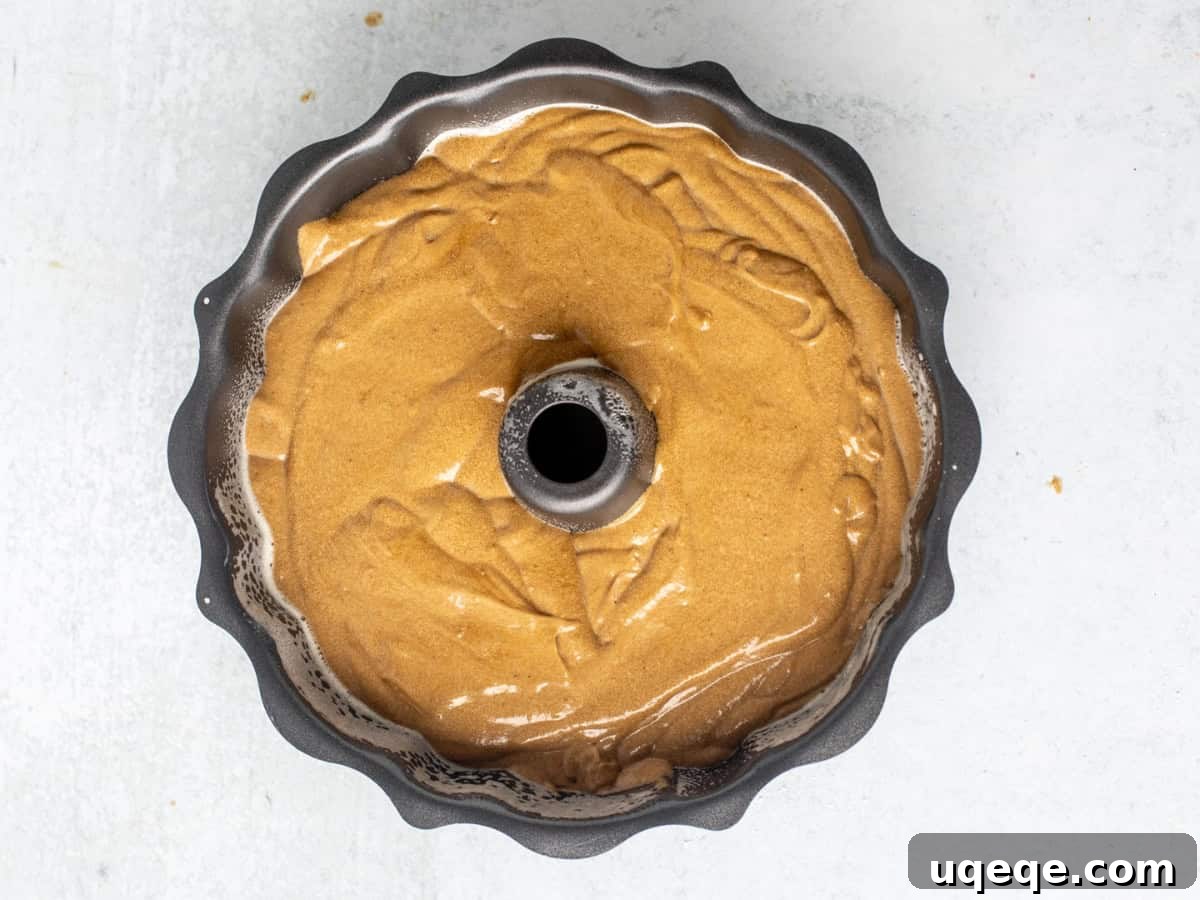
- Fill the Pan and Bake: Carefully pour the prepared cake batter evenly into your meticulously greased bundt pan. Use a spatula to gently smooth the top surface of the batter, ensuring an even layer before baking.
- Baking and Cooling to Perfection: Transfer the bundt pan to your preheated oven and bake for approximately 50-60 minutes. It’s important to note that actual baking times can vary significantly based on individual oven calibration (it’s always a good idea to know your oven!) and the specific design or material of your bundt pan. To check for doneness, insert a wooden skewer or toothpick into the thickest part of the cake; it should come out clean or with just a few moist crumbs attached. The top of the cake should also feel firm and spring back slightly when gently pressed. Once baked, allow the cake to cool in the pan on a wire rack for at least 20 minutes. This crucial cooling period allows the cake to firm up, settle, and naturally pull away from the pan’s sides, making inversion much easier and reducing the risk of it sticking. After 20 minutes, carefully invert the cake onto the wire rack to cool completely before applying any glaze or frosting.
The Perfect Finishing Touch: Lemon Glaze & Other Serving Ideas
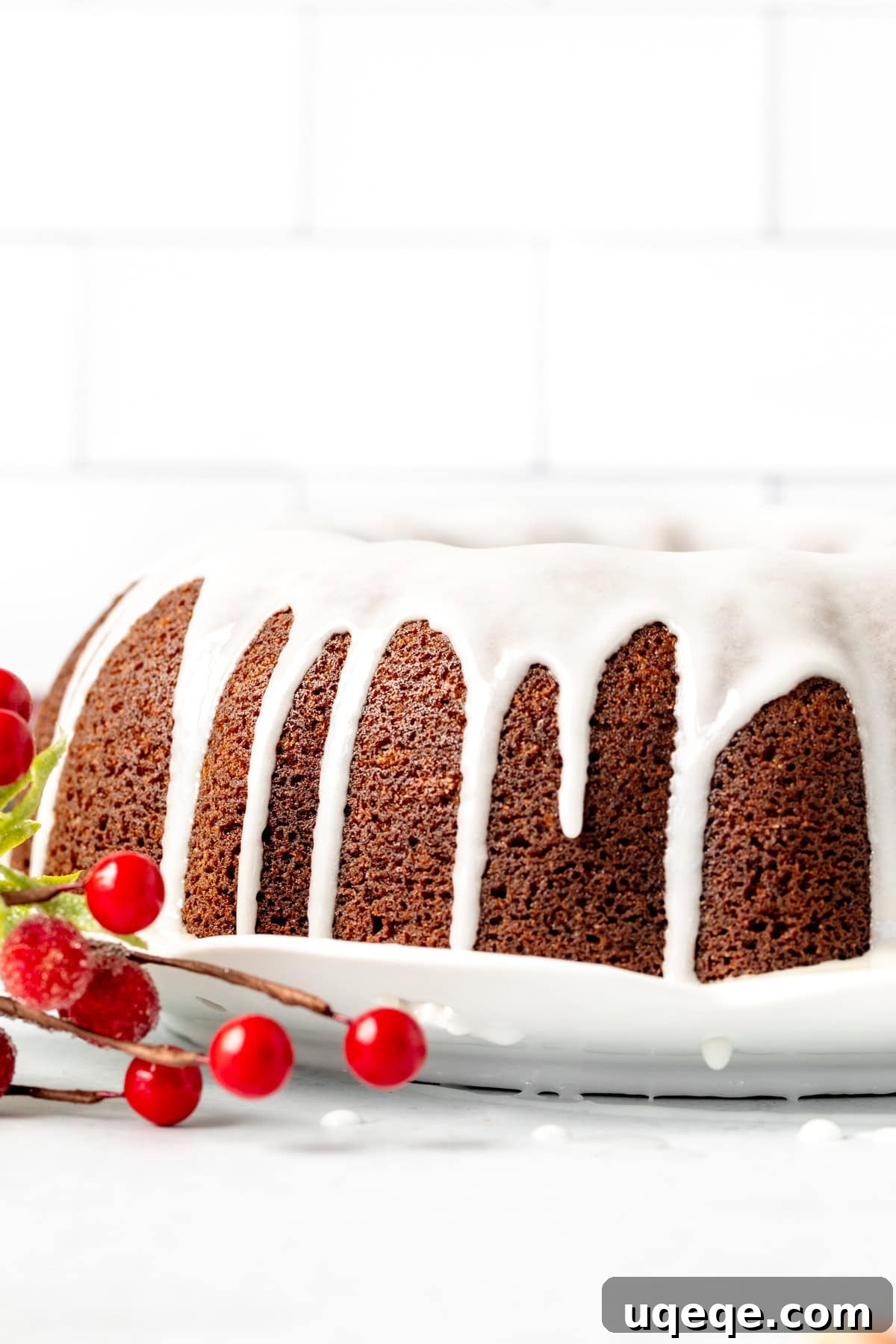
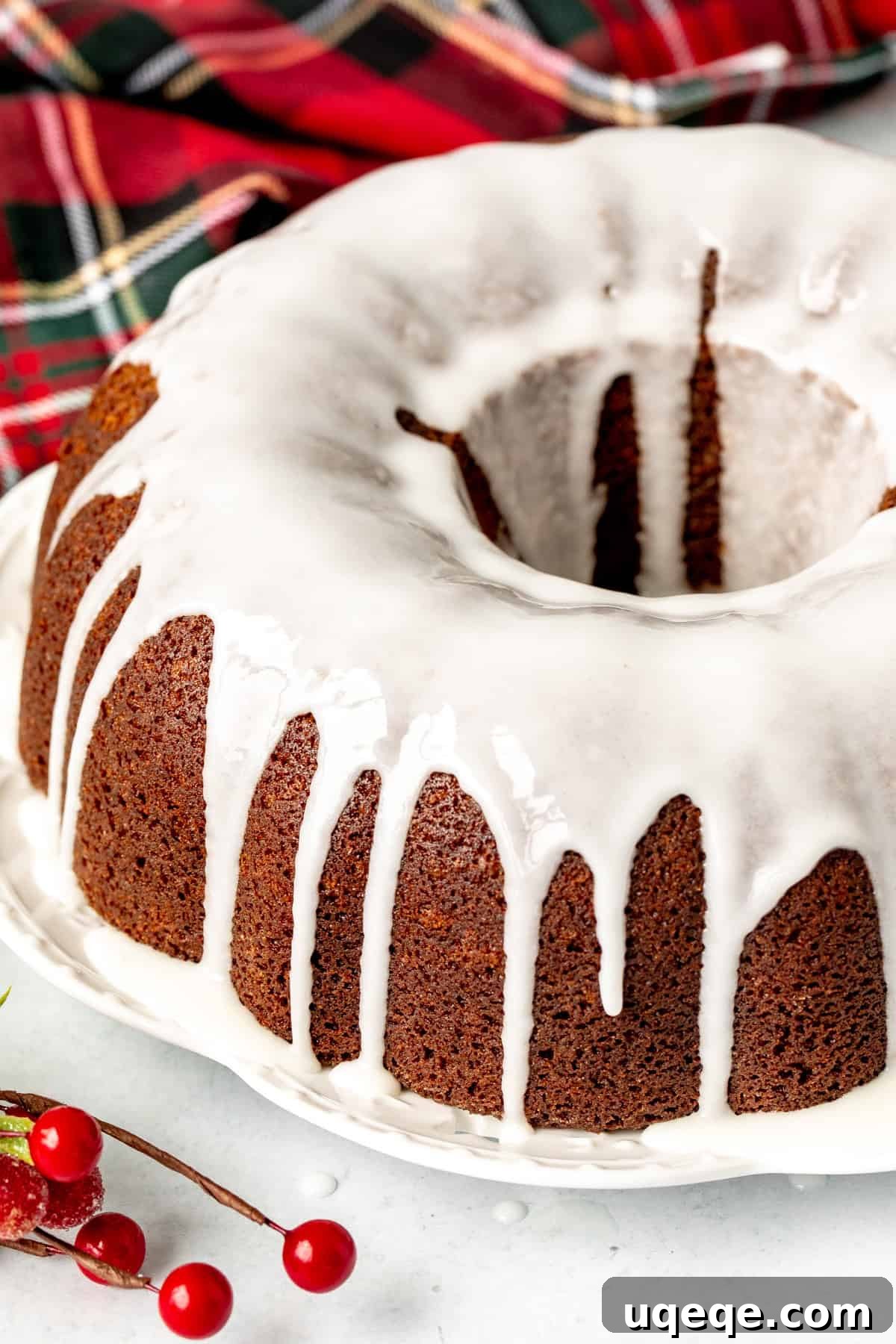
Once your perfectly baked gingerbread bundt cake has cooled completely and been inverted, it’s time for the final flourish: a simple yet elegant lemon glaze. This glaze not only adds a beautiful sheen and a touch of extra sweetness but also provides a bright, tangy citrus counterpoint that perfectly balances the rich, warm spices of the cake. To make it, simply whisk together powdered sugar and fresh lemon juice until you achieve your desired drizzling consistency. If it’s too thick, add a few more drops of lemon juice; if too thin, a spoonful of powdered sugar will quickly fix it.
Beyond the classic lemon glaze, this versatile gingerbread bundt cake can be served with a delightful array of toppings to suit any preference or occasion:
- Caramel or Butterscotch Sauce: A warm salted caramel sauce or a rich warm butterscotch sauce draped generously over a slice adds an extra layer of indulgent sweetness and deep, complementary flavors.
- Whipped Cream: A light, airy dollop of freshly whipped cream provides a lovely contrast in both texture and richness, offering a cooling counterpoint to the warm spices.
- Cream Cheese Frosting: For a richer and more decadent topping, a luscious cream cheese icing, similar to what you might use for a banana bundt cake, would be absolutely divine and perfectly complement the gingerbread flavors.
- Candied Ginger: A sprinkle of finely chopped candied ginger not only adds a lovely chewiness and textural interest but also intensifies the cake’s vibrant ginger flavor for true ginger lovers.
- Orange Zest: For an alternative citrus note, a little fresh orange zest can complement the lemon glaze beautifully or provide a different aromatic lift if the cake is served plain.
- Dusting of Powdered Sugar: For a minimalist yet incredibly elegant presentation, a simple dusting of powdered sugar offers a delicate sweetness and a beautiful snowy finish, perfect for a holiday table.
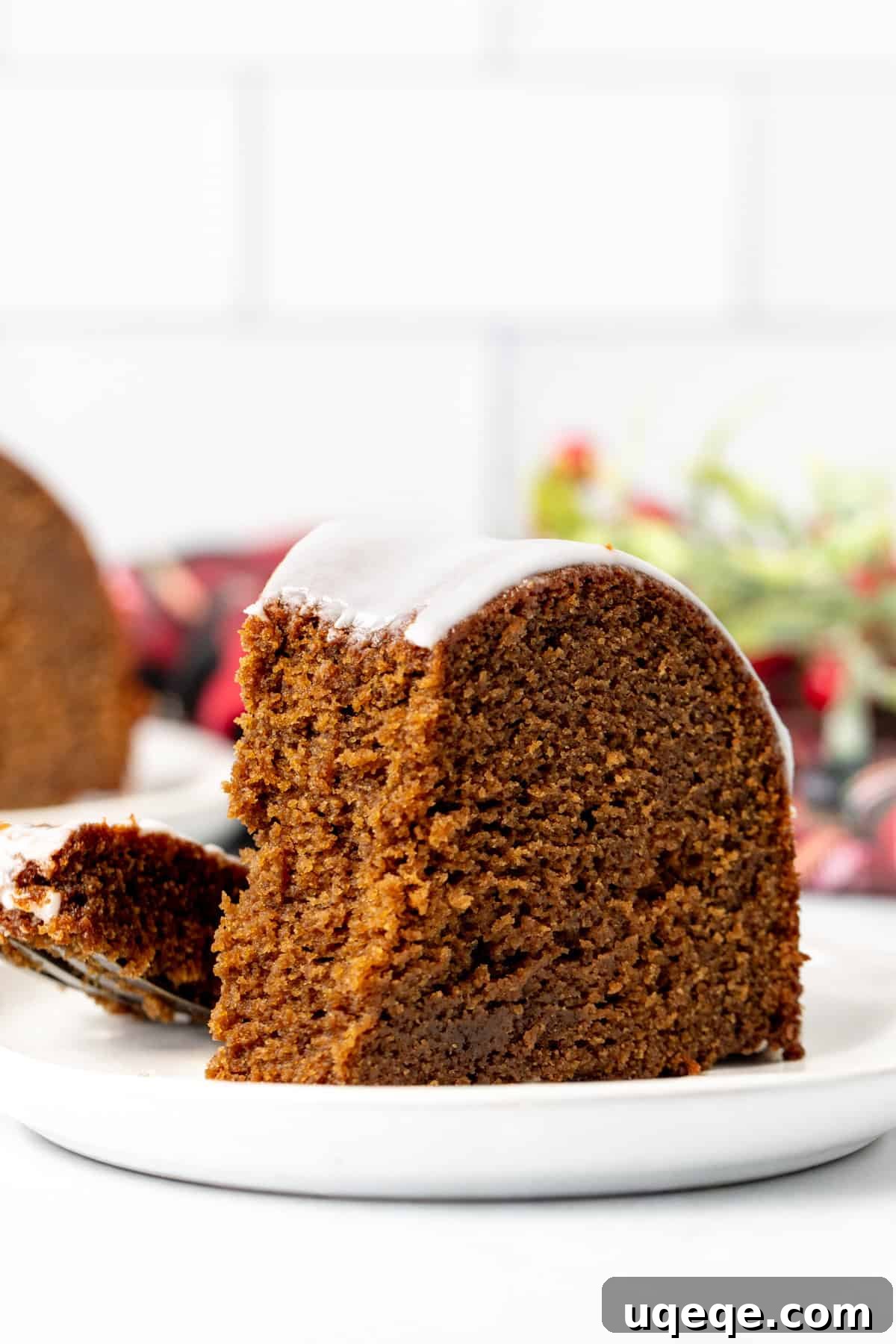
This gingerbread bundt cake is more than just a dessert; it’s a flavorful, moist embodiment of the Christmas spirit, bringing warmth and joy to any festive gathering. Its elegant simplicity and rich, complex gingerbread flavor make it a true holiday favorite that will impress your guests and become a cherished part of your seasonal traditions. If you adore the profound, spicy notes of gingerbread and desire a show-stopping yet achievable holiday bake, this recipe is crafted specifically for you.
More Gingerbread Recipes to Delight Your Holiday Season
If this delicious gingerbread bundt cake has ignited your passion for gingerbread, don’t stop here! Explore these other fantastic gingerbread recipes to keep the festive flavors going throughout the entire holiday season. There’s a gingerbread treat for everyone!
- Gingerbread Cheesecake: A creamy, richly spiced cheesecake with a gingerbread twist, perfect for a sophisticated holiday dessert.
- Gingerbread Cookie Bars: All the classic flavor of gingerbread cookies, but in an incredibly easy-to-make bar form – no individual cookie cutting required!
- Gingerbread Cupcakes: Individually portioned, perfectly moist cupcakes infused with gingerbread spices and topped with a luscious cream cheese frosting.
- Classic Gingerbread: The timeless, traditional recipe that started it all, perfect for baking classic gingerbread men or houses.
Gingerbread Bundt Cake Recipe
Recipe Overview
This gingerbread bundt cake is incredibly moist with a delicious ginger molasses flavor and a sweet, tangy lemon glaze. It’s an elegant, simple Christmas dessert that tastes wonderfully warm and cozy, making it ideal for any holiday gathering.
- Prep Time: 25 minutes
- Cook Time: 55 minutes
- Total Time: 1 hour 20 minutes
- Yields: 14 slices
Equipment
- 12-cup bundt pan (non-stick recommended)
- Large mixing bowls (2)
- Electric mixer (stand mixer or hand-held)
- Wire whisk or rubber spatula
- Measuring cups and spoons
- Wire cooling rack
Ingredients
For the Gingerbread Bundt Cake:
- 3 cups all-purpose flour (375 grams)
- 1 teaspoon baking powder
- 1/2 teaspoon baking soda
- 2 teaspoons ground ginger
- 1 1/2 teaspoons cinnamon
- 1/4 teaspoon ground nutmeg
- 1/4 teaspoon ground cloves
- 1/2 teaspoon salt
- 3/4 cup unsalted butter (168 grams), softened to room temperature
- 1 1/4 cup brown sugar (262 grams), firmly packed
- 1/4 cup granulated sugar (50 grams)
- 1 tablespoon lemon zest (from 1-2 lemons)
- 1/4 cup vegetable oil (60 ml), or canola oil
- 2/3 cup unsulphured molasses (160 ml), do not use blackstrap molasses
- 1 tablespoon vanilla extract (15 ml)
- 3 large eggs, at room temperature
- 3/4 cup sour cream (180 ml), at room temperature
- 3/4 cup milk (180 ml), whole milk or 2% is best, at room temperature
For the Lemon Glaze:
- 1 1/2 – 2 cups powdered sugar (165 grams – 220 grams), sifted
- 1-2 tablespoons lemon juice, freshly squeezed
Instructions
Gingerbread Bundt Cake:
- Preheat your oven to 350°F (180°C).
- In a medium bowl, whisk together the flour, baking powder, baking soda, ground ginger, cinnamon, nutmeg, cloves, and salt until well combined. Set this dry mixture aside.
- In a large mixing bowl, using an electric mixer (stand or hand-held), beat together the softened butter, brown sugar, granulated sugar, and lemon zest until the mixture is light, fluffy, and pale in color (approximately 2-3 minutes).
- Add the vegetable oil, unsulphured molasses, and vanilla extract to the butter mixture. Continue beating until all ingredients are well combined and smooth, scraping down the sides of the bowl as needed.
- Beat in the eggs, adding them one at a time. Ensure each egg is fully incorporated into the batter before adding the next to create a smooth emulsion.
- With the mixer on low speed, add about one-third of the dry flour mixture to the wet butter mixture. Mix just until no dry streaks of flour remain.
- Next, add all of the sour cream to the batter and mix until it is fully incorporated and the batter appears smooth.
- Add another one-third of the dry ingredients and mix until just combined. Then, add all of the milk and mix briefly.
- Finally, gently mix in the remaining dry ingredients. Stop mixing as soon as you no longer see any lumps or streaks of flour. For this last addition, it is highly recommended to switch to a wire whisk or spatula to prevent overmixing.
- Prepare your 12-cup bundt pan. Thoroughly grease it with pan release (either store-bought or homemade as described in the notes below), ensuring all cracks and crevices are completely coated.
- Carefully pour the cake batter evenly into the prepared bundt pan and use a spatula to gently smooth the top surface.
- Bake in the preheated oven for approximately 50-60 minutes, or until a wooden skewer or toothpick inserted into the center of the cake comes out clean. The top of the cake should feel firm and spring back when gently pressed.
- Allow the cake to cool in the bundt pan on a wire rack for at least 20 minutes. This is crucial for the cake to firm up and pull away from the pan’s sides. After 20 minutes, carefully invert the cake onto the wire rack to cool completely before glazing.
Lemon Glaze:
- In a small bowl, whisk together 1 1/2 cups of sifted powdered sugar with 1 tablespoon of freshly squeezed lemon juice until smooth and lump-free.
- Adjust the consistency as needed: if the glaze is too thick, whisk in a little more lemon juice (1/2 teaspoon at a time) until it reaches a smooth, drizzling consistency. If it’s too thin, add more sifted powdered sugar (1 tablespoon at a time). The glaze should be opaque white and thick enough to cling to the cake but thin enough to drizzle elegantly.
- Once the gingerbread bundt cake is completely cool, generously drizzle the lemon glaze over the top, allowing it to artfully drip down the sides.
Notes
- Bundt Pans: Always use a high-quality, non-stick 12-cup capacity bundt pan for this recipe. A 10-cup capacity pan will be too small and likely cause the batter to overflow during baking. For easier cake release, consider choosing a bundt pan with a simpler design rather than overly intricate patterns.
- Greasing the Pan/Pan Release: Even with a non-stick bundt pan, thorough greasing is absolutely essential to prevent sticking. I highly recommend using a commercial pan release spray or paste, or preparing your own homemade version. To make your own pan release, combine equal parts (e.g., 1/2 cup each) softened unsalted butter (or shortening), all-purpose flour, and vegetable oil. Beat them together until completely smooth. Brush a generous, even layer onto the entire interior surface of your bundt pan, ensuring every crevice and detail is covered. Store any leftover homemade pan release in an airtight container in the refrigerator for future use.
- Lemon Glaze Variations: If you prefer a milder glaze or do not have lemons on hand, you can easily substitute the lemon juice with milk (dairy or non-dairy, like almond or soy milk) for a simple, sweet vanilla glaze. For a more subtle and minimalist finish, you can omit the glaze entirely and simply dust the cooled cake generously with powdered sugar just before serving.
- Nutrition Information: The provided nutritional details are an estimate only and should be considered approximate. They are based on a single slice of cake, assuming the recipe yields 14 uniform pieces and includes the lemon glaze. Actual values may vary depending on specific ingredients used and portion sizes.
- Storage Recommendations: Store the frosted gingerbread bundt cake covered tightly at room temperature for up to 2 days to maintain optimal freshness and moisture. Alternatively, you can store it in the refrigerator for up to 4 days; bring it to room temperature before serving for the best flavor and texture. If you wish to freeze the cake, it’s best to do so unfrosted. Wrap the completely cooled, unfrosted cake tightly in multiple layers of plastic wrap, then again in aluminum foil, and place it in a freezer-safe container or bag. It can be frozen for up to 2 months. To thaw, transfer the wrapped cake to the refrigerator overnight. Add the glaze just before serving. It is crucial to NOT thaw the cake directly on the counter from frozen, as this can result in a gummy texture in the center of the cake.
- Room Temperature Ingredients: For optimal results, ensure your butter, eggs, sour cream, and milk are all at room temperature before you begin mixing. Room temperature ingredients combine more smoothly and evenly, creating a more uniform batter and ultimately leading to a finer, more tender crumb in your final cake.
- Measuring Flour Accurately: For precise and consistent baking, always use the spoon and level method for measuring flour. Gently spoon flour into your dry measuring cup until it overflows, then level it off with a straight edge (like the back of a knife) without packing the flour down. This technique prevents adding too much flour, which can lead to a dense or dry cake.
Nutrition
Approximate nutritional information per slice (assuming 14 slices with glaze):
- Calories: 457 kcal
- Carbohydrates: 70g
- Protein: 5g
- Fat: 18g
- Saturated Fat: 9g
- Polyunsaturated Fat: 3g
- Monounsaturated Fat: 5g
- Trans Fat: 0.4g
- Cholesterol: 75mg
- Sodium: 160mg
- Potassium: 379mg
- Fiber: 1g
- Sugar: 49g
- Vitamin A: 461 IU
- Vitamin C: 1mg
- Calcium: 107mg
- Iron: 2mg
We truly hope you enjoy baking and sharing this delightful Gingerbread Bundt Cake with your loved ones this holiday season! If you loved this recipe, please consider leaving a rating and comment below. Your valuable feedback helps us improve and inspires other bakers in our community.