
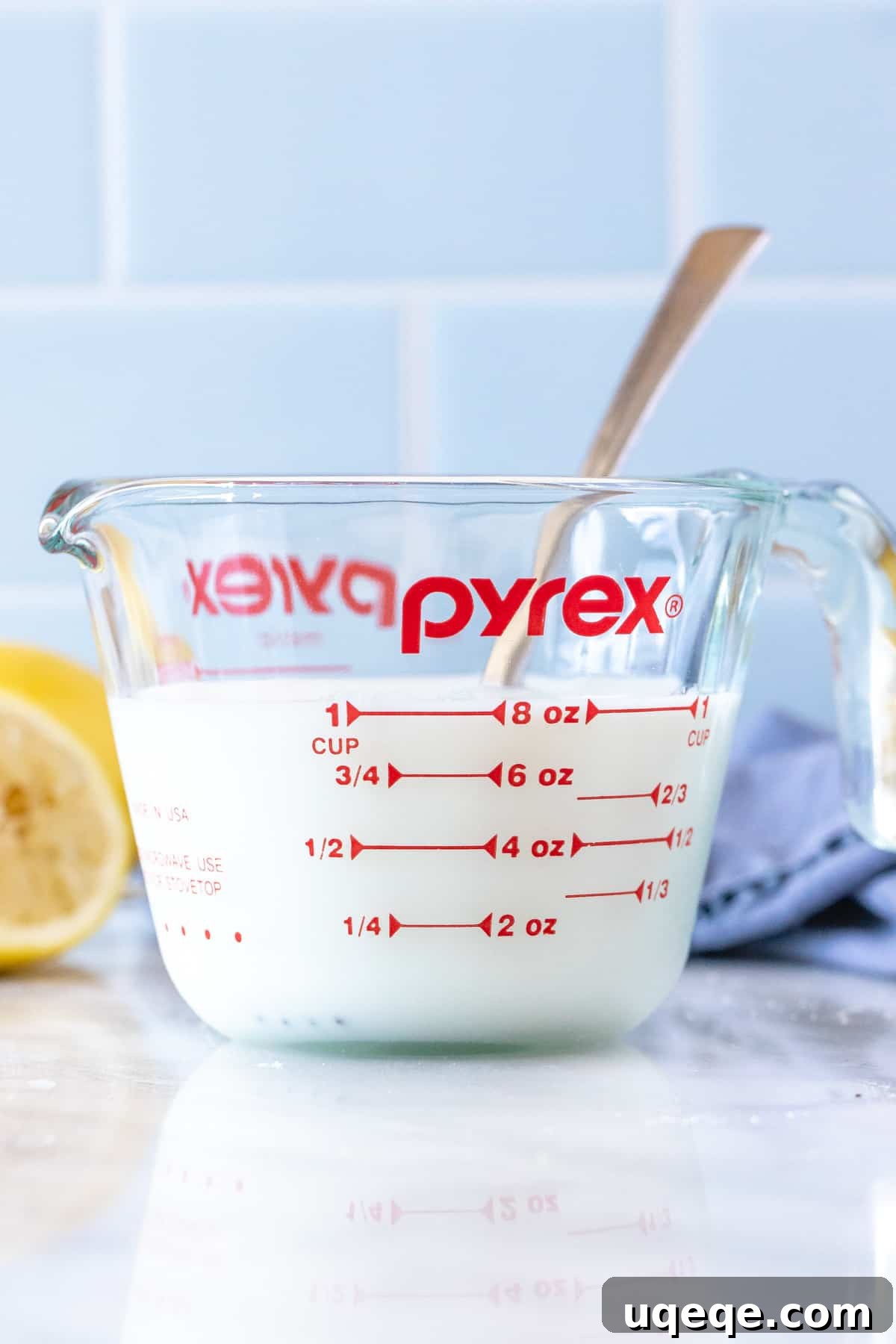
Unlock the secret to incredibly moist cakes, fluffy pancakes, and tender baked goods by learning how to make your own buttermilk at home! This simple, ingenious substitution will not only save you an emergency trip to the grocery store but also guarantee consistently delicious results in all your favorite recipes. 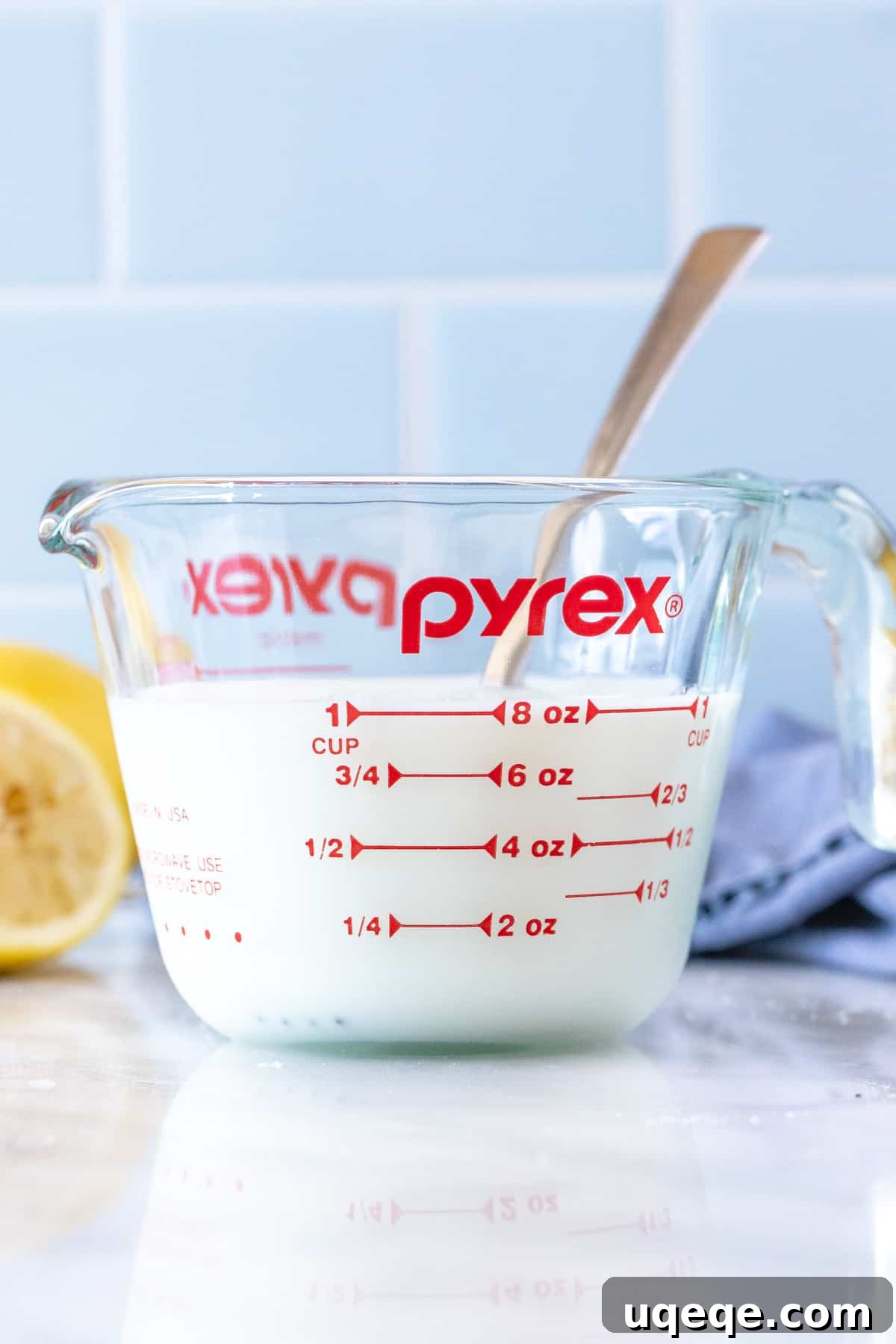
If you’ve ever embarked on a baking adventure, aiming to create irresistibly fluffy buttermilk pancakes, a decadent and super moist red velvet cake, or delightfully tender bakery-style muffins, you’ve undoubtedly encountered buttermilk on your ingredient list. This often-overlooked ingredient possesses a distinctive tangy flavor and a remarkable ability to transform ordinary baked goods into culinary masterpieces, making them exceptionally moist and tender. It’s truly a cornerstone for achieving cakes with an extra soft crumb, perfectly light scones, and sky-high pancakes, among countless other treats.
Why Buttermilk is a Baking Essential: The Science Behind the Magic
Buttermilk is far more than just soured milk; it’s a powerhouse ingredient that brings unique properties to your baking. Its acidity and specific composition contribute significantly to both the flavor and texture of your finished products. Understanding its role can elevate your baking from good to extraordinary.
What Exactly is Buttermilk? Traditional vs. Modern Production
The term “buttermilk” can sometimes be a bit misleading, especially if you’re thinking of its traditional origins. Historically, buttermilk was the thin liquid byproduct left over after churning butter from cultured cream. This traditional buttermilk was naturally rich in beneficial bacteria cultures, giving it a characteristic tangy flavor. Because the butterfat was separated to make butter, this original form of buttermilk was naturally low in fat, yet full of the microbial magic that made it so valuable.
Today’s commercially available buttermilk, however, is typically produced differently. While it still involves cultured milk, it’s not usually a byproduct of butter production. Instead, dairy producers add specific lactic acid bacteria cultures (like *Lactococcus lactis*) directly to pasteurized milk, most commonly low-fat or skim milk. These bacteria ferment the lactose (milk sugar), producing lactic acid, which gives buttermilk its signature tartness and slightly thickened consistency. This modern method ensures a consistent product with reliable acidity, making it an indispensable ingredient for contemporary bakers.
The Distinctive Qualities of Buttermilk
- Tangy Flavor: The lactic acid produced during fermentation gives buttermilk a pleasant, slightly sour, and tangy taste that adds depth and complexity to baked goods, enhancing savory dishes as well.
- Acidity: Buttermilk is acidic, typically having a pH level between 4.4 and 4.8. This acidity is crucial for its interaction with leavening agents and its impact on texture.
- Thickened Consistency: The coagulation of milk proteins due to acidity results in a thicker liquid compared to regular milk, which can affect the batter’s viscosity and final product structure.
- Lower Fat Content: Although modern buttermilk can vary, it is generally lower in fat than whole milk, making it a lighter option in many recipes.
The Unrivaled Benefits of Baking with Buttermilk
Buttermilk isn’t just an arbitrary ingredient; it plays several vital roles in the alchemy of baking. Its unique properties work synergistically to create superior results:
Enhanced Tenderness and Moisture
The acidity in buttermilk works wonders on gluten, the protein network responsible for the structure and chewiness in baked goods. By partially breaking down gluten strands, buttermilk helps to tenderize the dough or batter. This results in a softer, more delicate crumb in cakes, muffins, and quick breads. Furthermore, the very nature of buttermilk helps retain moisture, contributing to baked goods that stay fresh and succulent for longer.
Superior Leavening and Fluffiness
Perhaps buttermilk’s most celebrated role is its interaction with baking soda. Baking soda is a base (alkali), and when combined with an acid like buttermilk, it produces carbon dioxide gas. These tiny gas bubbles are trapped within the batter, expanding as they bake, causing the baked good to rise beautifully. This acid-base reaction is incredibly effective for achieving light, airy textures, such as the characteristic fluffiness in buttermilk pancakes or the impressive rise in scones and biscuits. Without buttermilk (or another acidic ingredient), baking soda would not be fully activated, leading to dense, flat results.
Distinctive Flavor Profile
Beyond texture, buttermilk imparts a subtle, pleasant tang that balances richness and adds a nuanced depth of flavor. This is particularly noticeable in recipes where buttermilk is a star, like buttermilk fried chicken, where it tenderizes the meat and adds a distinct zesty note, or in classic buttermilk ranch dressing, providing that iconic fresh taste.
Buttermilk vs. Regular Milk: Why the Substitution Matters
A common question among home bakers is whether regular milk can simply replace buttermilk. The short answer is: typically, no, unless the recipe explicitly states it. The primary reason lies in the significant difference in acidity and its impact on leavening. Regular milk is much less acidic than buttermilk, with a nearly neutral pH.
Recipes formulated with buttermilk almost always rely on its acidity to activate baking soda for leavening. If you substitute regular milk for buttermilk, the balance of acid and base will be disrupted. You’ll end up with too much unreacted baking soda, which can lead to a metallic or soapy taste in your final product, along with a poor rise. The delightful tanginess unique to buttermilk will also be absent, resulting in a blander flavor profile. For consistent and delicious results, sticking to buttermilk or a reliable substitute is paramount.
No Buttermilk? No Problem! How to Make Your Own Buttermilk Substitute at Home
It happens to the best of us: you’re halfway through a recipe, only to realize you don’t have buttermilk in the fridge. Fear not! Making a quick and effective homemade buttermilk substitute is incredibly easy and uses ingredients you likely already have on hand. While using genuine buttermilk will always yield the precise flavor and texture the recipe developer intended, this homemade version is a fantastic and reliable alternative in a pinch.
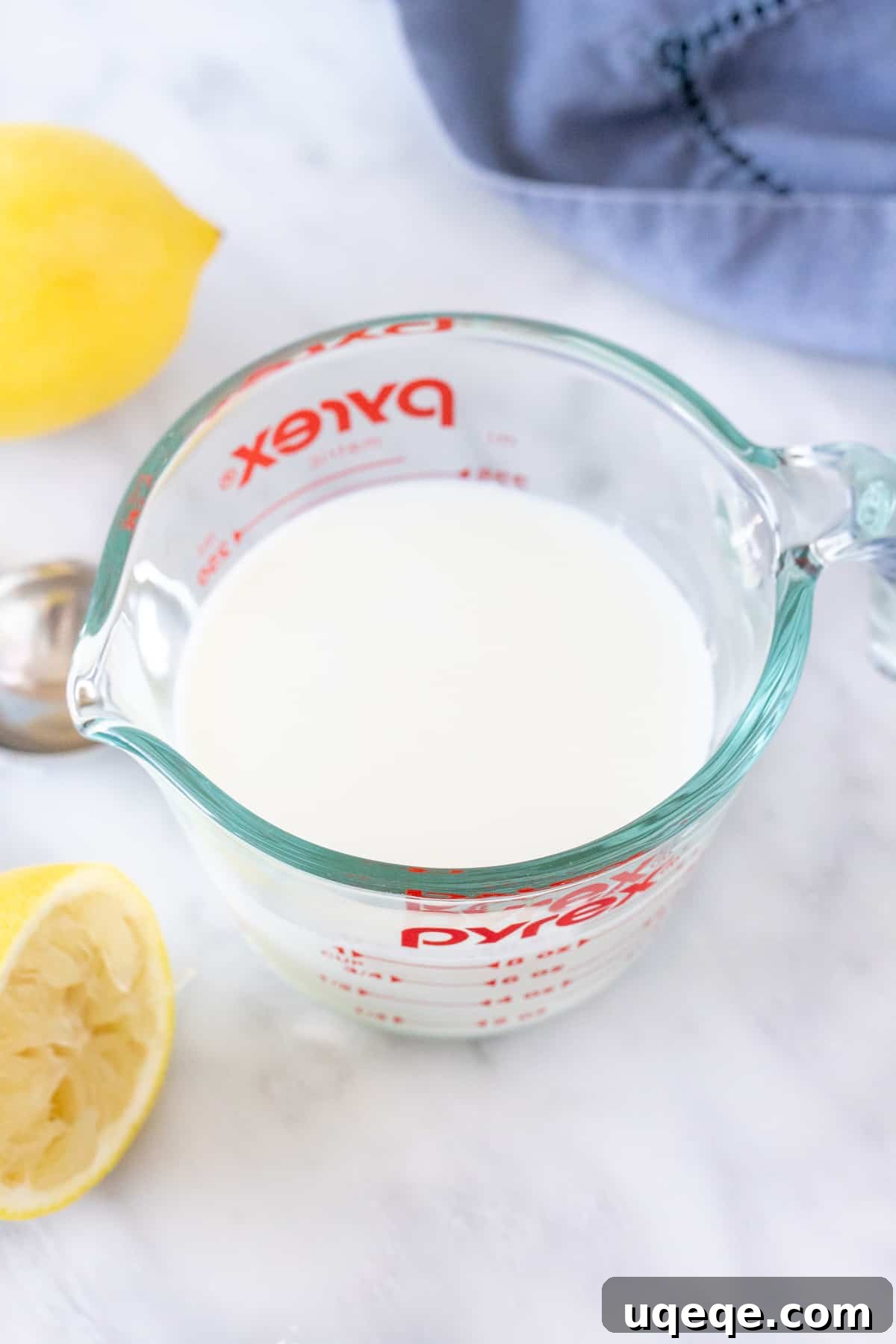
Ingredients for 1 Cup Buttermilk Substitute:
- 1 tablespoon of an acidic agent (freshly squeezed lemon juice, white vinegar, or distilled vinegar)
- Nearly 1 cup of milk (dairy or non-dairy)
Step-by-Step Instructions:
- Add Acid: Pour 1 tablespoon of your chosen acidic agent (lemon juice or vinegar) into a liquid measuring cup. Freshly squeezed lemon juice is often preferred for its brighter flavor, but white or distilled vinegar works equally well without imparting a strong flavor.
- Top with Milk: Fill the remainder of the measuring cup with milk, up to the 1-cup line (240 ml). For best results, 1% or 2% milk is ideal, but whole milk also works.
- Gently Whisk: Stir the mixture gently with a spoon or whisk to combine the acid and milk thoroughly.
- Let It Curdle: Allow the mixture to sit undisturbed for 5 to 10 minutes. During this time, the acid will react with the milk proteins, causing it to curdle slightly and thicken. You’ll notice small curds forming, and the milk will look visibly thicker, similar to authentic buttermilk.
- Use in Your Recipe: Once visibly curdled, your homemade buttermilk substitute is ready to be used just as you would regular buttermilk in your recipe.
Tips for Perfect Homemade Buttermilk Substitute:
- Milk Temperature: Room temperature milk tends to curdle faster and more effectively than cold milk. If your milk is straight from the fridge, consider warming it slightly for quicker results, but avoid making it hot.
- Acid Choice: While lemon juice and white vinegar are common, apple cider vinegar can also be used. Be aware that apple cider vinegar might impart a slight flavor, so it’s often best for recipes where its taste would be complementary.
- Don’t Over-Curdle: A slight curdling is what you’re looking for, not thick chunks. If it separates too much or smells off, it might be past its prime.
- Scaling the Recipe: Easily adjust the quantities for different amounts. For example, for ½ cup buttermilk, use ½ tablespoon (1 ½ teaspoons) acid and fill to the ½ cup line with milk. For ⅓ cup, use 1 teaspoon acid and fill to the ⅓ cup line.
Dairy-Free and Lactose-Free Options
This substitution method is remarkably versatile! I’ve personally had great success using lactose-free dairy milk. Furthermore, many readers have reported excellent results with various dairy-free alternatives such as almond milk, soy milk, and oat milk. The key is that the milk contains proteins that can be curdled by the acid. Some thinner non-dairy milks might require a slightly longer sitting time or a tiny bit more acid to achieve the desired consistency.
Embrace Buttermilk in Your Kitchen: Recipes to Try
Now that you’re a pro at making buttermilk (or its excellent substitute!), it’s time to put it to good use. Here are some of my all-time favorite recipes that truly shine with the addition of this magical ingredient:
- Red Velvet Cupcakes: Buttermilk is essential for the characteristic moist texture and subtle tang that defines these classic crimson treats.
- Double Chocolate Layer Cake: The acidity of buttermilk reacts with cocoa powder, intensifying the chocolate flavor and ensuring a rich, moist crumb.
- Fluffy Buttermilk Pancakes: The quintessential use for buttermilk! It reacts with baking soda to create incredibly light, tender, and sky-high pancakes every time.
- Chocolate Chip Muffins: Achieve that coveted bakery-style domed top and tender interior with the help of buttermilk, preventing dense, dry muffins.
- Buttermilk Biscuits: The lactic acid in buttermilk helps to create tender, flaky layers and a distinct savory flavor that makes these biscuits irresistible.
- Fried Chicken Marinade: Buttermilk tenderizes the chicken meat and infuses it with a tangy flavor, preparing it for a crispy, golden crust.
How To Make Buttermilk Substitute
By: Fiona Dowling
Learn how to make buttermilk for your pancakes, cakes, and so much more! This easy substitution will save you a trip to the grocery store and ensure that you have the most delicious results.
Prep Time: 5 mins
Total Time: 5 mins
Servings: 1 cup
Rate Recipe
Print Recipe
Equipment
- Liquid measuring cup
Ingredients
- 1 tablespoon lemon juice (15 ml), or white vinegar or distilled vinegar
- 1 cup milk (240 ml), 1% or 2% recommended
Instructions
- Add the lemon juice (or vinegar) to a liquid measuring cup.
- Pour the milk to the 1 cup line.
- Whisk together.
- Let the milk sit for 5 minutes before using in your recipe.
Notes
- Lemon Juice: For the best flavor, freshly squeezed lemon juice is recommended over bottled varieties, which can sometimes be overly sour or contain additives.
- Milk: While 1% or 2% milk (low-fat) is generally preferred for this substitute, whole milk also works. For those with dietary restrictions, lactose-free milk produces excellent results, and many readers have found success with various dairy-free milks like almond, soy, or oat milk. The key is to see slight curdling.
- Different Amounts:
- For 1/2 cup buttermilk: use 1/2 tablespoon (1 1/2 teaspoons) acid and 1/2 cup milk.
- For 1/3 cup buttermilk: use 1 teaspoon acid and 1/3 cup milk.
Nutrition (Estimated per 1 cup serving)
- Calories: 152 kcal
- Carbohydrates: 13g
- Protein: 8g
- Fat: 8g
- Saturated Fat: 5g
- Polyunsaturated Fat: 1g
- Monounsaturated Fat: 2g
- Cholesterol: 24mg
- Sodium: 105mg
- Potassium: 338mg
- Fiber: 1g
- Sugar: 13g
- Vitamin A: 396 IU
- Vitamin C: 6mg
- Calcium: 277mg
- Iron: 1mg
Nutrition details are an estimate only and based on 1 cup of 2% milk and lemon juice. Actual values may vary based on specific ingredients used.
Liked this comprehensive guide? We encourage you to rate this recipe and share your thoughts in the comments below! Your feedback helps us improve and grow our community of passionate bakers.