
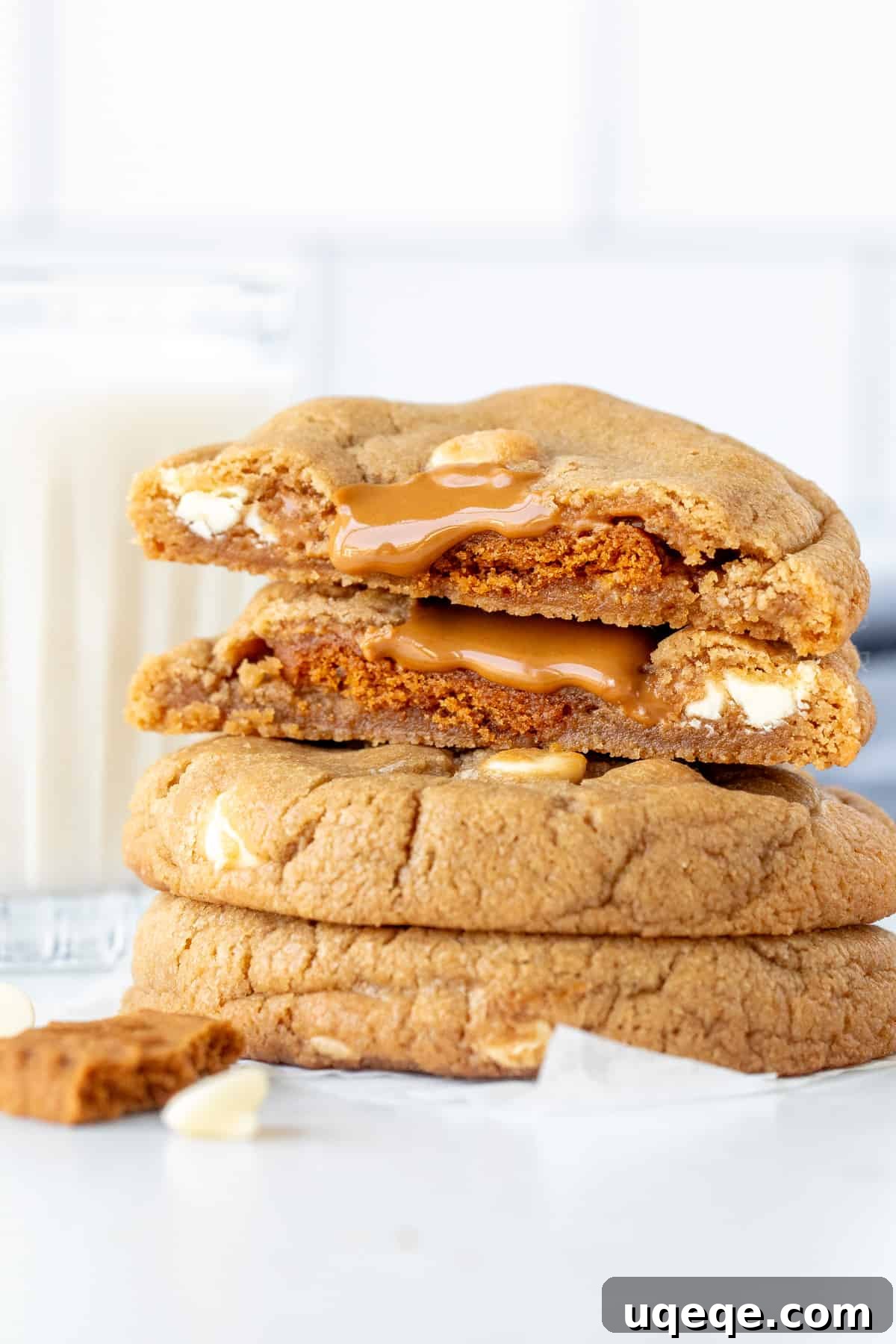
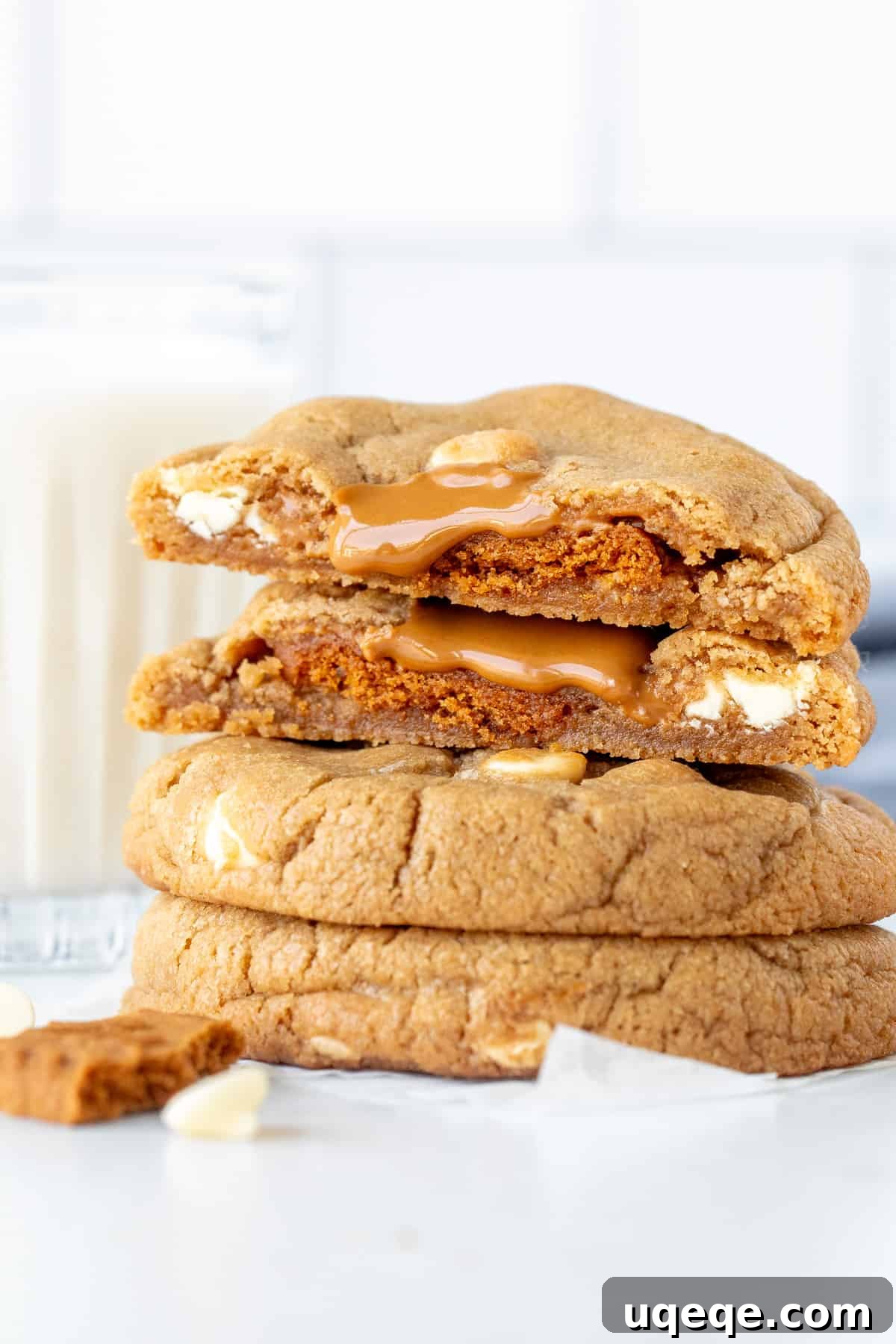
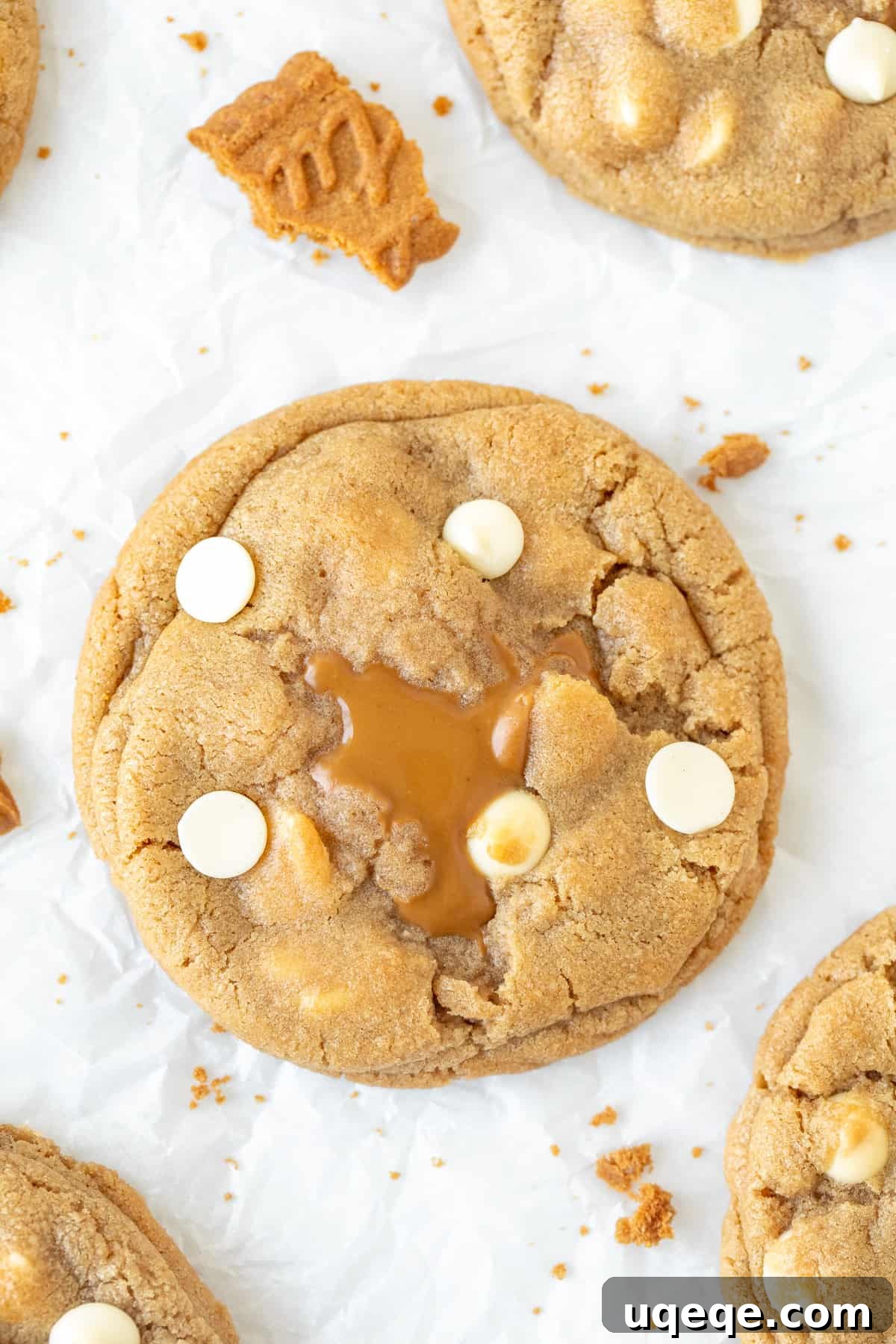
Prepare to indulge in the **ultimate Biscoff cookies**, a dream come true for anyone who adores the rich, caramelized flavor of cookie butter. These aren’t just any cookies; they are a masterpiece of texture and taste, featuring a generous amount of Biscoff cookie butter mixed directly into the dough. But the magic doesn’t stop there. Each glorious cookie is then expertly stuffed with a crunchy Lotus biscuit and an extra dollop of creamy Biscoff spread, creating an explosion of flavor in every bite. The result? Huge, decadent, bakery-style cookies loaded with sweet white chocolate chips and an irresistibly gooey, oozing cookie butter center.
Ultimate Stuffed Biscoff Cookies: A Cookie Butter Lover’s Dream
If your heart beats for the distinctive, spiced notes of cookie butter, then you simply *must* experience these extraordinary, bakery-style Biscoff cookies. Imagine biting into a giant, perfectly thick cookie, its edges lightly crisp, giving way to a wonderfully chewy interior. This delightful chewiness is infused with the warm, caramel-like essence of Biscoff, complemented by abundant white chocolate chips that melt beautifully. But the true star lies within: a hidden surprise of a crunchy Lotus cookie and a molten pool of warm Biscoff spread, ready to spill out with every tender break. These cookies are nothing short of incredible, offering a sensory journey that elevates a simple treat into an unforgettable dessert experience.
What Exactly is Biscoff Cookie Butter? A Deep Dive into Speculoos
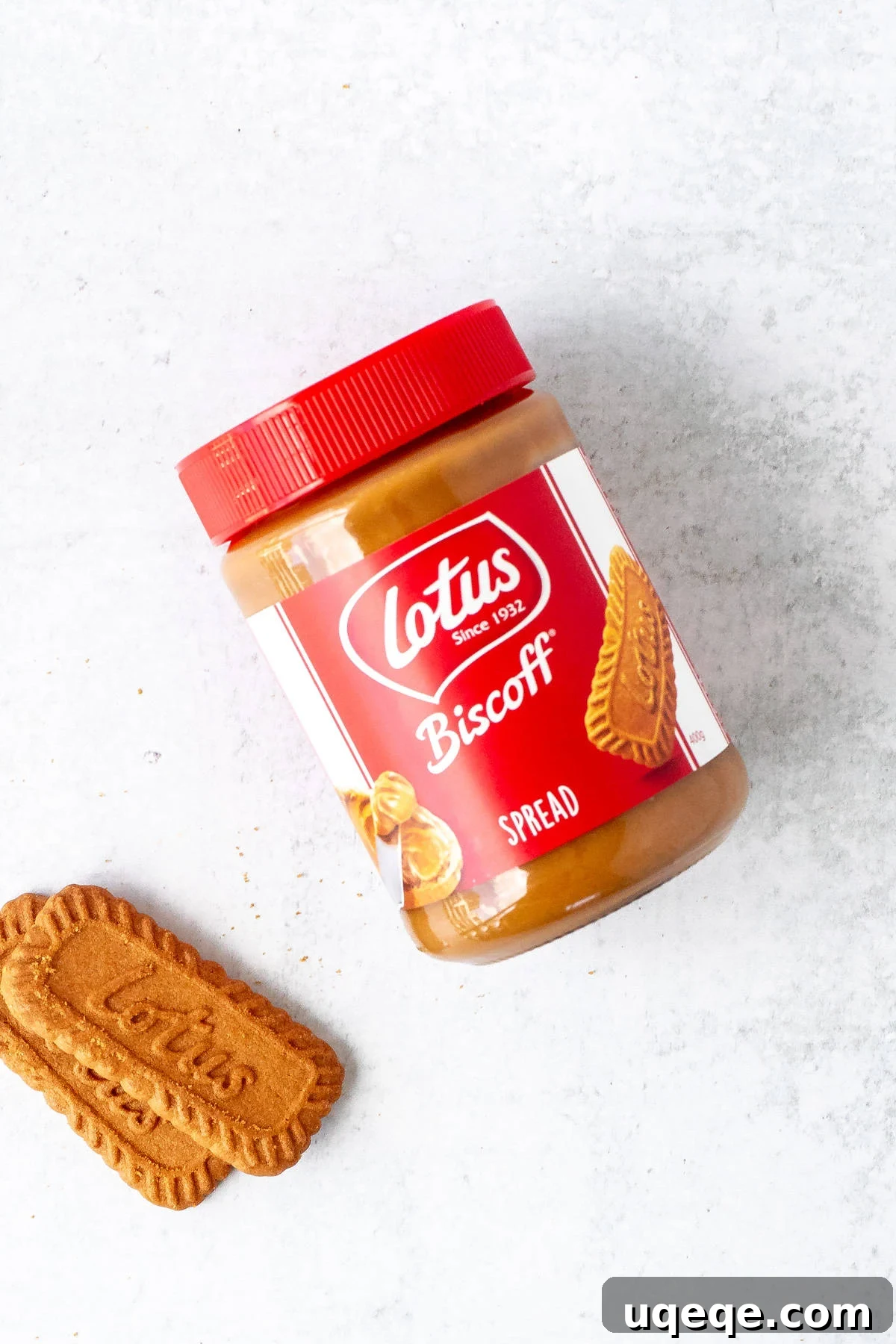
For those new to this delightful spread, let’s demystify cookie butter. At its core, cookie butter is a remarkably delicious, creamy spread crafted from crushed speculoos biscuits. Originating from Belgium, speculoos are thin, crunchy, spiced cookies renowned for their distinct caramel and cinnamon flavor profile. The most famous brand of speculoos cookie globally is Lotus Biscoff, and it’s the Lotus brand that also produces the wildly popular Biscoff spread, which is a prime example of cookie butter. This spread captures all the iconic flavors of the biscuit in a smooth, spreadable form, making it a versatile ingredient for baking, spreading on toast, or enjoying straight from the spoon. Its unique taste and texture have garnered a massive following, turning it into a beloved pantry staple for many dessert enthusiasts.
Mastering the Art of Bakery-Style Biscoff Cookies: Essential Tips for Perfection
Achieving these remarkably thick, chewy, and genuinely bakery-style Biscoff cookies requires attention to a few critical techniques and ingredients. These key elements work in harmony to ensure your cookies boast the perfect texture—crispy edges, soft, gooey centers, and that irresistible stuffed core.
The Magic of Cold Butter: A Game-Changer for Texture
- **Cold Butter:** Unlike many cookie recipes that call for softened or melted butter, this recipe specifically utilizes *cold* butter. This isn’t a mere suggestion; it’s a fundamental step that significantly impacts the final texture of your Biscoff cookies. Cold butter melts more slowly in the oven, creating steam that helps to lift the cookies, contributing to their impressive thickness. It also ensures those coveted crispy edges while maintaining an incredibly soft and almost gooey middle. There’s no need for it to be frozen solid, just cold from the refrigerator. For easier mixing and integration into the dough, cutting the cold butter into small cubes is highly recommended.
The Secret Ingredient: Cornstarch for Unrivaled Chewiness
- **Cornstarch (AKA Cornflour in the UK and Australia):** This humble pantry staple is a secret weapon for achieving truly chewy cookies. Adding cornstarch to your cookie dough helps to tenderize the proteins in the flour, resulting in a softer, more delicate crumb structure that resists drying out. It’s an essential ingredient for that signature bakery-style texture – a cookie that bends rather than breaks, delivering a satisfying chew with every bite. Don’t skip this ingredient if you’re aiming for that perfect pliable consistency.
Precision in Flour Measurement: A Game-Changer for Consistency
- **Flour:** The amount of flour in any cookie recipe is incredibly delicate. Too much flour, and your Biscoff cookies will inevitably turn out dry, dense, and crumbly, lacking the desired softness. Conversely, too little flour will result in cookies that spread excessively thin, causing the precious Biscoff filling to melt right through the dough instead of remaining a decadent, gooey pool in the center. Therefore, meticulous flour measurement is absolutely crucial. The most accurate method involves whisking your flour first to aerate it, then gently spooning it into a dry measuring cup and leveling off the top with a straight edge. For the highest level of precision, using a kitchen scale to measure flour in grams (as provided in the recipe) will yield the most consistent and accurate results, ensuring your cookies achieve their ideal structure and moistness every time.
The Non-Negotiable Step: Chilling Your Dough for Thick, Stuffed Cookies
- **Chilling the Dough:** This step is paramount for producing thick, luscious cookies, especially when they’re stuffed with a gooey filling like Biscoff spread. Through extensive recipe testing, it became clear that skipping the chilling phase leads to a significant compromise in quality. Without chilling, the cookie dough spreads too rapidly in the oven, causing the spoonful of cookie butter in the middle to flatten out considerably. Instead of a luxurious, thick pool of Biscoff, you’d end up with a thin, almost undetectable layer at the bottom of the cookie. Chilling the dough solidifies the butter, preventing excessive spreading and ensuring the cookies hold their shape, trapping that delightful Biscoff filling perfectly in the center.
Pro Tip: After preparing the dough, if you gently squeeze a small portion in your palms, it should feel soft but not sticky to your fingers. This indicates the perfect consistency for handling and stuffing.
The Stuffed Center: Assembling Your Biscoff Masterpieces
The most intricate part of crafting these sensational Biscoff cookies is precisely assembling them to ensure each giant cookie generously encases a luscious pool of cookie butter and a crunchy speculoos biscuit. Proper technique here guarantees an awe-inspiring reveal when you break open your warm, freshly baked cookie.
Prepping the Cookie Butter Filling: The Key to a Gooey Core
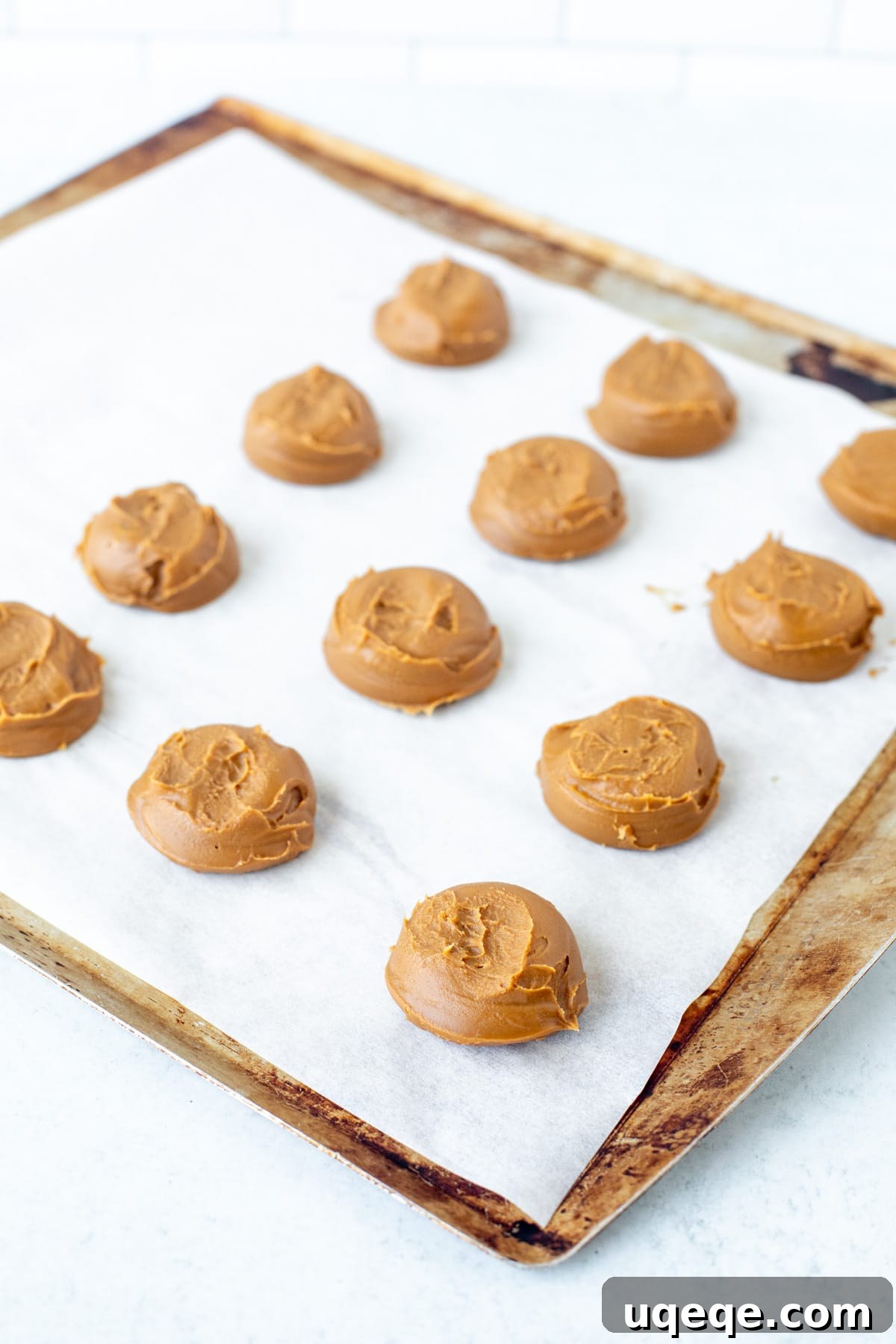
- **Step 1: Freeze Cookie Butter Dollops:** Before you even begin mixing your cookie dough, you’ll need to prepare the cookie butter filling. Spoon dollops of cookie butter—approximately 2 to 3 teaspoons (nearly 1 tablespoon) for each—onto a baking sheet lined with parchment paper or wax paper. These dollops must be thoroughly frozen until solid. This crucial step prevents the cookie butter from melting prematurely and seeping out during the assembly process, allowing it to remain a distinct, gooey center in the baked cookie. Place the baking sheet with the dollops into the freezer for at least 30-60 minutes, or until firm.
Layering for Perfection: Step-by-Step Cookie Assembly
Once your cookie butter dollops are frozen and your dough is ready, it’s time to assemble these delightful stuffed cookies:
- **Step 2: Create the Dough Base:** Take about 1.5 to 2 tablespoons of cookie dough and gently flatten it into a disc shape in the palm of your hand. This will form the base of your stuffed cookie.
- **Step 3: Add Lotus Biscuit & Frozen Cookie Butter:** Carefully place half of a Lotus Biscoff cookie on top of the flattened dough disc. Then, retrieve one of your frozen cookie butter dollops from the freezer and place it directly on top of the Lotus cookie piece. The layers from bottom to top should be: flattened cookie dough, piece of Lotus cookie, and then the frozen cookie butter dollop.
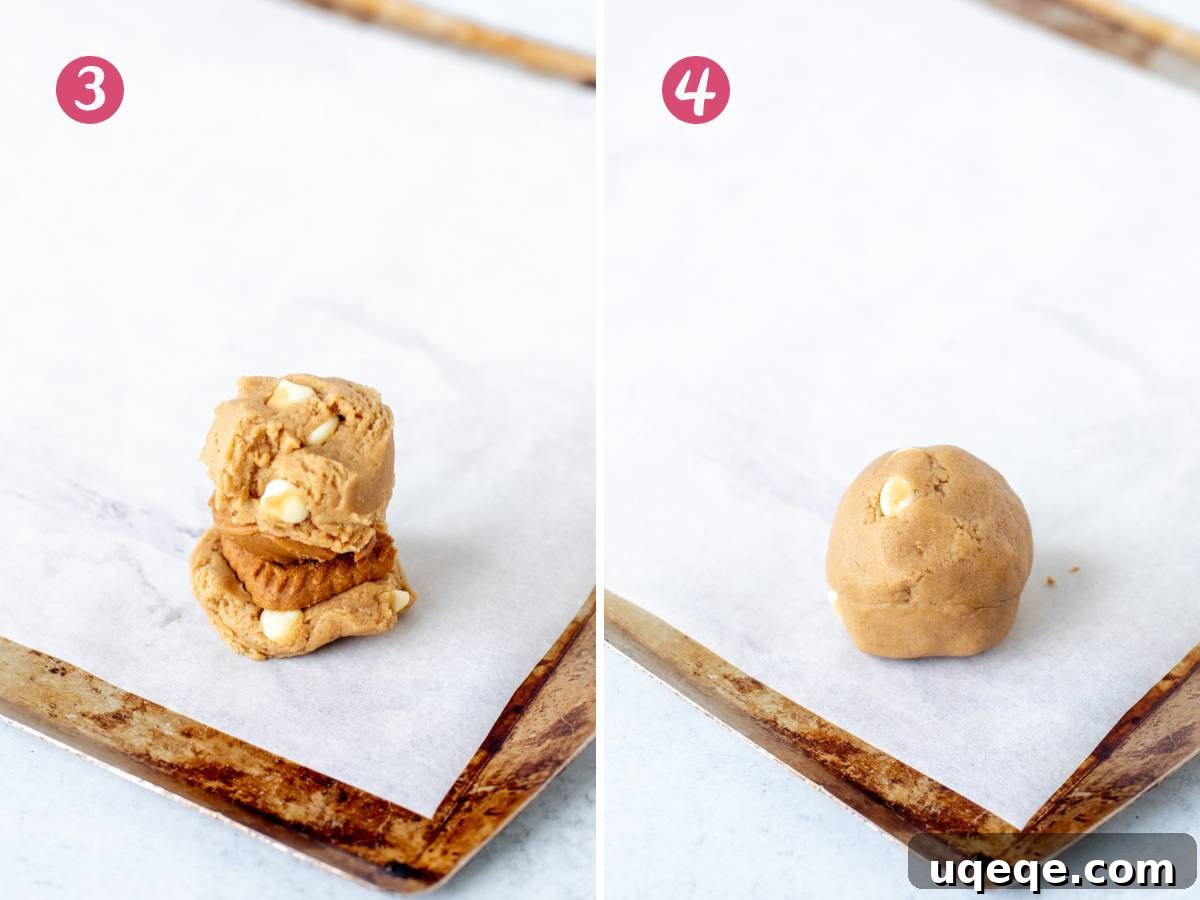
- **Step 4: Top with More Dough:** Scoop another 1.5 to 2 tablespoons of cookie dough and gently place it on top of the frozen cookie butter dollop, completely covering it.
- **Step 5: Form into a Round Ball:** Carefully pinch and seal the edges of the top dough layer with the bottom dough layer, working your way around to completely enclose the Lotus cookie and frozen cookie butter. Gently roll the entire creation into a smooth, round ball. As you do this, ensure that the Lotus cookie remains horizontal within the dough, which helps to maintain the structure of the filling.
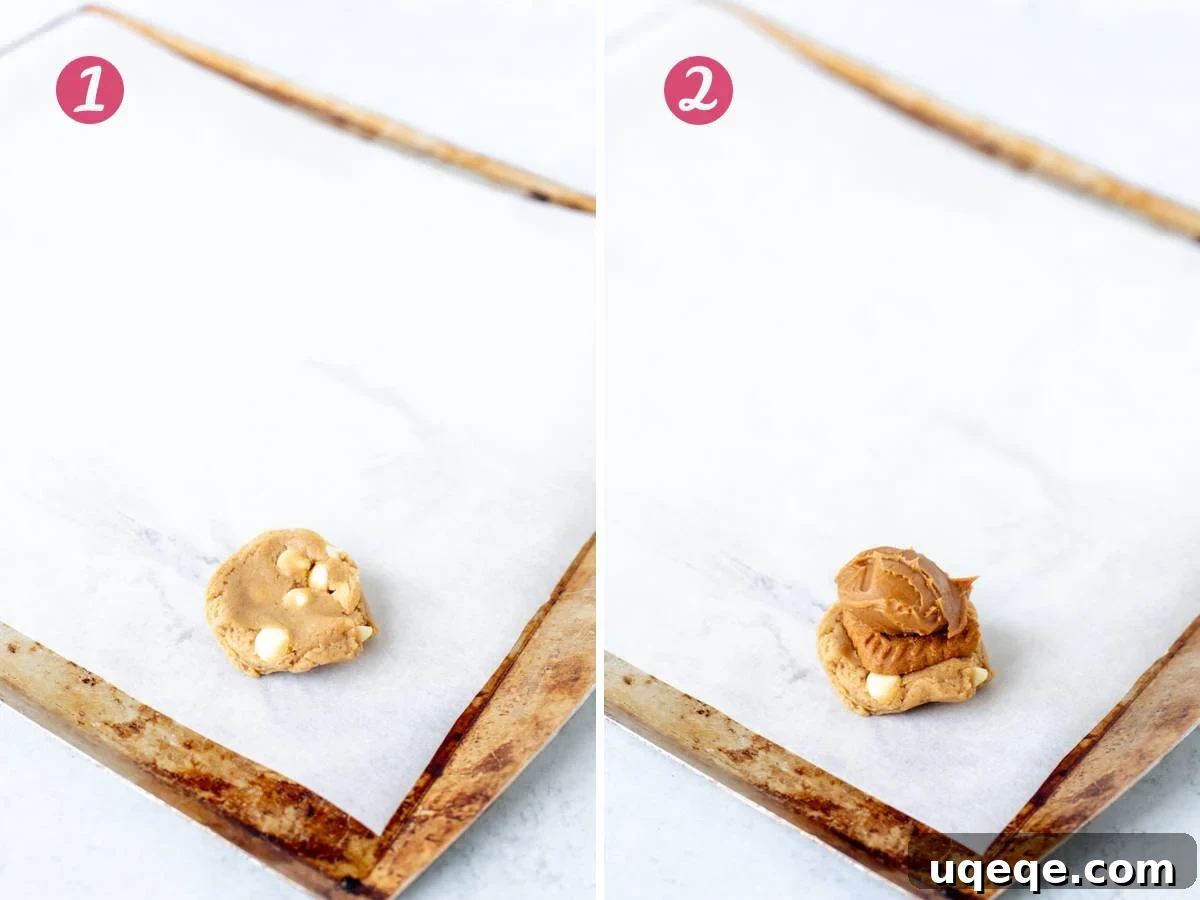
Crucial Note on Lotus Cookie Placement: It is imperative that the Lotus biscuit is positioned *underneath* the frozen cookie butter and on top of the initial dough layer. This strategic placement acts as a barrier, preventing the cookie butter from sinking or melting out of the bottom of the cookie during baking, ensuring it stays beautifully contained within its gooey pocket.
Important Tip for Assembly: If your frozen cookie butter dollops begin to soften or thaw while you are assembling multiple cookies, promptly return them to the freezer. Attempting to assemble cookies with soft, thawed cookie butter will be significantly more challenging and may compromise the integrity of the stuffing.
From Freezer to Oven: Baking Your Biscoff Stuffed Cookies to Perfection
The final stages of preparing these magnificent Biscoff stuffed cookies involve a critical freezing step and precise baking instructions to guarantee their optimal texture and a perfectly molten center.
The Essential Second Freeze
After assembling your stuffed cookie dough balls, they *must* go back into the freezer to firm up for at least 2 hours. This second freezing step is absolutely 100% necessary for this recipe. It prevents the cookies from spreading too much in the oven and ensures that the cookie butter filling remains a thick, luscious pool in the middle, rather than melting into a thin, diluted layer. Skipping this step will result in flatter cookies with a less impressive stuffed center.
For convenience, you can prepare the cookie dough balls, freeze them, and then transfer them to a freezer-safe bag. They can be stored in the freezer for up to 2 months, ready to be baked whenever a craving strikes. This makes them perfect for meal prepping desserts or having a fresh, warm cookie on demand.
Baking for Optimal Texture and Gooeyness
- **Preheat & Arrange:** When you’re ready to bake, preheat your oven to 350°F (180°C). Line two baking sheets with parchment paper or silicone baking mats. Take the frozen cookie dough balls directly from the freezer and place them on the lined baking sheets, ensuring they are spaced about 2.5 inches (approximately 6 cm) apart to allow for proper spreading. **Do not thaw the cookie dough balls before baking.**
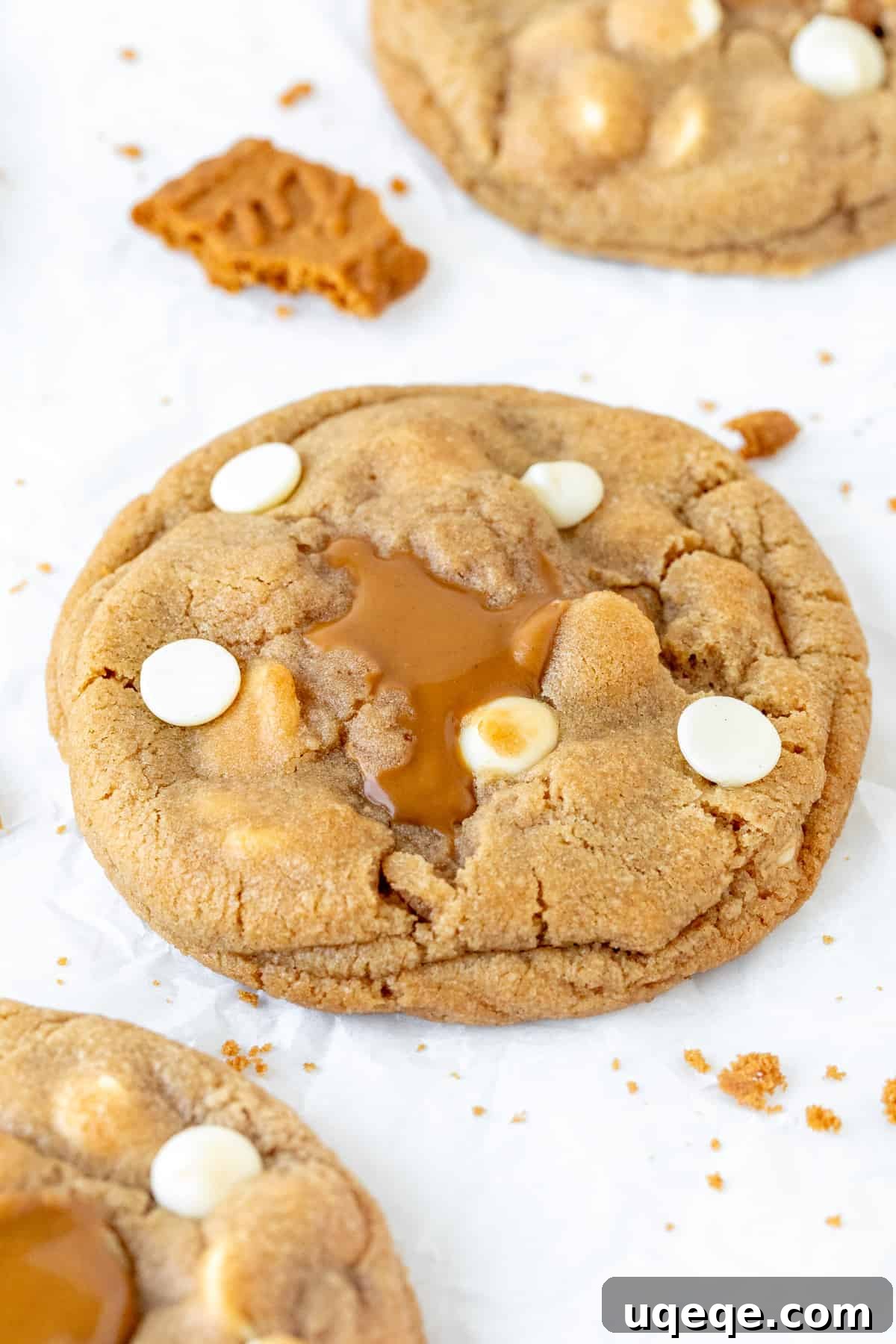
- **Baking Time:** Bake one sheet at a time in the middle of the preheated oven for approximately 13-16 minutes. The exact time may vary slightly depending on your oven, so keep an eye on them. The cookies are done when their tops appear just set, and the edges are lightly golden. You might even notice some of that delicious Biscoff cookie butter beginning to gently ooze out from the center – a sign that perfection is near!
- **Cooling & Finishing Touches:** Once out of the oven, allow the Biscoff cookies to cool on the baking sheets for at least 10 minutes. This crucial cooling period allows them to set up properly before you attempt to move them, preventing them from falling apart. After 10 minutes, carefully transfer them to a wire rack to finish cooling completely. For an extra touch of decadence and visual appeal, consider pressing a few additional white chocolate chips onto the warm tops of each cookie immediately after they come out of the oven; the residual heat will melt them slightly, creating a beautiful finish.
Scaling Down: Making Smaller Biscoff Cookies (Without the Stuffing)
While the stuffed, bakery-style Biscoff cookies are undeniably magnificent, sometimes a smaller, simpler treat is desired. If you wish to make smaller Biscoff cookies, simply scoop the dough into balls, using approximately 1.5 to 2 tablespoons of dough for each. Due to their reduced size, these smaller cookies will not be able to accommodate the stuffed cookie butter and Lotus biscuit filling without becoming unstable or too messy. The good news is that for these unstuffed versions, you won’t need to go through the freezing steps for the dough balls. Simply bake these smaller dough balls in a preheated oven at 350°F (180°C) for about 8-11 minutes, or until their tops are just set and the edges are lightly golden. They will still deliver that wonderful Biscoff flavor and a satisfying chew, just in a more compact form.
From their impressive size and chewy texture to their rich Biscoff-infused dough, generous white chocolate chips, and that sensational, oozing cookie butter core, these Biscoff cookies might just be the epitome of cookie perfection. If your affection for Biscoff runs deep, you absolutely must try this recipe. And for more ways to enjoy this beloved flavor, be sure to explore our delectable Biscoff brownies. If you’re a fan of the stuffed cookie concept, don’t miss out on these other fantastic recipes:
- Nutella Stuffed Chocolate Chip Cookies
- Reese’s Stuffed Chocolate Chip Cookies
- Reese’s Stuffed Double Chocolate Cookies
Recipe Card: Ultimate Stuffed Biscoff Cookies

Yields: 12 large cookies
Prep Time: 30 minutes
Cook Time: 14 minutes
Freezing Time: 2 hours (minimum)
Total Time: Approximately 3 hours (including freezing)
Ingredients
- For the Frozen Cookie Butter Filling:
- 2/3 cup cookie butter (e.g., Lotus Biscoff spread)
- For the Biscoff Cookie Dough:
- 1/2 cup (112 grams) unsalted butter, cold and cut into cubes
- 1/2 cup (105 grams) brown sugar, light or dark
- 1/2 cup (100 grams) granulated sugar
- 1 large egg, cold (straight from the fridge)
- 1 teaspoon vanilla extract
- 1/3 cup cookie butter (e.g., Lotus Biscoff spread)
- 1 3/4 cups (219 grams) all-purpose flour
- 2 teaspoons cornstarch (also known as cornflour)
- 1/2 teaspoon baking soda
- 1/2 teaspoon baking powder
- 1/4 teaspoon salt
- 2/3 cup (120 grams) white chocolate chips, plus extra for topping (optional)
- For Stuffing:
- 24 Lotus Biscoff cookies (equivalent to 12 whole cookies, broken in half)
Equipment
- Cookie Sheets (at least 2)
- Parchment Paper or Silicone Baking Mats
- Large Mixing Bowl
- Electric Mixer (stand mixer or hand-held)
Instructions
- Prepare Frozen Cookie Butter Filling: Line a cookie sheet or plate with wax paper or parchment paper. From the 2/3 cup of cookie butter, drop small dollops onto the lined sheet. Each dollop should be about 1 to 2 teaspoons (ensure you have about 12-14 in total). Place the sheet in the freezer until the cookie butter dollops are solid.
- Make the Cookie Dough (Wet Ingredients): In a large mixing bowl, using an electric mixer, beat together the cold cubed butter, brown sugar, and granulated sugar until well combined and no lumps of butter remain.
- Incorporate Wet Additions: Beat in the cold large egg, vanilla extract, and the 1/3 cup of cookie butter until fully incorporated and smooth.
- Add Dry Ingredients: In a separate bowl, whisk together the all-purpose flour, cornstarch, baking soda, baking powder, and salt. Gradually add the dry ingredients to the wet ingredients, starting the mixer on a low speed to avoid a flour cloud, then increasing speed until just combined. Be careful not to overmix.
- Fold in Chocolate Chips: Stir in the 2/3 cup of white chocolate chips. You may wish to reserve a few tablespoons to press onto the tops of the baked cookies for a prettier finish.
Assembling Your Stuffed Cookies:
- Flatten Dough Base: Take about 1.5 to 2 tablespoons of cookie dough and flatten it slightly into a disc in your palm.
- Layer Lotus & Frozen Cookie Butter: Break a Lotus cookie in half or thirds and place one piece on top of the flattened dough disc. Then, place one frozen spoonful of cookie butter on top of the Lotus cookie piece. The order should be: flattened dough, Lotus piece, then frozen cookie butter.
- Top with More Dough: Scoop another 1.5 to 2 tablespoons of cookie dough and place it on top of the frozen cookie butter spoonful, completely covering it.
- Form into Balls: Carefully pinch the edges of the top dough layer around the sides of the cookie dough ball and roll it gently into a round ball, fully enclosing the filling. Ensure the Lotus cookie remains horizontal inside.
- Freeze Assembled Dough Balls: Cover the assembled cookie dough balls with plastic wrap and place them in the freezer for at least 2 hours. This step is crucial!
Baking Your Biscoff Cookies:
- Preheat Oven & Prep Sheets: When ready to bake, preheat your oven to 350°F (180°C). Line two cookie sheets with parchment paper or silicone baking mats.
- Arrange on Trays: Place the frozen cookie dough balls at least 2.5 inches (about 6 cm) apart on the lined cookie sheets. Do not thaw the dough balls before baking.
- Bake from Frozen: Bake one cookie sheet at a time in the middle of the preheated oven for about 13-16 minutes, or until the tops look just set and the edges are lightly golden. The cookie butter may begin to ooze out, which is a good sign!
- Cool & Serve: Cool the baked cookies on the cookie sheets for at least 10 minutes before carefully transferring them to a wire rack to finish cooling. Optionally, immediately after removing them from the oven, press a few extra white chocolate chips onto the warm tops of each cookie for a delightful presentation.
Recipe Notes
- Cookie Butter Choice: While any non-separating cookie butter will work, the Lotus brand Biscoff cookie butter is highly recommended for its authentic flavor. One 14.1-ounce (400-gram) jar is generally sufficient for this entire recipe.
- Cold Butter Advantage: This recipe is specifically designed to use cold butter. This method is key to achieving cookies with subtly crispier edges and wonderfully gooey, soft centers.
- Accurate Flour Measurement: To prevent dry cookies, measure your flour with precision. Whisk the flour first to aerate it, then spoon it into dry measuring cups and level off the top. For the most accurate results, use a kitchen scale to measure flour in grams.
- Freezing is Essential: Freezing the cookie dough balls, both the initial dollops and the assembled cookies, is 100% necessary for this recipe’s success. Do not thaw them before baking.
- Smaller Cookies Adaptation: If you prefer smaller cookies, scoop about 1.5 tablespoons of dough per ball. These will be too small to stuff with cookie butter. For smaller, unstuffed cookies, you will not need to freeze the dough balls. Bake them for 8-10 minutes in a preheated oven at 350°F (180°C).
- Storage & Make-Ahead Tips: Unbaked, frozen cookie dough balls can be stored in a freezer bag for up to 2 months. Bake directly from frozen as instructed. Baked and cooled cookies should be stored in an airtight container at room temperature for up to 4 days, though fresh cookies are always best.
- Nutrition Disclaimer: The nutritional details provided below are an estimate only. They are based on one cookie, assuming the recipe yields 12 uniformly sized large cookies.
Nutrition Information (per cookie, estimated)
- Calories: 382kcal
- Carbohydrates: 48g
- Protein: 4g
- Fat: 19g
- Saturated Fat: 9g
- Polyunsaturated Fat: 1g
- Monounsaturated Fat: 3g
- Trans Fat: 0.3g
- Cholesterol: 38mg
- Sodium: 113mg
- Potassium: 86mg
- Fiber: 1g
- Sugar: 30g
- Vitamin A: 262IU
- Vitamin C: 0.05mg
- Calcium: 42mg
- Iron: 1mg