
The Ultimate Moist and Fluffy Coconut Cupcakes with Creamy Coconut Frosting
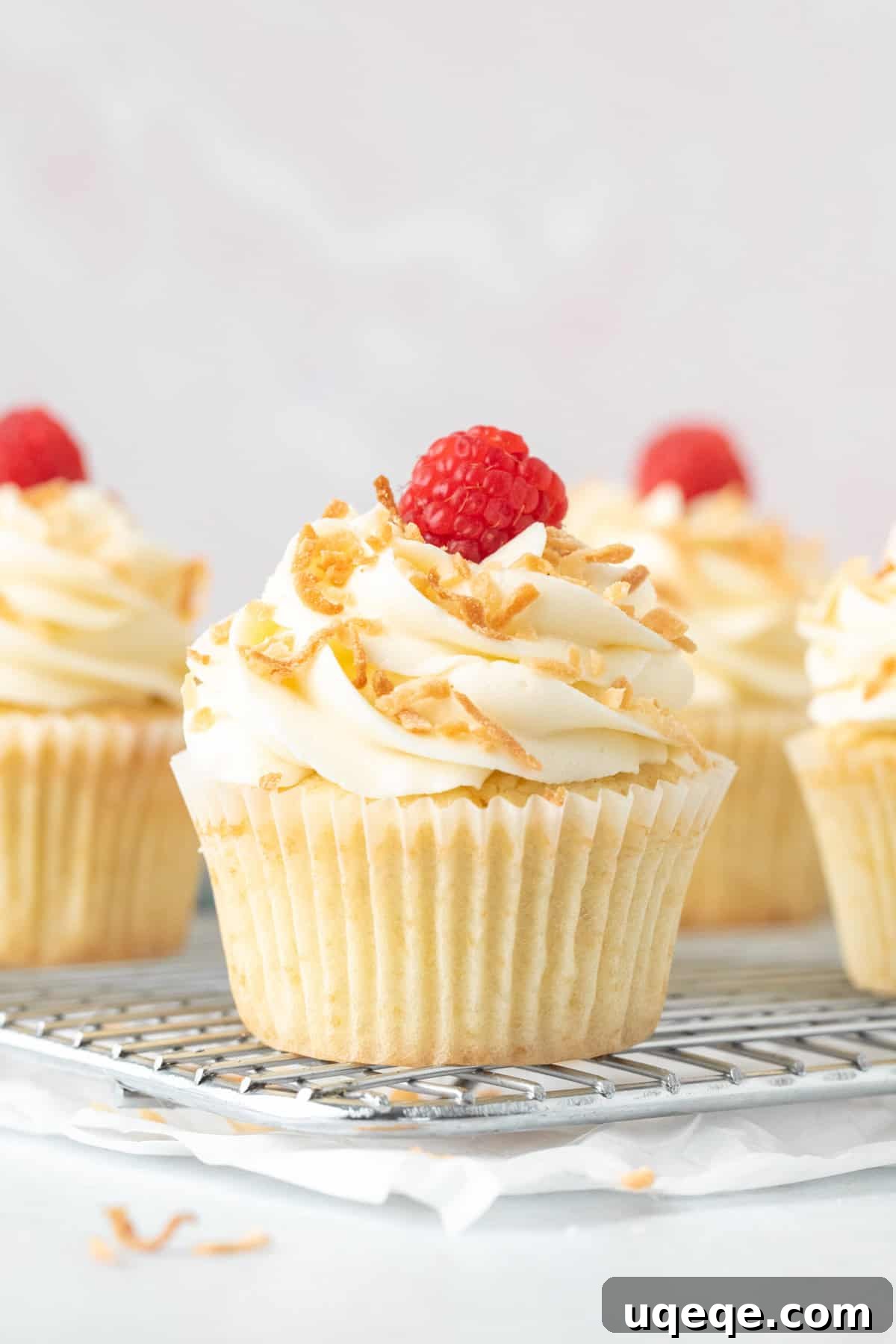
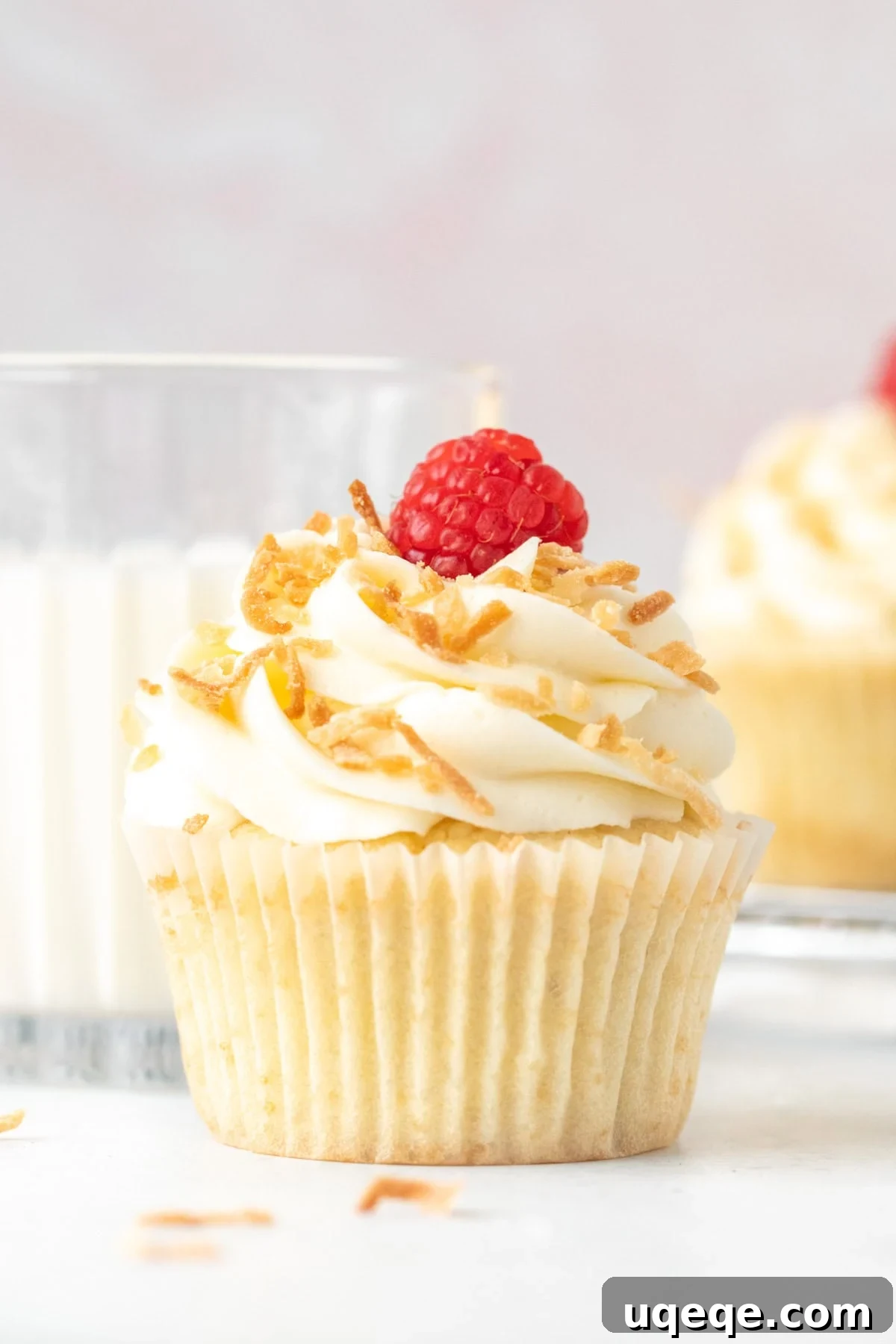
Indulge in the delightful taste of the tropics with these exquisite coconut cupcakes. Each cupcake is a masterpiece of baking – wonderfully moist, incredibly fluffy, and bursting with an authentic, rich coconut flavor that sets them apart from anything store-bought. What truly makes this recipe special is its commitment to real coconut; no artificial extracts are needed to achieve that vibrant, natural taste. Topped with generous swirls of a luxurious, creamy coconut frosting and garnished with a sprinkle of golden toasted coconut, these cupcakes are as beautiful to behold as they are delicious to eat. They are destined to become a beloved favorite for any occasion, from casual family desserts to elegant parties.
These coconut cupcakes offer a delicate, tender crumb that melts in your mouth, providing a light and airy experience. The coconut flavor is perfectly balanced, sweet without being overly rich, allowing the pure essence of coconut to shine through. This depth of flavor is meticulously crafted by incorporating both finely shredded coconut and rich coconut milk directly into the cupcake batter. The combination ensures every bite is infused with a sweet, tropical essence. The experience culminates with a creamy, dreamy coconut frosting, providing a delightful contrast in texture and an intensified coconut aroma. The fluffy texture of the cake, paired with the smooth, tropical frosting and the subtle crunch of toasted coconut, creates an unforgettable dessert experience that will transport you to a culinary paradise.
Crafting the Perfect Coconut Flavor Profile: Understanding Your Ingredients
Achieving a truly exceptional coconut flavor is at the heart of this recipe. We rely on genuine coconut ingredients, chosen for their ability to deliver rich, natural taste without any artificial undertones. Let’s dive into the specifics of these essential components to ensure your baking journey is a success.
Finely Shredded Coconut: The Key to a Smooth Crumb
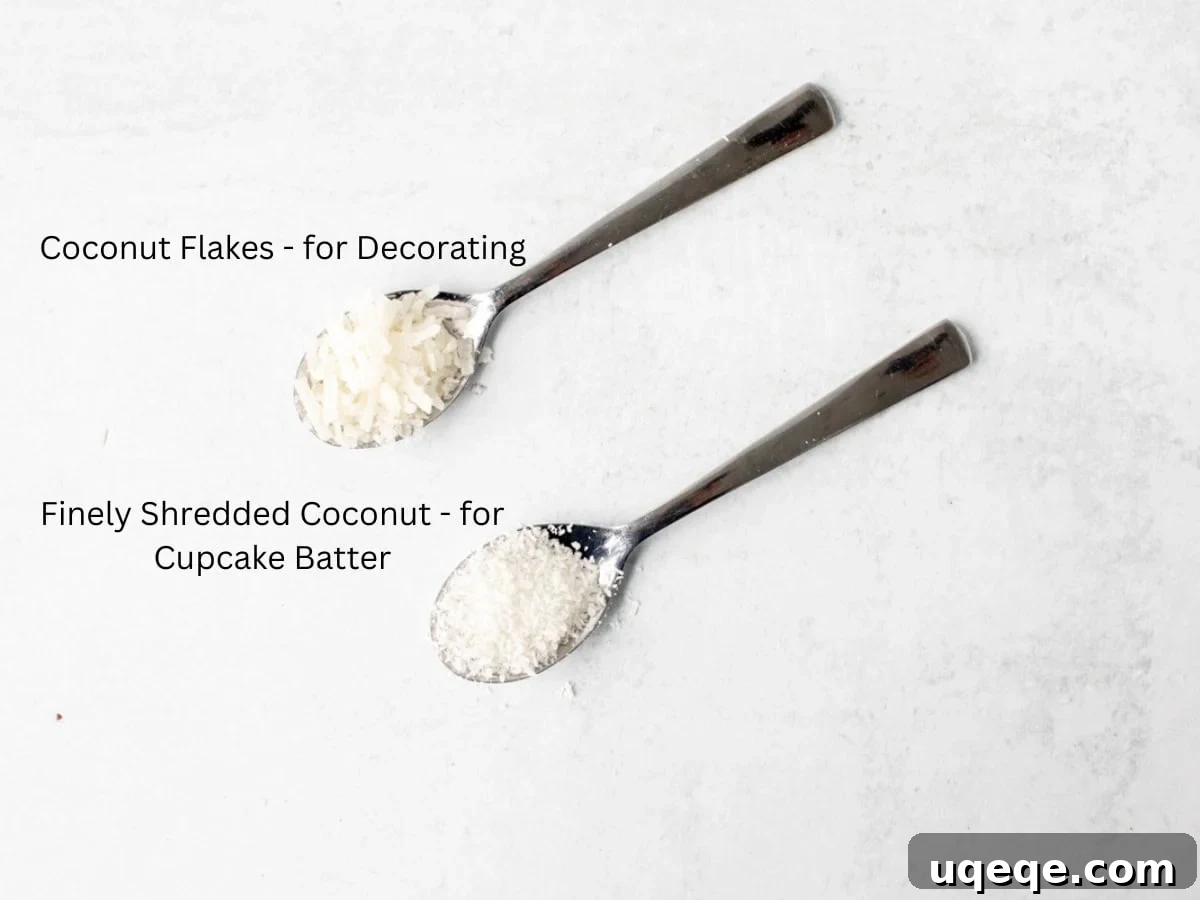
As previously mentioned, finely shredded, sweetened coconut is a crucial ingredient in our cupcake batter. This type of coconut, often called desiccated coconut, is preferred because its fine texture integrates seamlessly into the batter. Unlike larger coconut flakes, which can add a chewy texture (desirable in some desserts but not for these light cupcakes), finely shredded coconut behaves almost like an additional dry ingredient, contributing to a consistently moist and tender crumb without visible chunks. It distributes evenly, ensuring every part of your cupcake is infused with sweet coconut goodness.
Should you only have regular shredded coconut or larger flakes available, there’s no need to worry. You can easily achieve the desired finely shredded consistency by placing the coconut in a food processor and pulsing it a few times. Process until the flakes are noticeably smaller and resemble the texture of fine crumbs. Remember to measure the required 1/2 cup *after* pulsing, as the volume may change slightly. This simple preparation step is vital for the optimal texture and even flavor distribution of your coconut cupcakes.
Decoding Coconut Liquids: Milk, Cream, and More
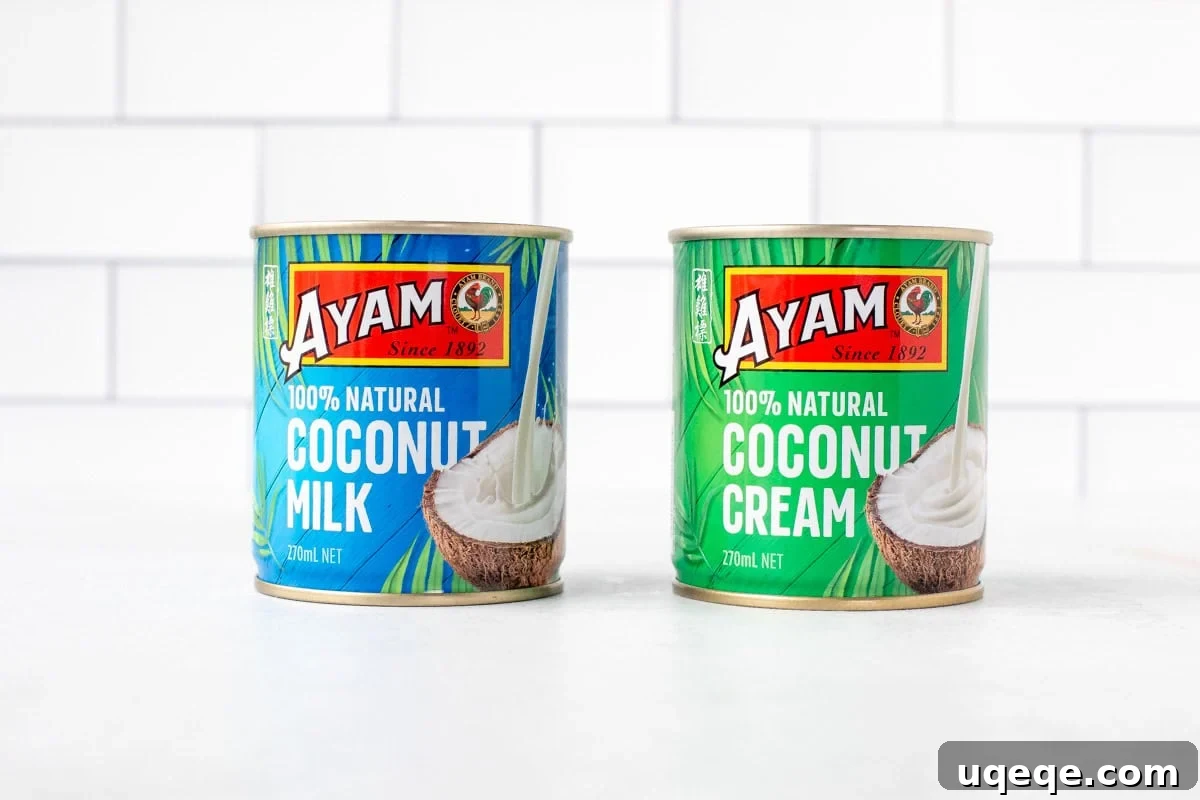
Another essential element contributing to the rich flavor of these cupcakes is coconut milk, used generously in the batter. It is imperative to understand the distinctions between the various coconut products found in grocery stores to ensure you select the correct ingredient for this recipe.
- Coconut Milk: This is the white, opaque liquid extracted from the grated meat of mature coconuts. It typically comes in a small can and has a creamy, somewhat thick consistency. When refrigerated, it often separates into a dense cream layer at the top and a thinner liquid layer below. Coconut milk is widely used in many Asian and tropical cuisines for both savory dishes like curries and sweet applications. You’ll usually find it in the international foods aisle of your supermarket.
- Coconut Water: Often mistaken for coconut milk, coconut water is the clear, thin liquid naturally found inside young, green coconuts. It’s refreshing and hydrating, commonly sold as a beverage in the drinks aisle. However, it lacks the fat content and rich flavor necessary for baking applications and should not be used as a substitute for coconut milk in this recipe. Using coconut water will result in a watery batter and bland, dry cupcakes.
- Coconut Cream: For the ultimate creamy coconut frosting, we turn to coconut cream. This product is a more concentrated version of coconut milk, boasting a higher fat content and a significantly thicker consistency. It also comes in a can and can typically be found next to coconut milk. Its richness is perfect for creating a stable, luscious frosting that pipes beautifully and delivers an intense, satisfying coconut flavor. While full-fat coconut milk can be used for the frosting if coconut cream is unavailable, the frosting will be slightly less thick and the coconut flavor a bit milder. If substituting with coconut milk for frosting, make sure to chill the can overnight and scoop out only the thick, solidified cream from the top, leaving the watery liquid behind.
Critical Warning: Absolutely avoid using “cream of coconut” or “coconut syrup” for this recipe. These products are heavily sweetened, thick, and syrupy, primarily designed for tropical cocktails. Their excessive sugar content and specific consistency are entirely unsuitable for both the cupcake batter and the frosting, which would result in an overly sweet, dense, and potentially sticky final product.
Essential Baking Tips & Tricks for Flawless Coconut Cupcakes
Baking can be both an art and a precise science. Mastering a few fundamental techniques will ensure your homemade coconut cupcakes rival those from a professional bakery. Follow these expert tips closely to guarantee your cupcakes are consistently moist, perfectly fluffy, and utterly delicious every single time you bake them.
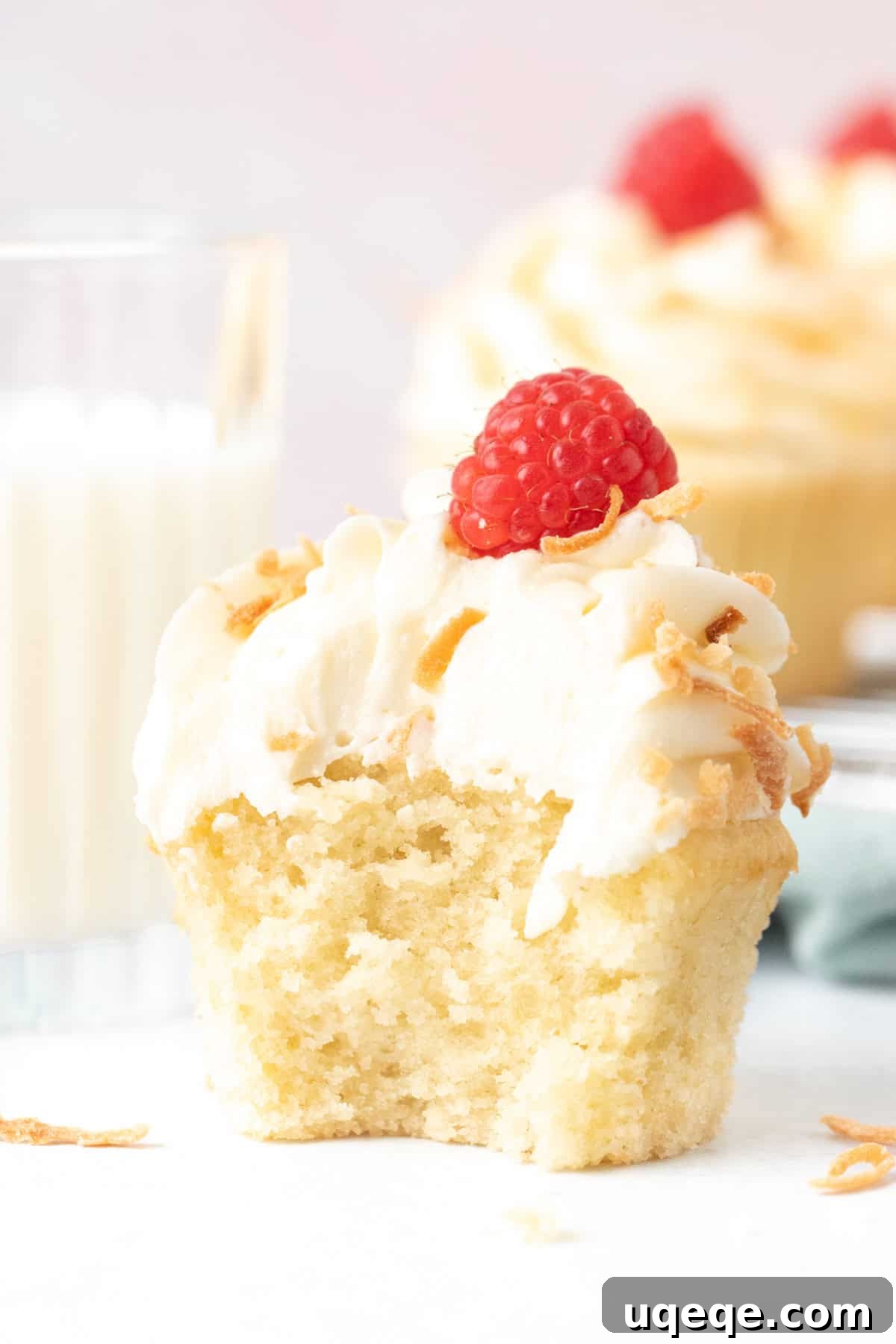
- The Importance of Finely Shredded Coconut: We cannot stress enough the importance of using finely shredded sweetened coconut (also known as desiccated coconut) for the cupcake batter. Its fine texture allows it to blend seamlessly, almost like flour, into the batter, ensuring a uniform, moist crumb. Using large coconut flakes will introduce an unwanted chewy texture and potentially make the batter too wet or lumpy. If you only have larger flakes, simply pulse them a few times in a food processor until finely shredded, then measure your 1/2 cup.
- Room Temperature Butter and Eggs are Crucial: For the best results, ensure your butter and eggs are at room temperature before you start mixing. Room temperature butter creams beautifully with sugar, creating a light, airy, and stable emulsion that traps air. This trapped air is fundamental for contributing to the cupcakes’ incredibly light and fluffy texture. Cold ingredients, on the other hand, will not emulsify properly, leading to a denser, heavier cupcake. Plan ahead and take them out of the refrigerator at least 30-60 minutes before you begin baking.
- Always Shake Coconut Milk Well: Before measuring your coconut milk, vigorously shake the can. Coconut milk naturally separates, with a thick layer of cream rising to the top. Shaking ensures the fat and liquid components are fully recombined, providing a consistent richness and moisture level for your batter. Neglecting this step could result in an imbalanced batter – either too watery or too fatty – which will affect the final texture of your cupcakes.
- Avoid Overfilling Cupcake Liners: This recipe is calibrated to yield 12 perfectly portioned cupcakes. To achieve uniform results and prevent overflowing, fill each cupcake liner approximately 2/3 to 3/4 full. Overfilling leads to excessively domed tops, potential spillage in the oven, and an uneven, sometimes dense, crumb structure. If you find yourself with too much batter and end up with fewer than 12 cupcakes, it’s a clear indication that you’ve overfilled your liners. An ice cream scoop can be a helpful tool for consistent portioning.
- Perfectly Toasting Coconut for Garnish: Toasted coconut adds a beautiful golden hue and intensifies the nutty, sweet notes of coconut, making for an irresistible garnish. To toast, preheat your oven to 350°F (180°C). Spread an even, thin layer of sweetened shredded coconut onto a baking sheet. Bake for approximately 5-10 minutes, or until the coconut achieves a lovely golden-brown color. It is vital to watch the coconut constantly and stir it halfway through, as it can go from perfectly toasted to burnt within seconds. Once toasted, remove it immediately from the hot baking sheet and spread it on a cool plate to stop the cooking process. Allow it to cool completely before decorating your cupcakes, as warm coconut will melt the frosting. Consider adding a fresh raspberry on top for an extra pop of color and a hint of fruity brightness.
- Prevent Overmixing the Batter: Once you begin incorporating the dry ingredients into the wet mixture, mix only until they are just combined. Overmixing the batter develops the gluten in the flour, which can lead to tough, chewy, and dense cupcakes rather than the desired light and tender crumb. Use a low speed on your mixer and stop as soon as all dry streaks disappear. Scrape down the sides and bottom of the bowl with a spatula to ensure everything is evenly incorporated without unnecessary beating.
- Cool Cupcakes Completely Before Frosting: Patience is a virtue in baking, especially when it comes to frosting. Resist the temptation to frost warm cupcakes! The heat will instantly melt your beautiful, creamy frosting, creating a runny, messy result. Allow the baked cupcakes to cool in the muffin pan for at least 5-10 minutes after removing them from the oven. This helps them firm up and makes them easier to handle. Then, carefully transfer them to a wire rack and let them cool completely to room temperature. This usually takes 30-60 minutes, depending on your kitchen’s temperature, but it’s a critical step for perfect frosting application.
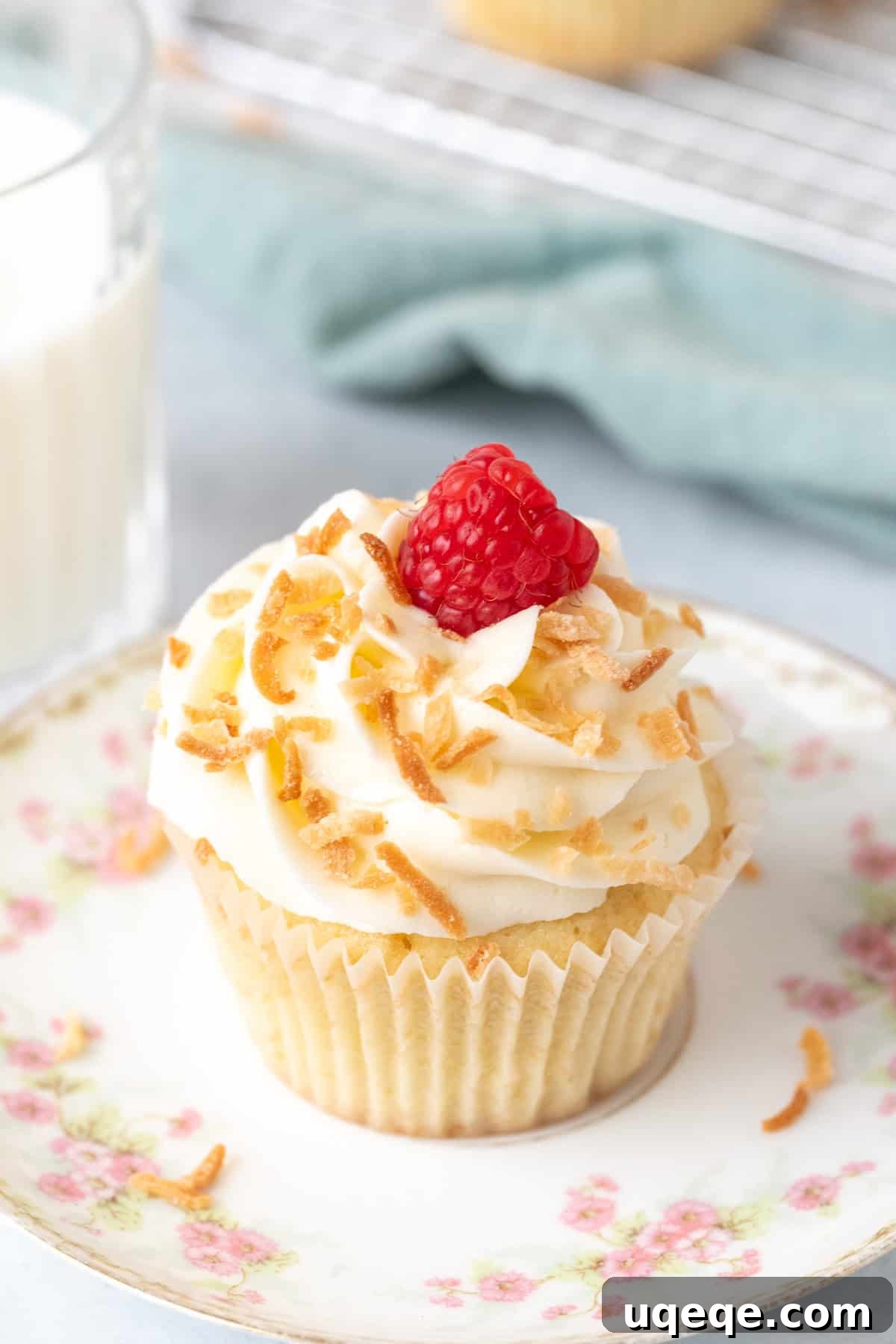
Armed with these comprehensive tips and tricks, you are now perfectly equipped to bake the most delectable coconut cupcakes. The harmonious blend of a moist, fluffy cake and a rich, creamy frosting, all infused with the pure essence of coconut, guarantees a dessert that will not only impress your guests but also bring immense joy with every bite. These aren’t just cupcakes; they’re a mini tropical vacation for your taste buds, promising to brighten any day!
Looking for more delightful cupcake inspirations? Be sure to explore some of our other popular recipes:
- Funfetti Cupcakes: Bursting with colorful sprinkles and vanilla flavor, perfect for celebrations.
- Lemon Cupcakes with Lemon Frosting: Zesty, bright, and refreshing, a perfect treat for citrus lovers.
- Strawberry Cupcakes: Made with fresh strawberries for a naturally sweet and fruity flavor.
- Strawberry Lemonade Cupcakes: A delightful blend of sweet strawberries and tangy lemon for a summery twist.
Rated 5 out of 5 stars from 1 vote
Delicious Homemade Coconut Cupcakes
Fiona Dowling
These exquisite coconut cupcakes are a celebration of tropical flavor, offering a perfect blend of moist, fluffy cake and rich, creamy coconut frosting. Made with real coconut ingredients, they deliver an authentic taste without any artificial notes. Garnished with golden toasted coconut and an optional fresh raspberry, they are ideal for any occasion, promising to be a delightful favorite.
45 mins
20 mins
30 mins
1 hr
35 mins
12
cupcakes
Rate Recipe
Print Recipe
Equipment
-
12-cavity muffin pan
Ingredients
For the Coconut Cupcakes
- 1 cup plus 2 tablespoons all-purpose flour (142 grams)
- 1 teaspoon baking powder
- 1/4 teaspoon salt
- 1/2 cup finely shredded sweetened coconut (40 grams), AKA desiccated coconut*
- 1/2 cup unsalted butter (112 grams), room temperature
- 3/4 cup granulated sugar (150 grams)
- 2 large eggs, room temperature
- 1/2 cup coconut milk (120 ml), shake well before measuring
For the Creamy Coconut Frosting
- 3/4 cup unsalted butter (168 grams), slightly softened, but not melted
- 3-4 cups powdered sugar (330-440 grams), sifted
- 1/4 teaspoon salt
- 2-4 tablespoons coconut cream (30-60 ml), coconut milk is acceptable, but may result in a thinner frosting with less pronounced coconut flavor
Toasted Coconut – Optional Garnish
- 1/4 cup sweetened, shredded coconut (about 20 grams)
Instructions
Making the Coconut Cupcakes
-
Prepare Baking Essentials: Preheat your oven to 350°F (180°C). Line a 12-cavity muffin tin with paper cupcake liners. Set the prepared tin aside for later use.
-
Combine Dry Ingredients: In a medium-sized bowl, thoroughly whisk together the all-purpose flour, baking powder, salt, and finely shredded desiccated coconut until all ingredients are evenly distributed. This step ensures consistent leavening and flavor throughout the cupcakes. Set this dry mixture aside.
-
Cream Butter and Sugar: In a large mixing bowl, using an electric mixer, beat the room temperature unsalted butter and granulated sugar together on medium speed. Continue beating until the mixture becomes light, fluffy, and pale in color, with no visible lumps of butter. This creaming process is essential for incorporating air, which contributes to the cupcakes’ light and airy texture.
-
Incorporate Eggs: Add the large eggs to the creamed butter and sugar mixture one at a time. Beat well after each addition until each egg is fully incorporated into the batter. After adding each egg, remember to stop the mixer and scrape down the bottom and sides of the bowl with a rubber spatula to ensure all ingredients are evenly mixed and no pockets of unmixed batter remain.
-
Alternate Dry and Wet Ingredients: With the mixer on a low speed, gradually add about one-third of the whisked flour mixture to the butter mixture, mixing just until combined. Next, pour in approximately half of the coconut milk, again mixing on low speed until just incorporated. Repeat this process: add another third of the flour mixture, followed by the remaining coconut milk. Finally, mix in the last of the flour mixture. It is crucial not to overmix the batter; stop mixing as soon as the dry ingredients are no longer visible to prevent tough cupcakes. Scrape down the sides of the bowl as needed throughout this process.
-
Fill Cupcake Liners: Spoon the prepared cupcake batter evenly into the lined muffin tin cavities. Each liner should be filled approximately 2/3 to 3/4 full. This helps prevent overflow during baking and ensures consistently baked cupcakes with a beautiful dome. You should yield about 12 cupcakes from this batter.
-
Bake to Perfection: Carefully place the muffin tin into the middle rack of your preheated oven. Bake for approximately 19-23 minutes. Baking times can vary, so begin checking for doneness around the 19-minute mark. The cupcakes are ready when the tops appear set and golden, and a toothpick inserted into the center of a cupcake comes out clean, indicating no wet batter remains.
-
Cooling Process: Once baked, remove the muffin tin from the oven. Allow the cupcakes to cool in the pan for at least 5 minutes. This initial cooling period helps them firm up and makes them easier to transfer. After 5 minutes, carefully transfer the cupcakes to a wire rack to cool completely. This crucial step prevents soggy bottoms and ensures your frosting will adhere perfectly without melting.
Preparing the Creamy Coconut Frosting
-
Beat the Butter: In a large mixing bowl, using an electric mixer, beat the slightly softened unsalted butter until it is smooth and creamy. Ensure the butter is softened but not melted, as this will affect the frosting’s texture.
-
Start with Powdered Sugar and Salt: Add 2 cups of sifted powdered sugar along with the salt to the beaten butter. Begin mixing on a very low speed to prevent the powdered sugar from creating a cloud, then gradually increase the speed to medium until the mixture is well combined and fluffy.
-
Achieve Desired Consistency: Gradually beat in the remaining powdered sugar, adding it approximately 1/2 cup at a time. Alternate these additions with spoonfuls of coconut cream (or the thick cream from the top of a chilled can of coconut milk). Continue mixing until the frosting reaches your desired sweetness and a thick, pipeable consistency. If the frosting appears too thick, add a little more coconut cream (or milk) by the teaspoon. If it’s too thin, incorporate more powdered sugar, a tablespoon at a time. The thick coconut cream that separates and sits on top of the can is ideal for this step.
-
Frost and Decorate: Once the cupcakes are completely cooled to room temperature, frost them generously. You can use an offset spatula for a charming, rustic appearance or a piping bag fitted with your favorite tip (a 1M tip creates beautiful swirls) for a more professional finish. Optionally, sprinkle the frosted cupcakes with the prepared toasted coconut (refer to the instructions below). It is important to ensure the toasted coconut has cooled completely before applying it to prevent the frosting from melting.
How to Make Toasted Coconut Garnish
-
Prepare for Toasting: Preheat your oven to 350°F (180°C). Spread the sweetened, shredded coconut evenly in a single layer onto a small baking sheet. A single, thin layer is crucial for even and consistent toasting.
-
Bake Until Golden: Place the baking sheet with coconut in the middle of the preheated oven and bake for approximately 5-10 minutes. It is vital to watch the coconut very carefully during this stage, as it can quickly transition from perfectly golden to burnt in a matter of seconds. Stir the coconut halfway through the baking time to ensure uniform toasting. Remove from the oven as soon as it reaches a beautiful golden brown color.
-
Cool Completely: Immediately transfer the toasted coconut from the hot baking sheet to a plate or another cool surface to halt the cooking process. Allow it to cool completely before using it as a garnish for your frosted cupcakes. This ensures it remains crisp and does not melt the delicate frosting.
Recipe Notes & Expert Tips
- Room Temperature Ingredients are Key: For the ultimate fluffy texture and perfectly emulsified batter, always ensure your butter and eggs are at room temperature before you begin. This significantly aids in proper mixing and achieving a smooth, consistent cupcake batter.
- Choosing the Right Coconut: For the cupcake batter, it is essential to use finely shredded, sweetened coconut, also known as desiccated coconut. If you only have regular shredded coconut or larger flakes, simply pulse them a few times in a food processor until finely shredded. Remember to measure the specified 1/2 cup *after* this step to ensure accuracy.
- Coconut Cream for Frosting: For the richest flavor and thickest consistency in your frosting, prioritize using full-fat coconut cream. If coconut cream is unavailable, you can use full-fat canned coconut milk; however, chill the can overnight and scoop out only the thick cream that solidifies on top, discarding the watery liquid. Both coconut milk and coconut cream are typically found in the international food section of most grocery stores. Never substitute with coconut water or cocktail cream of coconut.
- Storage Guidelines: While these coconut cupcakes are undeniably at their peak freshness on the day they are baked and frosted, they can be stored. Frosted cupcakes can be kept in an airtight container at room temperature for up to 3 days. For extended freshness, store them in the refrigerator for up to 5 days. For the best flavor and texture experience, remove refrigerated cupcakes about 30 minutes before serving to allow them to return to room temperature. To maintain optimal moisture, we recommend frosting cupcakes on the same day you plan to enjoy them. Unfrosted cupcakes can be stored in an airtight container for 2-3 days at room temperature.
- Freezing Options: Both unfrosted and frosted cupcakes can be successfully frozen. For unfrosted cupcakes, ensure they are completely cool, then wrap each tightly in plastic wrap and place them in an airtight freezer bag for up to 3 months. Thaw them at room temperature before frosting. For frosted cupcakes, first freeze them uncovered on a baking sheet until the frosting is firm (this usually takes 1-2 hours). Once firm, individually wrap each cupcake in plastic wrap and then foil, placing them in a freezer-safe container for up to 1 month. Thaw them in the refrigerator overnight, then bring to room temperature before serving for the best texture.
- Nutrition Information: Please note that the nutritional details provided are estimates only. They are based on a single cupcake, including both frosting and toasted coconut, assuming the recipe yields 12 uniform cupcakes and all frosting is used. Individual nutritional values may vary based on exact ingredient measurements, brands used, and portion sizes.
Nutrition Information (Estimated Per Cupcake)
Calories: 440kcal
Carbohydrates: 54g
Protein: 3g
Fat: 25g
Saturated Fat: 17g
Polyunsaturated Fat: 1g
Monounsaturated Fat: 5g
Trans Fat: 1g
Cholesterol: 82mg
Sodium: 129mg
Potassium: 127mg
Fiber: 1g
Sugar: 44g
Vitamin A: 636IU
Vitamin C: 0.2mg
Calcium: 37mg
Iron: 1mg
Enjoyed baking these cupcakes? We’d love to hear from you! Rate and leave a comment below!
Your feedback helps us improve and encourages other bakers in our community.