

Prepare to be enchanted by the ultimate Lemon Coffee Cake! This delightful recipe delivers a wonderfully moist and tender lemon-infused cake, crowned with an irresistible crunchy streusel topping and finished with a delicate drizzle of sweet lemon glaze. Bursting with bright, zesty lemon flavor, it’s the perfect centerpiece for any brunch, a delightful breakfast indulgence, or a light and refreshing dessert that’s never overly sweet. Every bite offers a harmonious blend of textures and an invigorating citrus punch that will undoubtedly brighten your day and delight your palate.

**This post was updated March 27, 2024 with new photos & enhanced recipe tips to ensure your baking success!**
Why This Lemon Coffee Cake Will Become Your New Favorite
If you’re a devoted fan of lemon desserts and pastries, this lemon coffee cake recipe is an absolute must-try. It transcends the typical breakfast pastry, offering a sophisticated yet comforting flavor profile that’s equally at home at a casual morning gathering, a celebratory brunch, or as an elegant afternoon treat with tea or coffee. Unlike heavier, more decadent desserts, this coffee cake strikes a beautiful balance, delivering vibrant citrus notes without being overly tart or sugary. Imagine a classic, comforting coffee cake, but imbued with the joyous, uplifting essence of sunshine – that’s precisely what this lemon version brings to your table. It’s the ideal way to infuse cheer into any day, whether you’re starting it with a warm beverage or enjoying a relaxing moment.
Our journey to lemon perfection begins with an incredibly moist and buttery cake base. This isn’t just any ordinary vanilla cake; it’s carefully crafted to be exquisitely tender, with a subtle richness that perfectly complements the star of the show: lemon. The cake itself is generously infused with citrus, ensuring a bright, authentic lemon flavor that tastes like pure sunshine – never artificial, never overwhelmingly sour. Each forkful reveals a delicate crumb that melts in your mouth, making it utterly irresistible and leaving you craving another slice. The secret to its incredible tenderness lies in the precise balance of ingredients and careful mixing techniques.

But the magic doesn’t stop there. What truly elevates this coffee cake is its magnificent crunchy crumb topping, often referred to as streusel. This streusel isn’t just an afterthought; it’s a crucial component that provides a delightful textural contrast that completes the experience. Golden brown, subtly sweet, and wonderfully crunchy, it creates a perfect counterpoint to the soft, tender cake beneath. The delicate crunch of the streusel topping adds another layer of enjoyment with every bite. And for that final flourish of sweetness and intensified lemon flavor, a luscious, tangy-sweet lemon glaze is artfully drizzled over the top. This harmonious combination of moist cake, crunchy streusel, and zesty glaze makes for an unforgettable dessert experience that you’ll want to recreate again and again.
Essential Ingredients for Your Zesty Lemon Coffee Cake
Crafting the perfect lemon coffee cake requires a thoughtful selection of ingredients, each playing a vital role in achieving that sought-after moist crumb, delightful crunch, and vibrant lemon flavor. Understanding the purpose of each component will not only make you a more confident baker but also ensure consistent, delicious results. Here’s a closer look at what you’ll need:
For the Irresistible Crumb Topping:
- All-Purpose Flour: This forms the essential structure of our crumb topping, giving it body and allowing it to achieve that satisfying crunch.
- Granulated Sugar & Light Brown Sugar: A carefully balanced combination that offers both sweetness and a hint of molasses depth. The light brown sugar provides a subtle chewiness and deeper flavor that enhances, rather than overpowers, the bright lemon notes of the cake.
- Salt: A small pinch of salt is crucial here; it acts as a flavor enhancer, bringing out the sweetness of the sugars and creating a more balanced taste profile for the streusel.
- Unsalted Butter (Melted): Unlike some streusel recipes that utilize cold, cubed butter, using melted butter for this coffee cake creates a more uniform, slightly moister crumble. This consistency integrates beautifully with the cake batter during baking, resulting in a more cohesive and evenly distributed crunchy layer that’s easier to slice.
For the Amazingly Moist Lemon Cake:
- All-Purpose Flour (Properly Measured): The foundation of our cake. Correct measurement is absolutely critical to avoiding a dense or dry texture. Too much flour will result in a heavy cake, while too little can make it crumbly.
- Baking Powder & Baking Soda: These are our primary leavening agents. Baking powder provides initial lift, while baking soda reacts with the acidic ingredients (sour cream, lemon juice) to create additional carbon dioxide, giving the cake its beautiful rise and tender, airy structure.
- Salt: Essential for balancing the sweetness and enhancing all the other flavors within the cake batter, ensuring a well-rounded taste.
- Granulated Sugar: Sweetens the cake beautifully and also plays a role in tenderizing the crumb by interfering with gluten development.
- Fresh Lemon Zest: This is where the magic happens for intense, natural lemon flavor. The zest contains the aromatic oils of the lemon, which are released when rubbed with sugar, infusing the cake with a profound citrus aroma and taste.
- Unsalted Butter (Room Temperature): Softened butter is key for proper creaming with the sugar. This process incorporates tiny air pockets, contributing significantly to the cake’s light, fluffy texture.
- Large Eggs (Room Temperature): Eggs provide structure, richness, and moisture to the cake. Using room temperature eggs ensures they emulsify better with the butter and sugar, resulting in a smoother, more stable batter.
- Vanilla Extract: A touch of pure vanilla extract beautifully complements the lemon flavor, adding a layer of warmth and complexity without competing for attention.
- Sour Cream (Room Temperature): This is truly a secret weapon for a wonderfully moist cake! Its high fat content contributes to a rich, tender crumb, while its acidity reacts with the baking soda, boosting the cake’s rise and creating an incredibly soft texture. Plain full-fat Greek yogurt can be substituted successfully.
- Fresh Lemon Juice: Adds a tangy liquid element and reinforces the bright lemon flavor profile throughout the cake. Always opt for freshly squeezed juice for the best, most authentic taste.
- Milk (Room Temperature, 2% or whole recommended): Adds necessary moisture to the batter and helps achieve the perfect consistency, ensuring a tender and well-hydrated cake.
For the Sweet Lemon Glaze:
- Powdered Sugar: The foundation of our smooth, pourable glaze. Its fine texture dissolves easily, creating a silky finish.
- Fresh Lemon Juice: Provides both the liquid needed to form the glaze and that essential tangy lemon kick, making the glaze bright and flavorful.
Step-by-Step Guide to Baking Your Perfect Lemon Coffee Cake
Achieving a perfectly moist and flavorful lemon coffee cake with that signature crunchy topping is a rewarding experience. Follow these detailed steps and accompanying tips for a truly successful bake, and you’ll be enjoying a bakery-quality treat in no time.
1. Prepare Your Baking Environment and Pan
- Start by preheating your oven to 350°F (180°C). Ensuring your oven is at the correct temperature from the beginning is vital for even baking and proper leavening.
- Next, prepare your baking pan. I highly recommend using a 9-inch round springform pan for this recipe. The high sides are essential to contain the generous amount of batter and crumb topping, preventing overflow, and the springform mechanism makes for incredibly easy removal and elegant serving of the finished cake. If a springform pan isn’t available, a 9×9 inch (23×23 cm) square pan with high sides can also work effectively.
- To prevent any potential batter leakage from the base of the springform pan (a common occurrence), wrap the outside of the pan securely with aluminum foil. This simple step can save you from a messy oven.
- Lightly grease the entire inside surface of the pan, then dust it evenly with all-purpose flour. This creates a non-stick barrier, ensuring your cake releases cleanly and beautifully after baking, preserving its pristine shape.
2. Craft the Irresistible Crumb Topping
The streusel topping adds a crucial textural element to this coffee cake. Its perfect crunch contrasts beautifully with the soft cake, creating a delightful sensation with every bite.
- In a medium bowl, combine the all-purpose flour, granulated sugar, light brown sugar, and a pinch of salt. Whisk these dry ingredients thoroughly to ensure they are evenly distributed, breaking up any sugar lumps. We use a modest amount of brown sugar here to ensure its subtle caramel notes enhance, rather than overshadow, the vibrant lemon flavor of the cake.
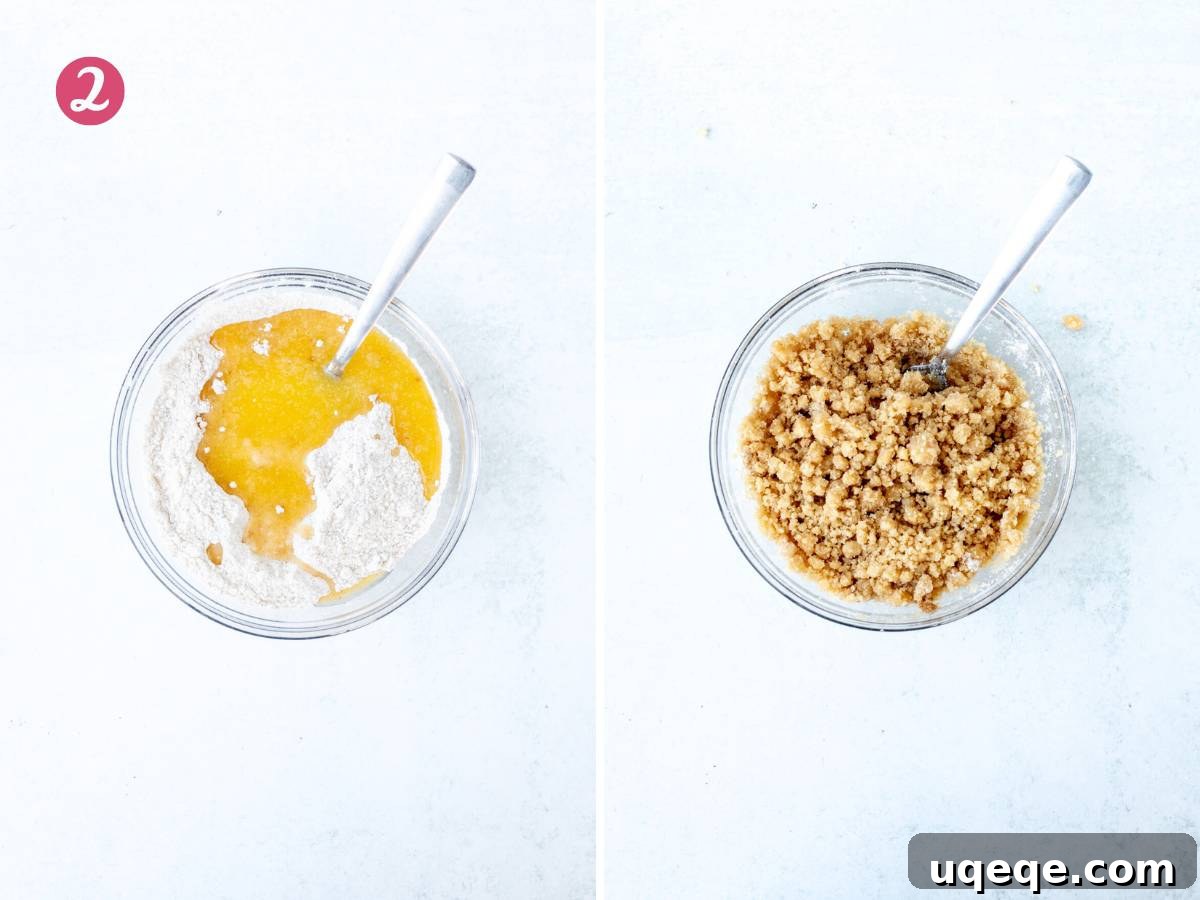
- Pour the melted unsalted butter into the dry mixture. Stir well with a fork or your fingers until the mixture comes together into small, distinct crumbles. The texture should resemble wet sand – easily clumped but still crumbly. Using melted butter, as opposed to cold, cubed butter, helps create a more uniform crumb topping that’s slightly moister. This consistency, in my experience, leads to a superior baked texture and makes the cake much easier to slice neatly without the topping crumbling excessively. If your mixture feels too wet, add an extra tablespoon of flour and granulated sugar until the desired crumbly consistency is achieved. Set this glorious topping aside while you prepare the cake batter.
3. Prepare the Velvety Lemon Cake Batter
This cake is designed for ultimate moistness and a tender crumb. Pay close attention to mixing techniques to avoid a tough or dry cake.
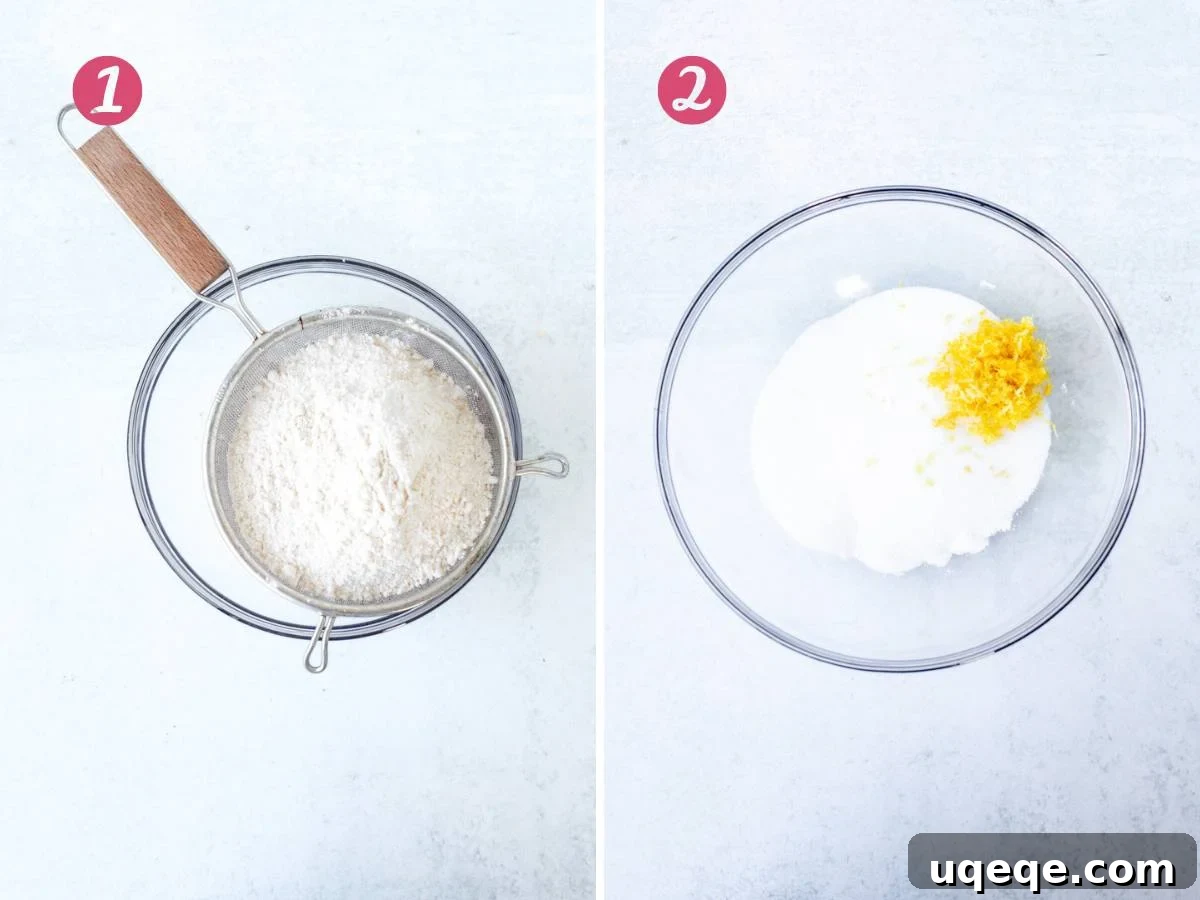
- Combine Dry Ingredients: In a separate medium bowl, sift together the all-purpose flour, baking powder, baking soda, and salt. Sifting is a critical step as it aerates the flour, prevents lumps, and ensures the leavening agents are perfectly distributed throughout the mixture. This contributes significantly to an even rise and delicate crumb in the final cake. Give the sifted ingredients a gentle whisk to further combine, then set aside.
- Activate Lemon Zest: In a large mixing bowl (the one you’ll use for the wet ingredients), add the granulated sugar and fresh lemon zest. This next step is a game-changer for infusing maximum lemon flavor: use your fingers to rub and pinch the lemon zest into the sugar for 1-2 minutes. This action effectively releases the fragrant oils from the zest, infusing the sugar crystals with intense lemon aroma and taste. You’re not trying to dissolve the zest, but rather to press its powerful flavor into the sugar.
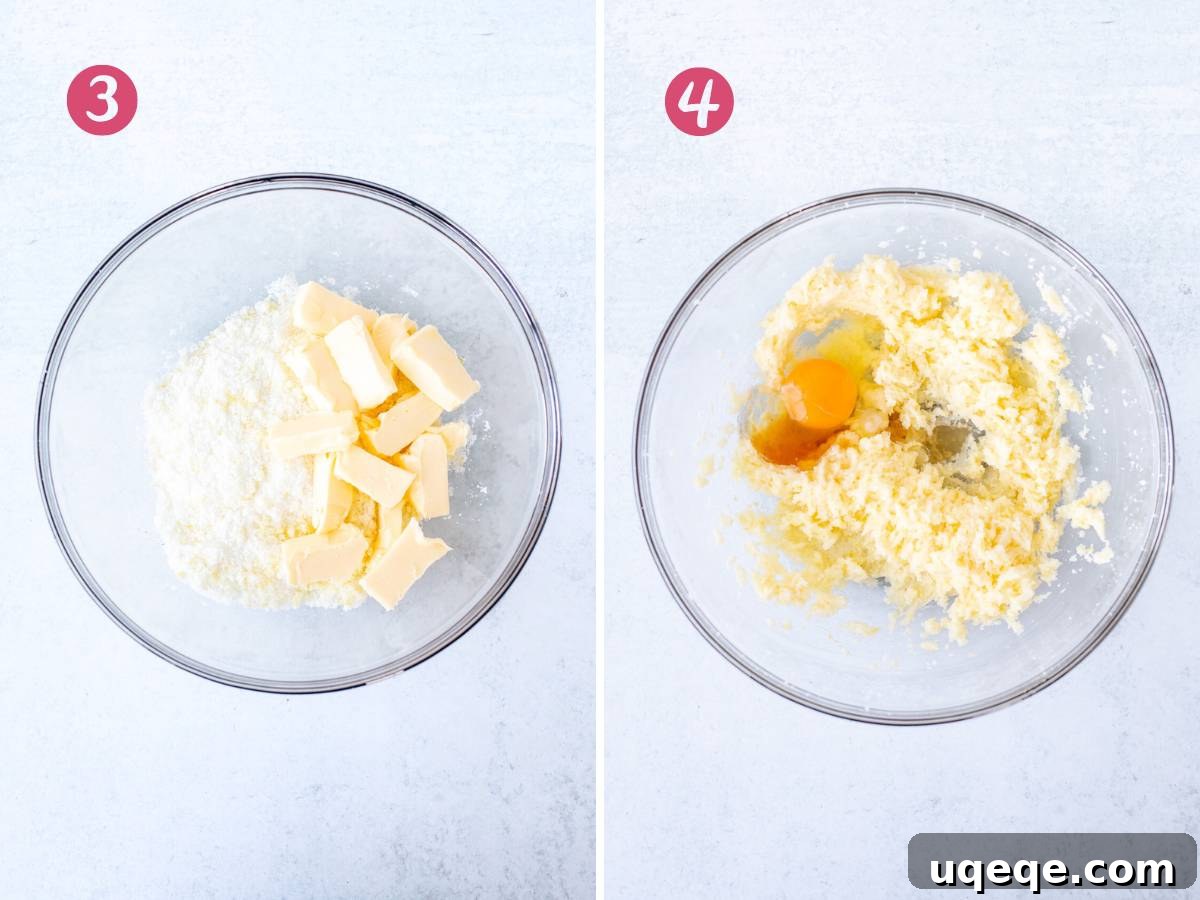
- Cream Butter and Sugar: Add the softened, room-temperature unsalted butter to the lemon-infused sugar mixture. Using an electric mixer (either a stand mixer with the paddle attachment or a hand-held mixer), beat these together on medium speed for 3-5 minutes. Continue mixing until the mixture is visibly light, fluffy, and pale in color. This creaming process incorporates a significant amount of air, which is essential for a light and tender cake texture.
- Incorporate Eggs and Vanilla: Stop the mixer and use a rubber spatula to scrape down the sides and bottom of the bowl thoroughly, ensuring all ingredients are well combined. Add the vanilla extract, then beat in the large eggs, one at a time. After each egg addition, mix just until it’s fully incorporated into the batter, then stop the mixer and scrape the bowl again. Adding eggs one by one and scraping the bowl prevents overmixing and helps maintain a smooth, emulsified batter, preventing it from separating.
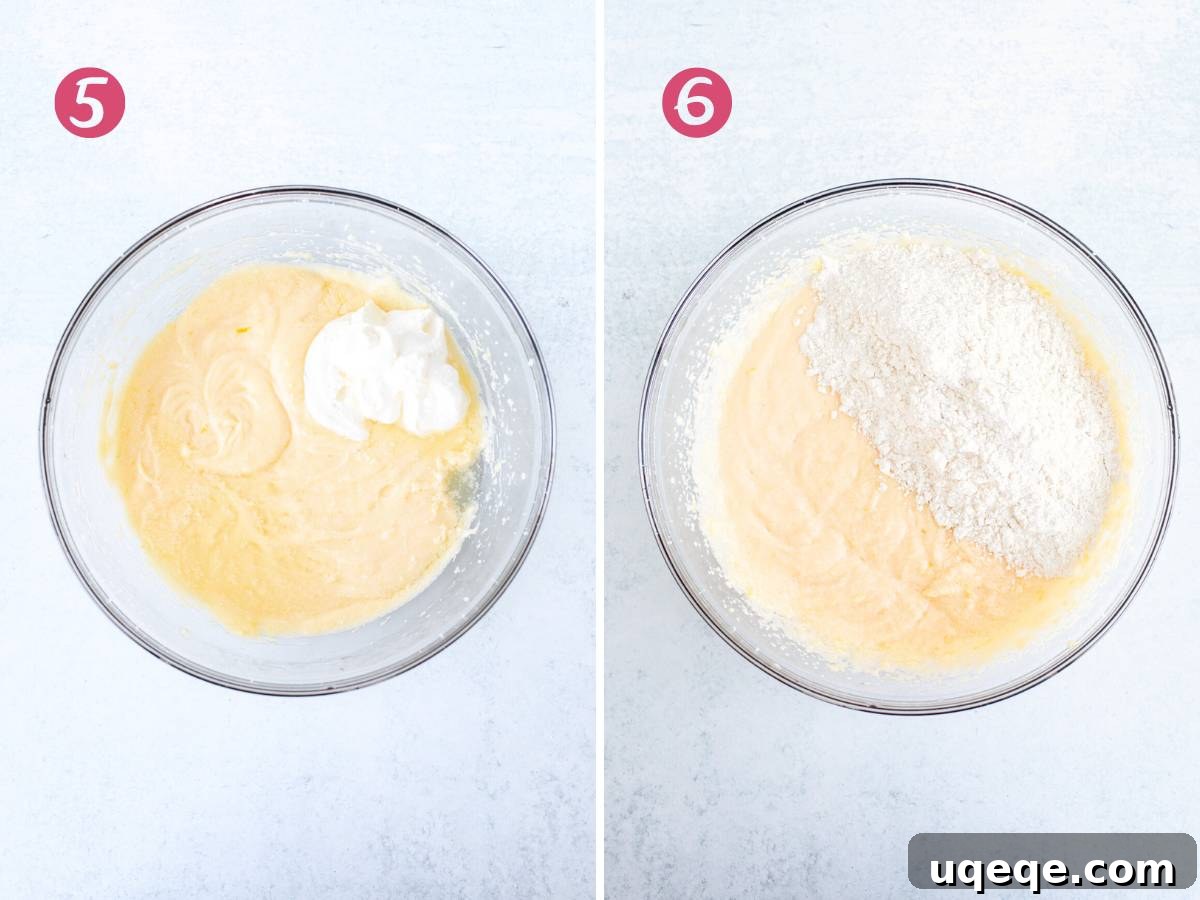
- Add Wet Ingredients: With the mixer on low speed, beat in the room-temperature sour cream and freshly squeezed lemon juice until just combined. Don’t be alarmed if the mixture appears slightly curdled or separated at this stage; this is completely normal due to the acidity of the sour cream and lemon juice reacting with the fat in the butter. It will smooth out as you add the dry ingredients.
- Alternate Dry and Wet: Gently add approximately half of the sifted flour mixture to the wet ingredients in the large bowl. With your mixer on the lowest speed, beat together just until streaks of flour disappear. Even better, you can fold it in by hand with a spatula for more control. Overmixing at this stage quickly develops gluten, which will inevitably lead to a tough and dense cake.
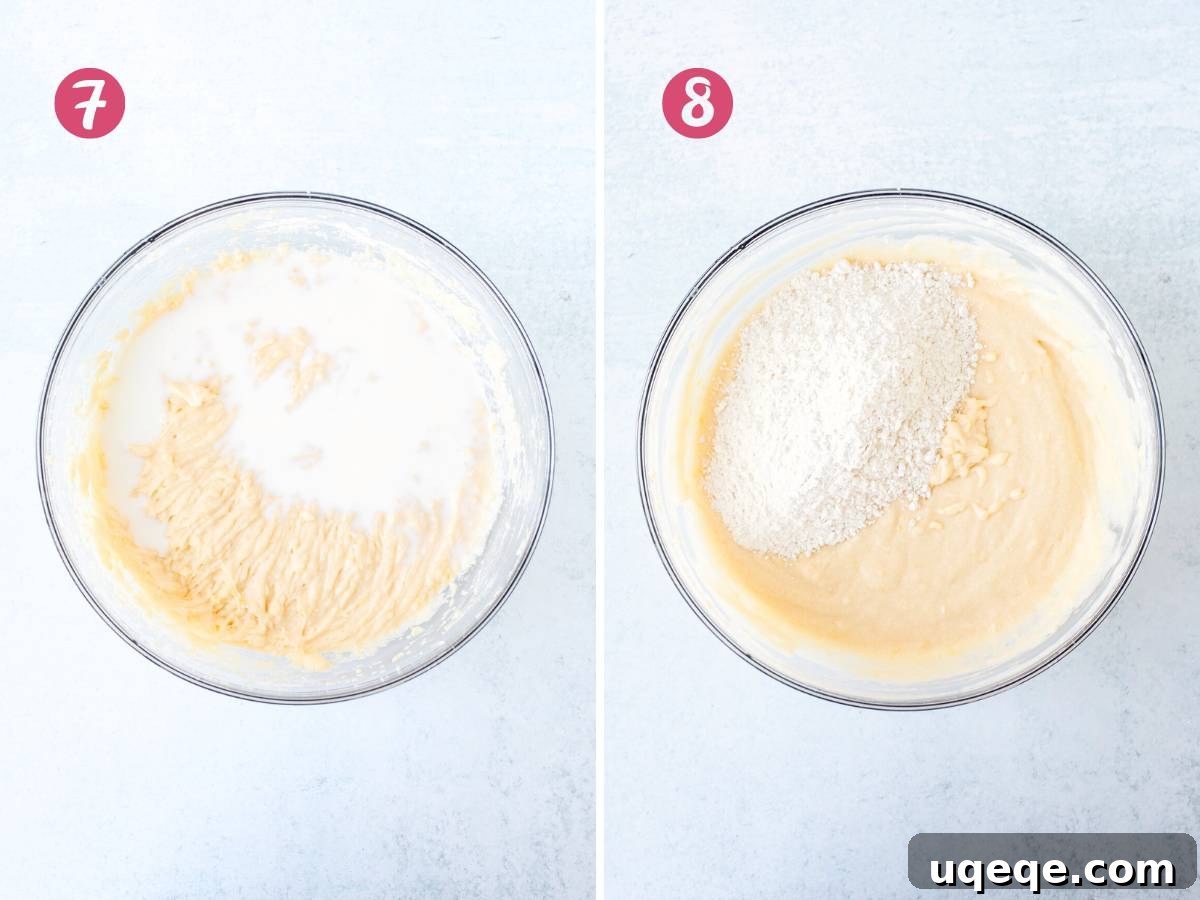
- Introduce Milk: Pour in the room-temperature milk and gently whisk it into the batter until fully incorporated and smooth. This can be done effectively by hand with a wire whisk for better control, or briefly with your electric mixer on a very low speed.
- Final Flour Addition: Add the remaining half of the dry ingredients to the batter. Again, mix very gently, and preferably by hand, until no large lumps or streaks of flour are visible. The batter will be noticeably thick at this point, which is exactly the desired consistency. To absolutely prevent overmixing, I highly recommend folding in this final portion of flour by hand using a rubber spatula. Stop mixing as soon as no large lumps or prominent streaks of flour are visible. A few tiny flecks of lemon zest are perfectly fine and actually add visual appeal and concentrated bursts of flavor.
4. Assemble and Bake to Golden Perfection
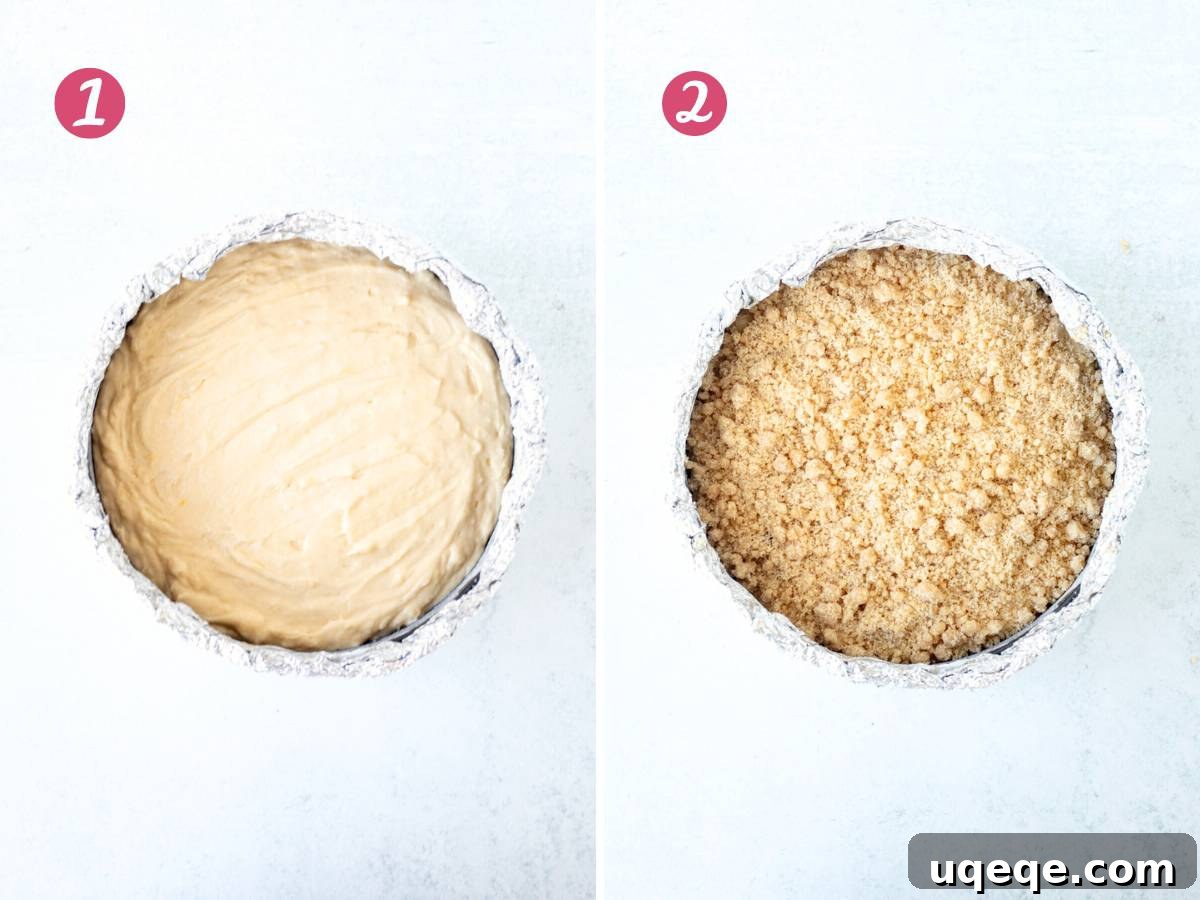
- Carefully spoon or pour the thick lemon cake batter evenly into your prepared springform pan. Use an offset spatula or the back of a spoon to gently smooth the top surface of the batter, ensuring an even layer for consistent baking.
- Generously sprinkle the reserved crumb topping over the entire surface of the cake batter. It will initially seem like a substantial amount of crumble, but rest assured, some of it will melt and gently sink into the cake as it bakes, creating delightful pockets of deliciousness and an irresistible crunchy crust. Ensure an even layer for maximum streusel enjoyment in every bite.
- Place the pan in the middle rack of your preheated oven. Bake for approximately 45-50 minutes if using a 9-inch round springform pan. If you’re using a 9×9 inch square pan, the baking time will likely be closer to 35-40 minutes, as square pans often cook slightly faster due to their geometry.
- Determining doneness for coffee cakes with crumb toppings can sometimes be tricky due to the obscuring streusel. The best indicators are:
- An inserted wooden toothpick or skewer into the center of the cake (avoiding the streusel too much) should come out clean or with only a few moist crumbs attached, but no wet batter.
- Gently nudge the pan – the cake should feel set and firm in the center and not wobble whatsoever.
- The streusel topping itself should be golden brown and incredibly fragrant, filling your kitchen with a delicious aroma. If the topping starts to brown too quickly before the cake is fully cooked, loosely tent the top of the pan with aluminum foil to prevent burning and allow the cake to finish baking.
When in doubt, it’s always better to bake for a few extra minutes than to risk an underbaked, gooey center.
- Once baked, carefully remove the cake from the oven and allow it to cool completely in the pan on a wire rack. This is a crucial step! Cooling allows the cake structure to fully set and solidify, preventing it from collapsing or sticking to the pan when you release the springform sides. Patience is a virtue here!
5. Whisk Up the Bright Lemon Glaze
A simple yet impactful lemon glaze provides the perfect finishing touch, adding a final burst of sweetness and tangy lemon flavor that truly brings the coffee cake to life.
- In a small bowl, whisk together 1 tablespoon of freshly squeezed lemon juice with about 1 cup of powdered sugar until the mixture is smooth and lump-free.
- Gradually adjust the consistency of the glaze by adding a little more powdered sugar (if you desire a thicker, more opaque glaze) or a few drops more lemon juice (if you prefer a thinner, drizzly glaze). Continue to whisk until you achieve your desired consistency. You want the glaze to be thin enough to elegantly drizzle over the cake but still opaque enough to create a distinct white finish. It should fall slowly from a spoon.
- Once the cake is fully cooled to room temperature, unclamp and gently remove the outer ring of the springform pan. Drizzle the prepared lemon glaze generously and artfully over the top of the cake, allowing it to drip attractively down the sides. Allow the glaze to set for a few minutes before slicing and serving. Enjoy your beautifully crafted lemon coffee cake!
Expert Baking Tips & Tricks for Coffee Cake Perfection
Achieving a bakery-worthy lemon coffee cake consistently relies on a few key baking principles. These expert tips are designed to ensure your cake is always wonderfully moist, incredibly tender, and bursting with vibrant lemon flavor, every single time:
- Always Use Fresh Lemons: This is absolutely non-negotiable for true, authentic lemon flavor. Bottled lemon juice, while convenient, is often overly concentrated, pasteurized, and can taste artificial or too tart for delicate baking. For this recipe, you’ll need approximately 3 medium-sized lemons (or 4 smaller ones) to provide enough zest and juice for both the cake batter and the luscious glaze. A pro tip: remember to zest the lemons *before* squeezing them; it’s much easier to get all those fragrant oils when the fruit is whole!
- Ensure All Ingredients are at Room Temperature: This might seem like a small detail, but it cannot be stressed enough. Room temperature butter, eggs, milk, and sour cream emulsify much more effectively and evenly. When ingredients are at the same temperature, they combine smoothly, creating a homogeneous batter that traps air better during the creaming process. This leads directly to a lighter, more tender, and uniform cake crumb. If your ingredients are cold, the batter can become lumpy, curdled, or dense, requiring excessive mixing to combine, which then leads to a tough, dry cake.
- Measure Flour Accurately: Too much flour is the most common culprit for dry, dense, and heavy cakes. The most accurate method for measuring flour is to use a digital kitchen scale (grams are always more precise than volume measurements). If you don’t have a scale, use the “spoon and level” method: gently spoon flour into your dry measuring cup until it’s overflowing, then level off the top with a straight edge (like the back of a knife) without packing it down. Never scoop flour directly from the bag with the measuring cup, as this compacts the flour, resulting in a significantly larger amount than intended.
- Do Not Overmix the Batter: This is a golden rule in almost all cake and pastry baking. Overmixing develops gluten in the flour, which leads to a tough, chewy, and dry cake texture – the opposite of what we want for a tender coffee cake. Mix only until ingredients are just combined and no large streaks of flour remain. A few small lumps are preferable to an overmixed, smooth batter. Overmixing can also create undesirable “tunnels” or air pockets within the cake’s structure.
- Alternate Wet and Dry Ingredients: Instead of adding all dry ingredients at once, followed by all wet ingredients (or vice-versa), we alternate additions in this recipe. This method helps to create a more stable emulsion, reduces the risk of overmixing the flour (and thus gluten development), and ensures a wonderfully uniform and tender cake crumb. It allows the fat to coat the flour particles, preventing too much gluten formation.
- Don’t Rush the Cooling Process: It’s incredibly tempting to dig into a warm, freshly baked cake, but allowing the cake to cool completely in its pan on a wire rack is crucial for its structural integrity and final texture. Hot cakes are very fragile and can collapse, crumble, or stick to the pan if removed too soon. Cooling allows the cake structure to fully set and solidify, ensuring a perfect slice every time. Patience truly pays off here!

Enjoying Your Homemade Lemon Coffee Cake
This irresistible homemade lemon coffee cake is incredibly versatile and perfect for a variety of occasions. It makes for a glorious breakfast treat to start your day on a bright note, a delightful addition to any brunch spread, or a refreshing companion to your afternoon coffee or tea. The lemon flavor is bright, joyful, and never sour, while the cake itself boasts an ideal moistness, and the crumb topping offers a satisfying, delicious crunch. What more could you possibly desire from a homemade cake? Its cheerful color and invigorating aroma make it a wonderful centerpiece for spring and summer gatherings, or simply a way to bring a little sunshine indoors on a cloudy day.
Perhaps just another generous slice to savor every moment!
Frequently Asked Questions About Lemon Coffee Cake
Here are answers to some common questions you might have while preparing this delicious lemon coffee cake:
- Can I use bottled lemon juice? While technically possible, we highly recommend using fresh lemon juice for its vibrant, authentic flavor. Bottled juice can sometimes taste artificial or overly acidic, which might alter the delicate balance of the cake and glaze, making it less pleasant.
- What if I don’t have sour cream? Plain full-fat Greek yogurt is an excellent substitute for sour cream in this recipe. It provides similar moisture and tanginess that significantly contributes to a tender and moist crumb. Just ensure it’s also brought to room temperature before incorporating it into the batter.
- How should I store leftover lemon coffee cake? To maintain its freshness and delightful texture, store the cake in an airtight container or wrap it tightly with plastic wrap at room temperature for up to 3 days. While delicious, like most baked goods, it’s always best enjoyed fresh within the first day or two.
- Can I freeze this coffee cake? Yes, you can! Leftover slices can be individually wrapped in plastic wrap and then an additional layer of aluminum foil to prevent freezer burn. Store them in the freezer for up to 2-3 months. To enjoy, simply thaw slices at room temperature or gently warm them in the microwave for a few seconds.
- Can I add other ingredients to the cake? Absolutely! For a delightful twist, consider adding 1 cup of fresh blueberries or raspberries to the batter just before baking. Gently fold them in to avoid crushing. Poppy seeds (1-2 tablespoons) can also be added with the dry ingredients for a classic lemon-poppy seed flavor combination that’s always a hit.
More Zesty Lemon Treats You’ll Love
If your love for lemon extends beyond this incredible coffee cake, be sure to explore these other fantastic recipes that celebrate the bright and tangy flavor of citrus:
- Lemon Sugar Cookies: Zesty and sweet, these soft sugar cookies are bursting with lemon and perfect for any cookie platter or everyday treat.
- Lemon Loaf: A classic, bakery-style lemon loaf, wonderfully moist and topped with a vibrant, tangy lemon glaze – just like your favorite coffee shop version.
- Lemon Cheesecake with Blueberry Topping: A creamy, tangy lemon cheesecake complemented by a luscious homemade blueberry compote for an elegant and refreshing dessert.
- Lemon Bars: The ultimate balance of tart and sweet, these iconic bars feature a bright, zesty lemon filling atop a tender, buttery shortbread crust.

Lemon Coffee Cake Recipe
By: Fiona Dowling
This incredibly moist lemon cake, topped with a delightful crunchy streusel and a sweet lemon glaze, is bursting with bright lemon flavor and perfect for any meal or snack. It’s a sunshine-filled treat for brunch, breakfast, or dessert that everyone will adore!
Prep Time: 30 minutes
Cook Time: 30-50 minutes
Total Time: Approx. 1 hour – 1 hour 20 minutes (plus cooling time)
Servings: 12 Slices
Equipment
- 9-inch (23 cm) springform pan (or a 9×9 inch / 23×23 cm square pan with high sides)
- Large mixing bowls
- Medium mixing bowls
- Electric mixer (stand or hand-held is fine)
- Whisk
- Rubber spatula
- Zester / Microplane
- Measuring cups and spoons (or a kitchen scale for best accuracy)
- Aluminum foil
- Wire cooling rack
Ingredients
Crumb Topping
- 1 cup all-purpose flour (125 grams)
- 1/2 cup granulated sugar (100 grams)
- 2 tablespoons light brown sugar
- 5 tablespoons unsalted butter (70 grams), melted
- 1/4 teaspoon salt (optional, for flavor enhancement)
Lemon Cake
- 2 1/2 cups all-purpose flour (313 grams), measured properly
- 1 1/2 teaspoons baking powder
- 1/2 teaspoon baking soda
- 1/4 teaspoon salt
- 1 1/4 cups granulated sugar (250 grams)
- 3 tablespoons fresh lemon zest (from approx. 2 medium lemons)
- 2/3 cup unsalted butter (150 grams), room temperature
- 2 teaspoons vanilla extract
- 3 large eggs, room temperature
- 1/2 cup sour cream (120 ml), room temperature (or plain full-fat Greek yogurt)
- 3 tablespoons lemon juice (60 ml), freshly squeezed
- 1/4 cup milk (60 ml), 2% or whole milk is best, room temperature
Lemon Glaze
- 1 – 1 1/2 cups powdered sugar (110 – 165 grams)
- 1 – 2 tablespoons lemon juice (15-30 ml), freshly squeezed
Instructions
Preparation
- Preheat your oven to 350°F (180°C).
- Wrap the outside of a 9-inch springform pan with aluminum foil to prevent leaks. Lightly grease the inside of the pan and dust evenly with flour. Set aside.
Crumb Topping
- In a medium bowl, combine the 1 cup all-purpose flour, 1/2 cup granulated sugar, 2 tablespoons brown sugar, and salt. Whisk to combine.
- Pour in the 5 tablespoons of melted butter. Stir with a fork until the mixture forms small, wet crumbles, resembling wet sand. If it feels too wet, you can mix in an additional tablespoon of flour and granulated sugar until desired consistency. Set aside.
Lemon Cake
- In a separate medium bowl, sift together the 2 1/2 cups all-purpose flour, 1 1/2 teaspoons baking powder, 1/2 teaspoon baking soda, and 1/4 teaspoon salt. Whisk these dry ingredients together thoroughly, then set aside.
- In a large mixing bowl, combine the 1 1/4 cups granulated sugar and 3 tablespoons lemon zest. Use your fingers to rub the lemon zest into the sugar for 1-2 minutes until the sugar is fragrant and moist.
- Add the 2/3 cup room-temperature unsalted butter to the lemon-sugar mixture. Using an electric mixer, beat on medium speed for 3-5 minutes until the mixture is light, fluffy, and pale. Scrape down the sides of the bowl as needed.
- Beat in the 2 teaspoons vanilla extract. Then, add the 3 large eggs one at a time, beating after each addition just until combined. Scrape the sides and bottom of the bowl after each egg.
- Add the 1/2 cup room-temperature sour cream and 3 tablespoons fresh lemon juice to the batter. Beat on low speed until just combined. The mixture may look slightly curdled, which is normal.
- Add approximately half of the dry flour mixture to the wet ingredients. Mix on the lowest speed until just combined, or gently fold in by hand with a spatula. Do not overmix.
- Whisk in the 1/4 cup room-temperature milk until smooth. This can be done by hand or with the mixer on very low speed.
- Add the remaining dry flour mixture. Mix very gently, preferably by hand with a spatula, until no large streaks of flour remain. The batter will be thick. Avoid overmixing.
Assembling and Baking
- Spoon the thick lemon cake batter evenly into your prepared springform pan and smooth the top surface with a spatula.
- Generously sprinkle the entire crumb topping mixture evenly over the batter, ensuring it covers the cake fully.
- Bake in the preheated oven for 45-50 minutes for a round springform pan, or 35-40 minutes for a 9×9 inch square pan. The cake is done when a toothpick inserted into the center comes out clean or with a few moist crumbs, and the cake no longer wobbles. If the topping browns too quickly, loosely tent with aluminum foil.
- Allow the cake to cool completely in the pan on a wire rack before proceeding to glaze.
Lemon Glaze
- In a small bowl, whisk together 1 tablespoon of fresh lemon juice with 1 cup of powdered sugar until smooth.
- Adjust the consistency by adding more powdered sugar (for a thicker glaze) or a few drops more lemon juice (for a thinner glaze) until it’s pourable yet opaque.
- Once the cake is fully cooled, remove the springform pan’s outer ring. Drizzle the lemon glaze generously over the top of the cake.
Notes
- Lemons: You will generally need about 3 medium lemons (or 4 smaller ones) to provide enough zest and juice for both the cake and the glaze in this recipe.
- Sour Cream Substitute: If you don’t have sour cream, plain full-fat Greek yogurt makes an excellent substitute for moisture and tang. Ensure it is at room temperature.
- Nutrition Information: The provided nutritional details are an estimate only, based on one slice of cake (assuming 12 uniform slices) and the full use of crumb and glaze.
- Storage: Store your lemon coffee cake in an airtight container or tightly covered at room temperature for up to 3 days. For best flavor and texture, it’s always recommended to enjoy it fresh.
- Freezing: Leftover slices can be individually wrapped in plastic wrap and then foil, and frozen for up to 2-3 months. Thaw at room temperature or warm briefly.
Nutrition
(Estimated per serving, based on 12 slices)
- Calories: 488 kcal
- Carbohydrates: 76g
- Protein: 6g
- Fat: 19g
- Saturated Fat: 11g
- Polyunsaturated Fat: 1g
- Monounsaturated Fat: 5g
- Trans Fat: 1g
- Cholesterol: 92mg
- Sodium: 121mg
- Potassium: 144mg
- Fiber: 1g
- Sugar: 47g
- Vitamin A: 597 IU
- Vitamin C: 4mg
- Calcium: 59mg
- Iron: 2mg