
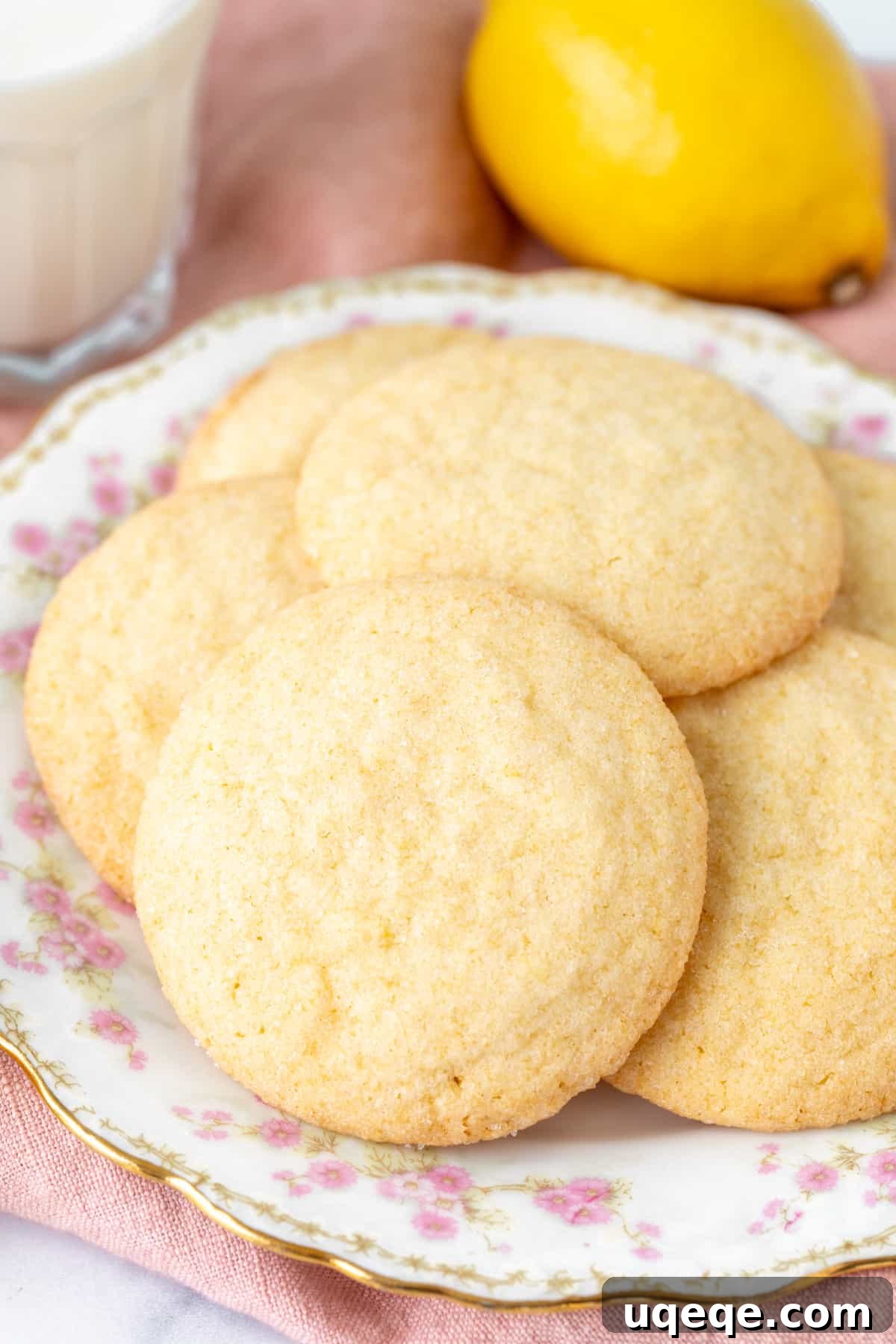
Irresistibly Chewy Lemon Sugar Cookies: Your Ultimate Guide to Sunshine in Every Bite
There’s something uniquely enchanting about a perfectly baked lemon sugar cookie. Each bite delivers a burst of bright, sun-kissed lemon flavor, harmoniously balanced with a wonderfully chewy texture. These aren’t just any cookies; they are an ode to simple elegance, a delightful treat that evokes feelings of warmth and joy. Whether you’re celebrating the arrival of spring, hosting a brunch, or simply craving a sweet escape, these buttery, zesty cookies with their satisfying crunchy edges are designed to impress and comfort. They are remarkably straightforward to make, yet possess a special quality that elevates them beyond the ordinary, making them a firm favorite for any occasion.
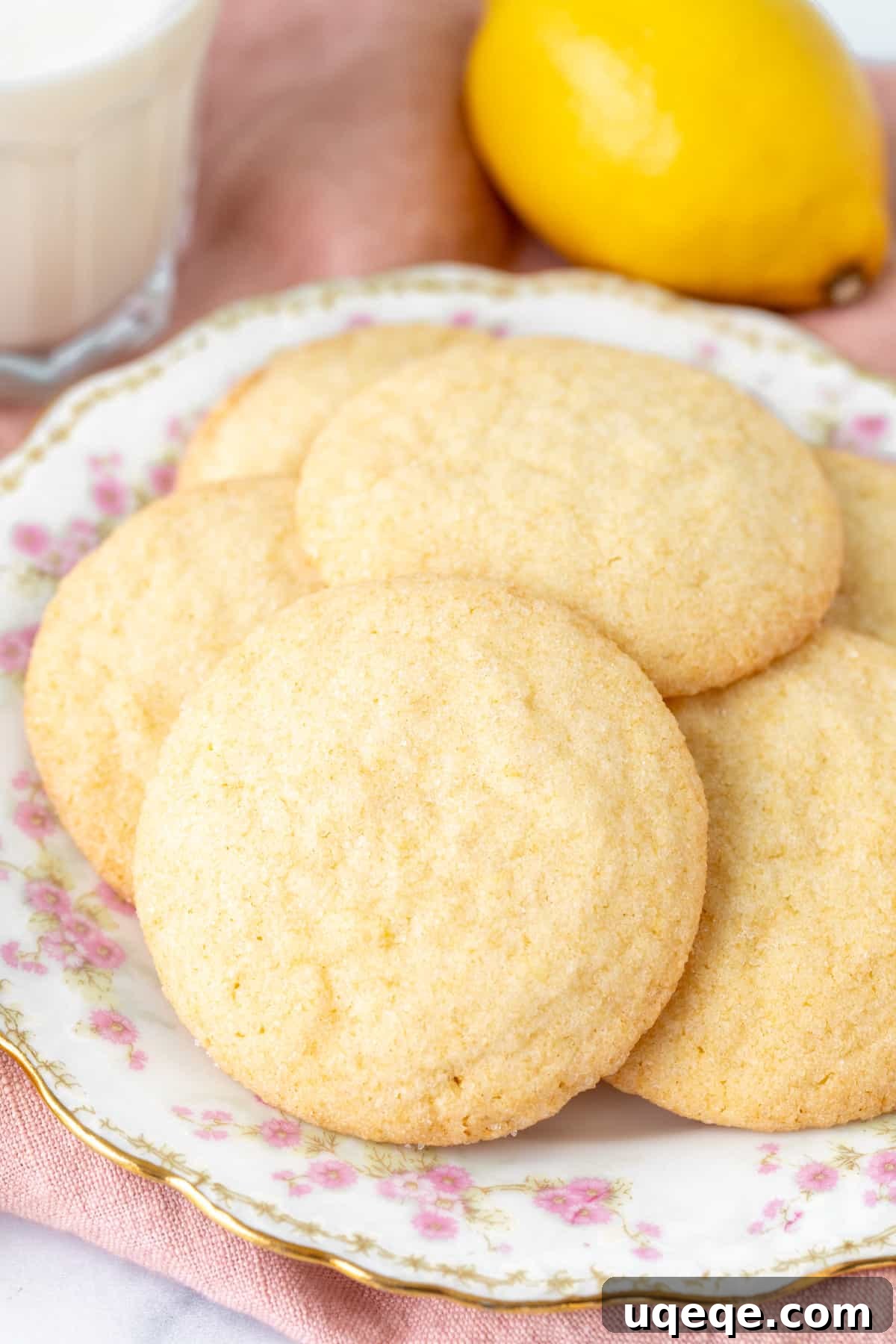
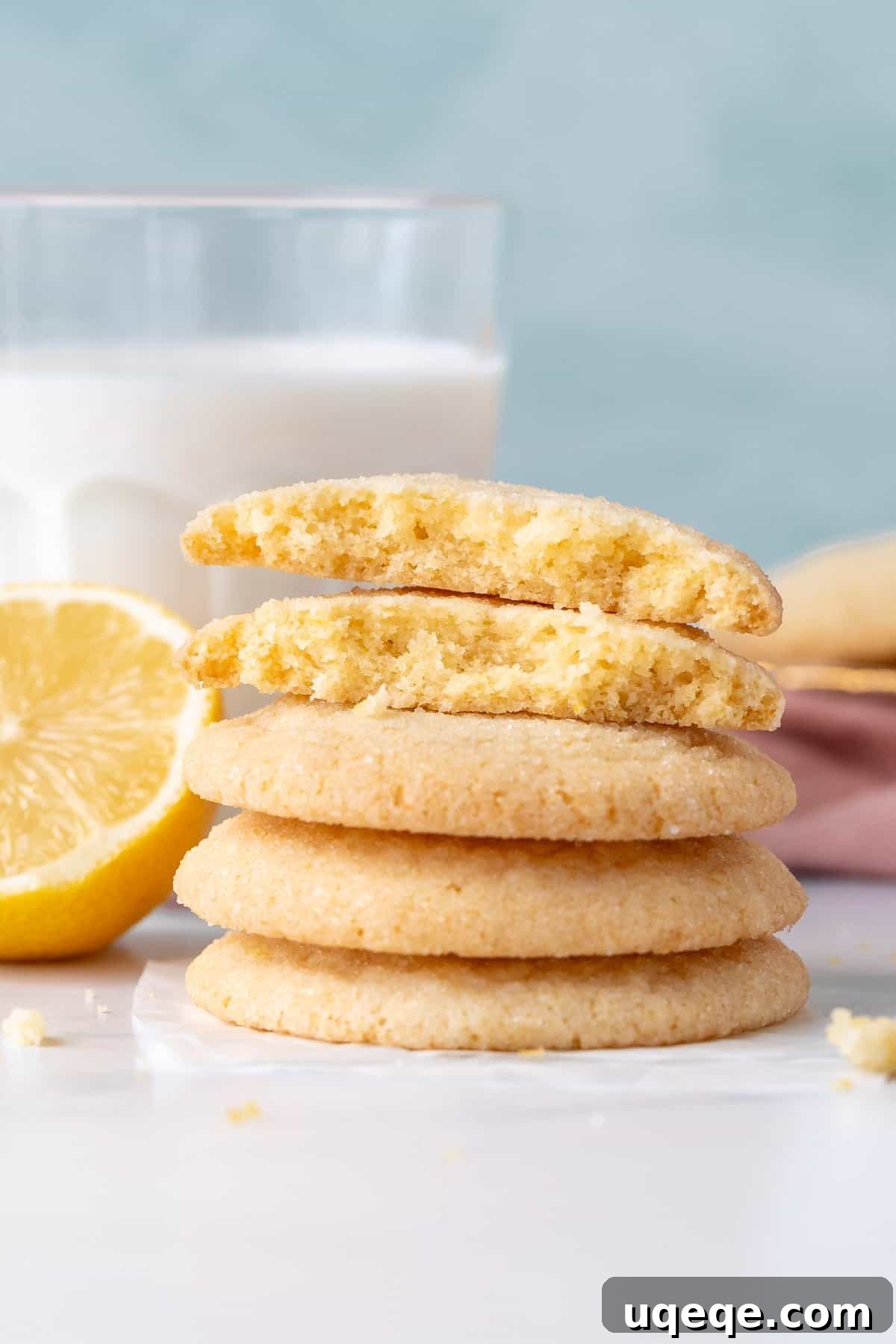
If your heart beats for buttery, citrus-infused delights – be it a moist lemon loaf, tangy lemon bars, or a fluffy lemon cake – then prepare to fall head over heels for these lemon sugar cookies. This recipe is a vibrant, citrusy twist on the classic chewy sugar cookie, elevating a beloved staple into something truly extraordinary. What sets these cookies apart is their incredible balance: a soft and yielding interior that gives way to a pleasant chew, complemented by a sparkling sugar coating that provides an irresistible crunch around every edge. The flavor profile is a magnificent symphony of citrus – a vibrant zing that dances on your palate, yet remains perfectly sweet and never veers into overly tart or sour territory. They are truly sunshine in cookie form, guaranteed to brighten any day.
Getting the Perfect Lemon Flavor: Zest, Extract, and Juice Explained
Achieving that quintessential “sunshine” flavor in a lemon cookie is paramount, and it’s a careful balance of ingredients. For these cookies, we harness the power of both fresh lemon zest and concentrated lemon extract. This combination ensures a robust and authentic lemon taste that permeates every crumb, without compromising the delicate texture we’re aiming for.
Why Lemon Extract is Your Secret Weapon for Chewy Cookies
You might be tempted to reach for fresh lemon juice to infuse your cookies with citrus, and while lemon juice has its place in many lemon desserts, it’s not ideal for these chewy sugar cookies. My experiments with lemon juice revealed a critical issue: to achieve a sufficiently strong lemon flavor, you’d need to add a significant amount of liquid to the dough. This extra moisture inevitably leads to a cakey texture, losing that desired chewy quality that makes these cookies so special. Lemon juice, being mostly water, dilutes the fat and sugar in the dough, causing it to puff up more like a cake than spread and chew like a cookie.
This is where lemon extract becomes your best friend. Lemon extract is a potent, concentrated flavoring agent, meaning a small amount goes a very long way. Because it’s so concentrated, you can infuse the dough with intense lemon flavor without adding excess liquid. This allows the cookies to retain their ideal balance of ingredients, resulting in that delightful soft and chewy texture that we all adore. You’ll typically find lemon extract conveniently located in the baking aisle of your grocery store, right alongside vanilla extract.
However, if lemon extract is absolutely unavailable, you can substitute it with fresh lemon juice. Just be aware that the lemon flavor won’t be as intensely bright or prominent, and the cookies might have a slightly softer, less chewy consistency due to the added liquid. For the best results and the most vibrant lemon experience, lemon extract is highly recommended.
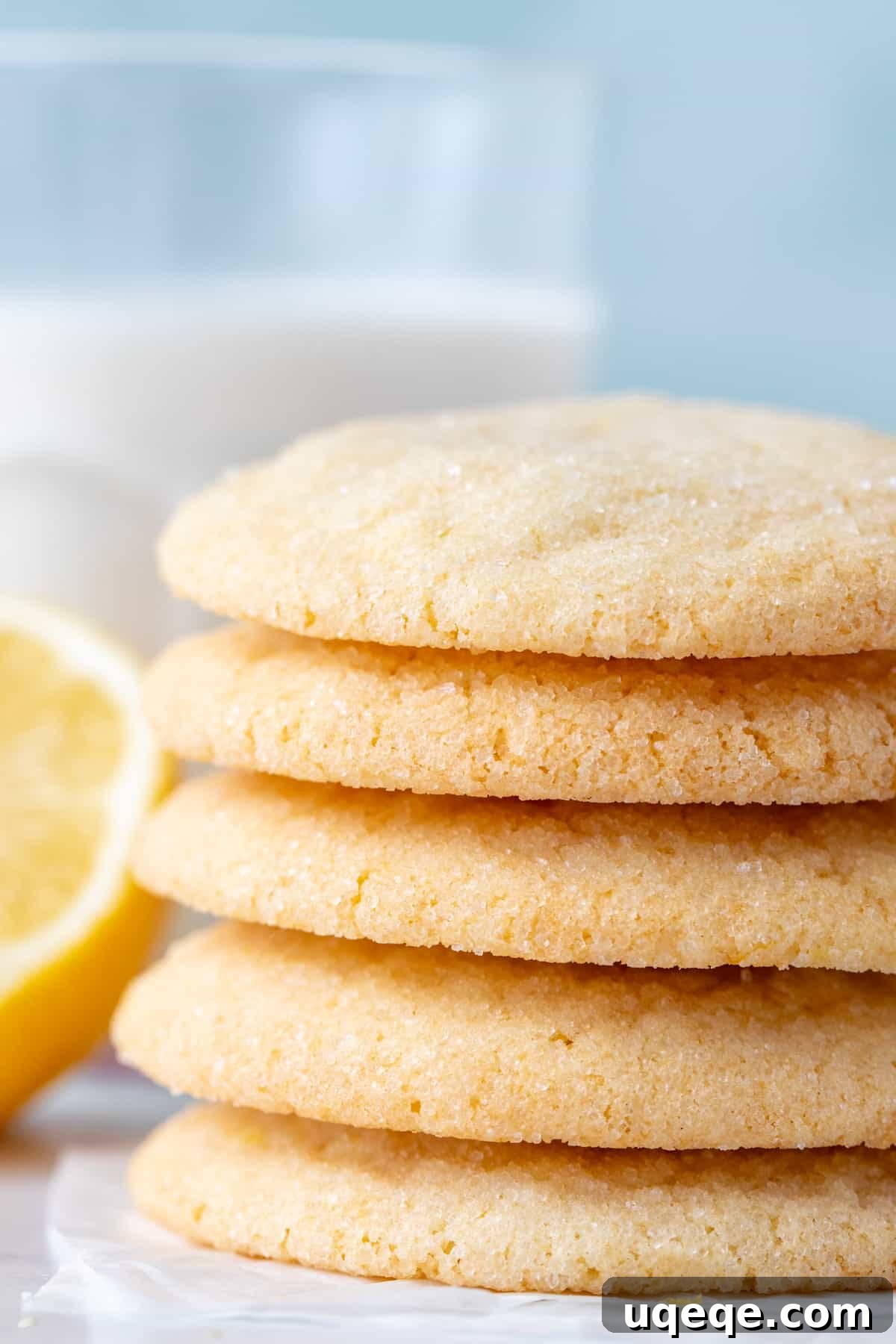
The Secret to Irresistibly Chewy Cookies: Beyond Basic Sugar Cookies
While the lemon flavor is undeniably the star, the chewy texture is its perfect companion. Several key ingredients and techniques contribute to that ideal soft-yet-chewy mouthfeel, distinguishing these from a standard, often crisp, sugar cookie. Understanding these elements is crucial for baking success.
The Role of Cornstarch and Extra Egg Yolk
One of the unsung heroes in achieving a supremely chewy cookie is cornstarch. Just a couple of teaspoons added to the dry ingredients work wonders by tenderizing the dough, preventing the gluten from becoming too strong, and ultimately leading to a softer, more yielding crumb. It helps create a delicate interior that contributes significantly to the chewiness.
Another crucial component for chewiness is the addition of an extra egg yolk. While one whole egg provides structure and moisture, the extra egg yolk (without the white) adds richness and fat, which inhibits gluten development even further and contributes to a denser, chewier texture. Egg yolks are natural emulsifiers and add a beautiful golden hue to the cookies, enhancing their visual appeal as well.
Perfecting Butter Temperature for Optimal Dough Consistency
The temperature of your butter is not just a suggestion; it’s a critical factor in cookie success. For these lemon sugar cookies, you want the butter to be softened but *not* melted. Softened butter creamed with sugar creates tiny air pockets, which are essential for a light yet chewy cookie. If your butter is too cold, it won’t cream properly, leading to a dense dough. If it’s melted, it will incorporate differently, resulting in a greasier dough that spreads too much and yields flatter, crispier cookies instead of soft and chewy ones. Aim for butter that gives slightly when pressed, but still holds its shape.
The Sparkling Crunch: Why We Roll Our Lemon Sugar Cookies in Granulated Sugar
While optional, rolling your cookie dough balls in granulated sugar before baking is a step I highly recommend and one that truly elevates these lemon sugar cookies. This outer coating of sugar caramelizes slightly in the oven, creating a beautiful, sparkling crust that delivers a delightful crunch around the edges of each cookie. This textural contrast between the crisp exterior and the soft, chewy interior is simply irresistible. It also adds an extra layer of sweetness and makes the cookies look even more inviting and festive.
Baking Your Lemon Sugar Cookies: A Step-by-Step Journey to Perfection
Follow these detailed steps and accompanying tips to ensure your lemon sugar cookies turn out perfectly every time. Each stage is important for the final flavor and texture.
Preparing Your Workspace and Ingredients
- Begin by preheating your oven to 350°F (180°C). This ensures the oven is at the correct temperature when your cookies are ready to bake, which is crucial for even cooking.
- Line your cookie sheets with parchment paper or silicone baking mats. This simple step is vital for preventing the bottoms of the cookies from overbrowning, a common issue with lighter-colored cookies like these, and also ensures easy removal.
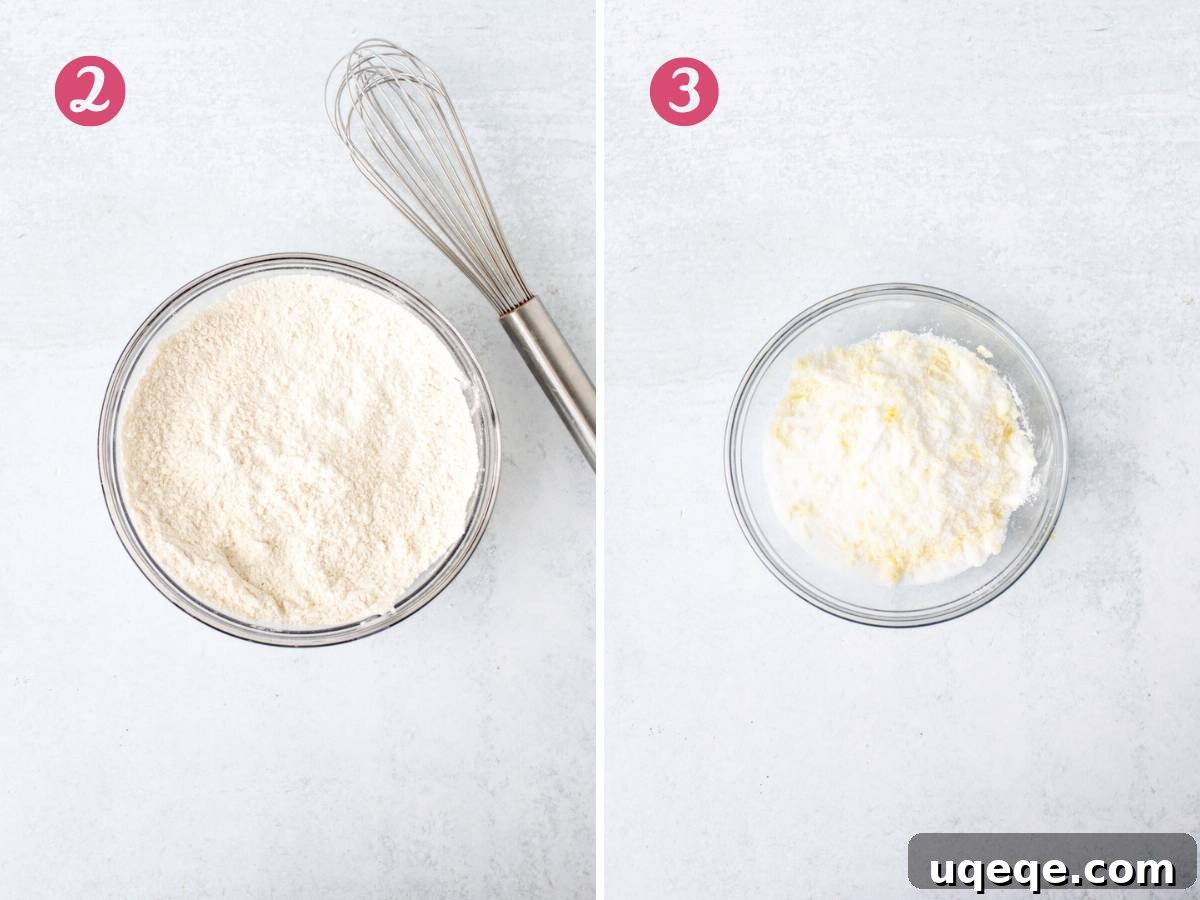
- In a medium-sized bowl, whisk together all your dry ingredients: all-purpose flour, cornstarch, baking soda, and salt. Whisking ensures that these ingredients are thoroughly combined, eliminating any lumps and evenly distributing the leavening agents (baking soda) and tenderizers (cornstarch) throughout the dough. This creates a uniform texture in your baked cookies.
Infusing the Lemon Flavor into Sugar
- In a separate small bowl, combine the granulated sugar (1 1/3 cup) with the lemon zest. Here’s a crucial flavor-boosting tip: use your fingertips to “pinch” or rub the lemon zest into the sugar for about 30 seconds. This simple act helps the oils from the lemon zest to release and infuse into the sugar, intensifying the overall lemon flavor of your cookies. You’ll notice the sugar becoming fragrant and slightly yellow.
Creaming Butter and Sugar: The Foundation of Flavor
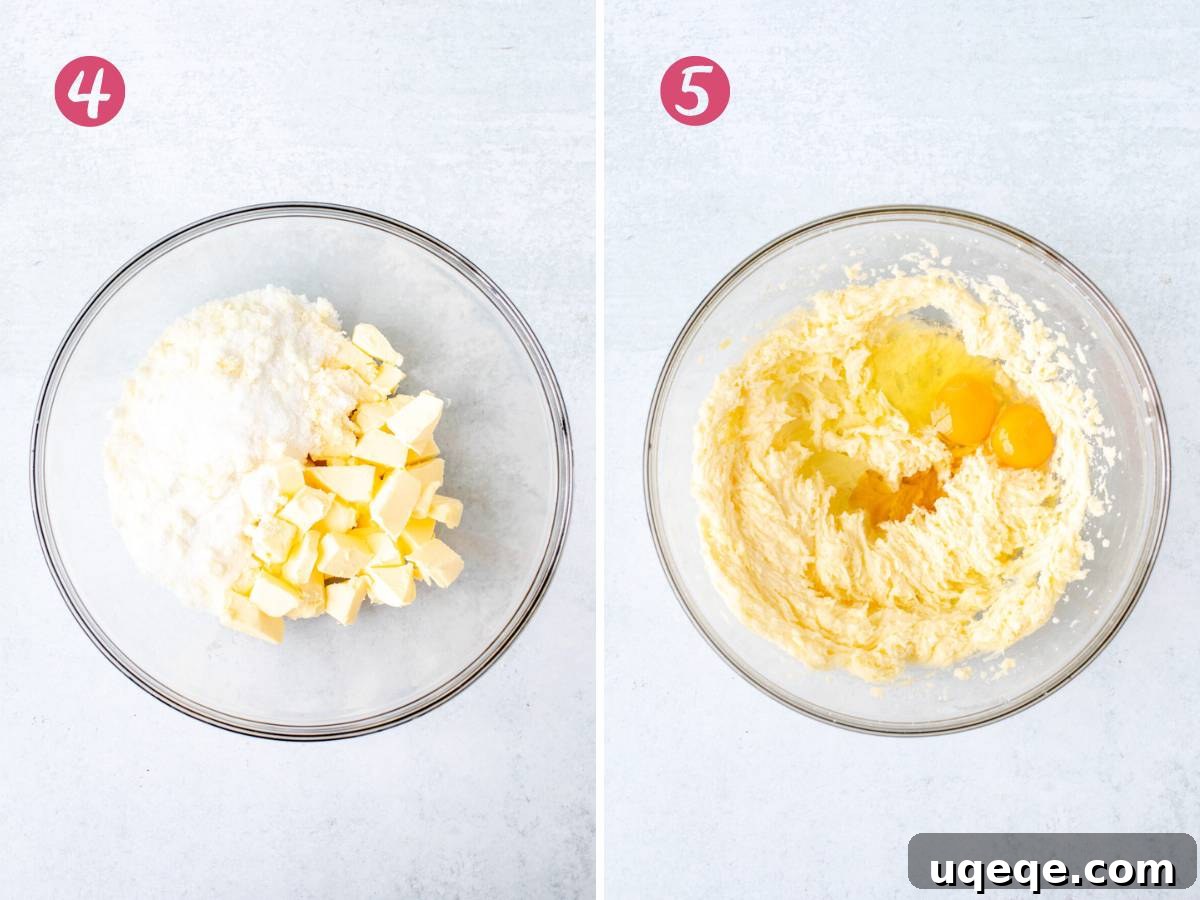
- In a large mixing bowl, using an electric mixer, beat together the slightly softened, cubed unsalted butter with the lemon-infused sugar mixture. Cream these together until the mixture is light, fluffy, and pale yellow. This process incorporates air into the butter, which is essential for the cookie’s final texture. Remember, the butter should be softened but not melted, as melted butter would lead to a different, less desirable cookie texture.
Mixing Wet Ingredients for Richness and Chewiness
- Next, beat in the large egg, the additional large egg yolk (discarding the white), vanilla extract, and lemon extract. The extra egg yolk is key to making these cookies extra chewy and rich. Ensure all ingredients are well combined, scraping down the sides of the bowl as needed to incorporate everything evenly.
Combining Wet and Dry: The Art of Dough Formation
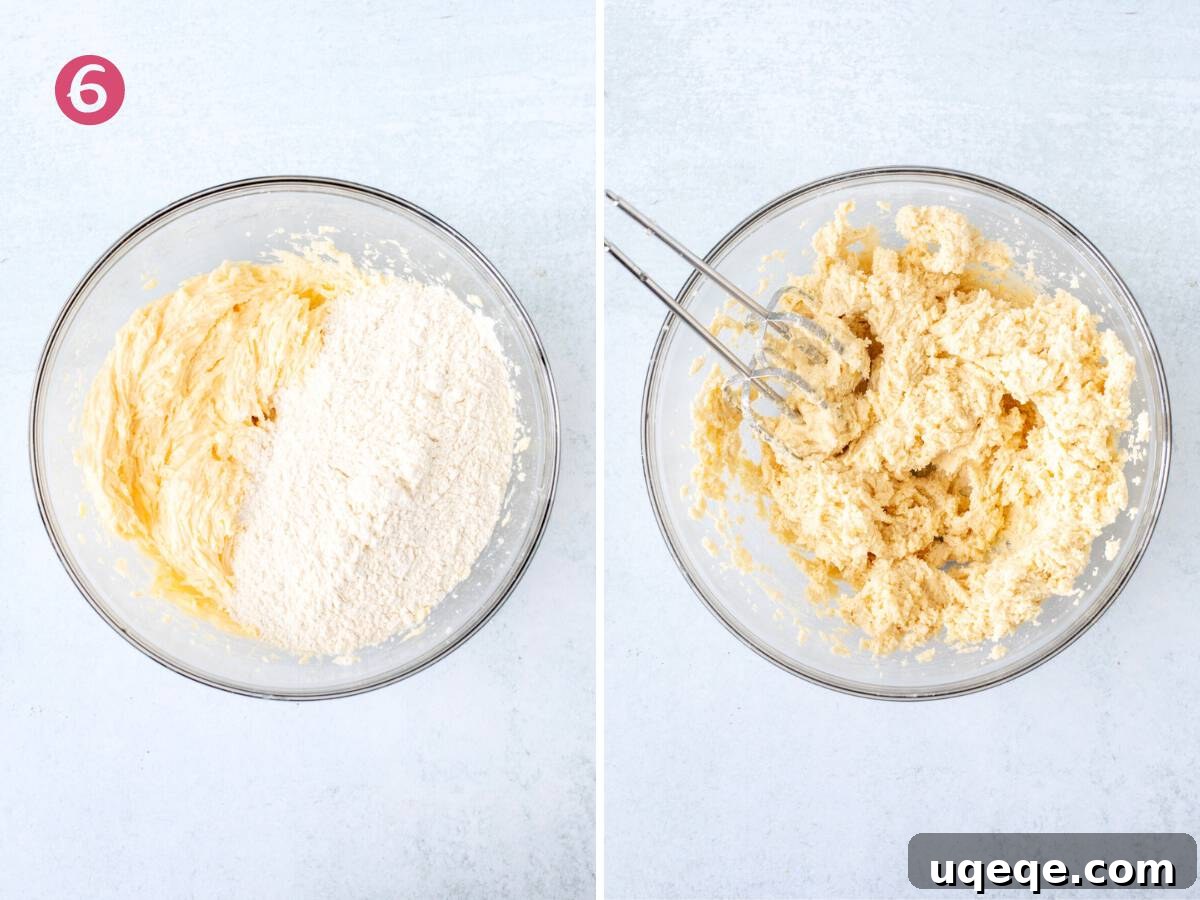
- Gradually add the whisked dry ingredients to the butter mixture. Start your mixer on a very low speed to prevent a “flour cloud,” then gradually increase the speed to medium until the dry ingredients are just incorporated. Be careful not to overmix the dough, as this can develop the gluten too much, resulting in tougher cookies. Mix only until no streaks of flour remain.
Forming and Coating the Cookie Dough Balls
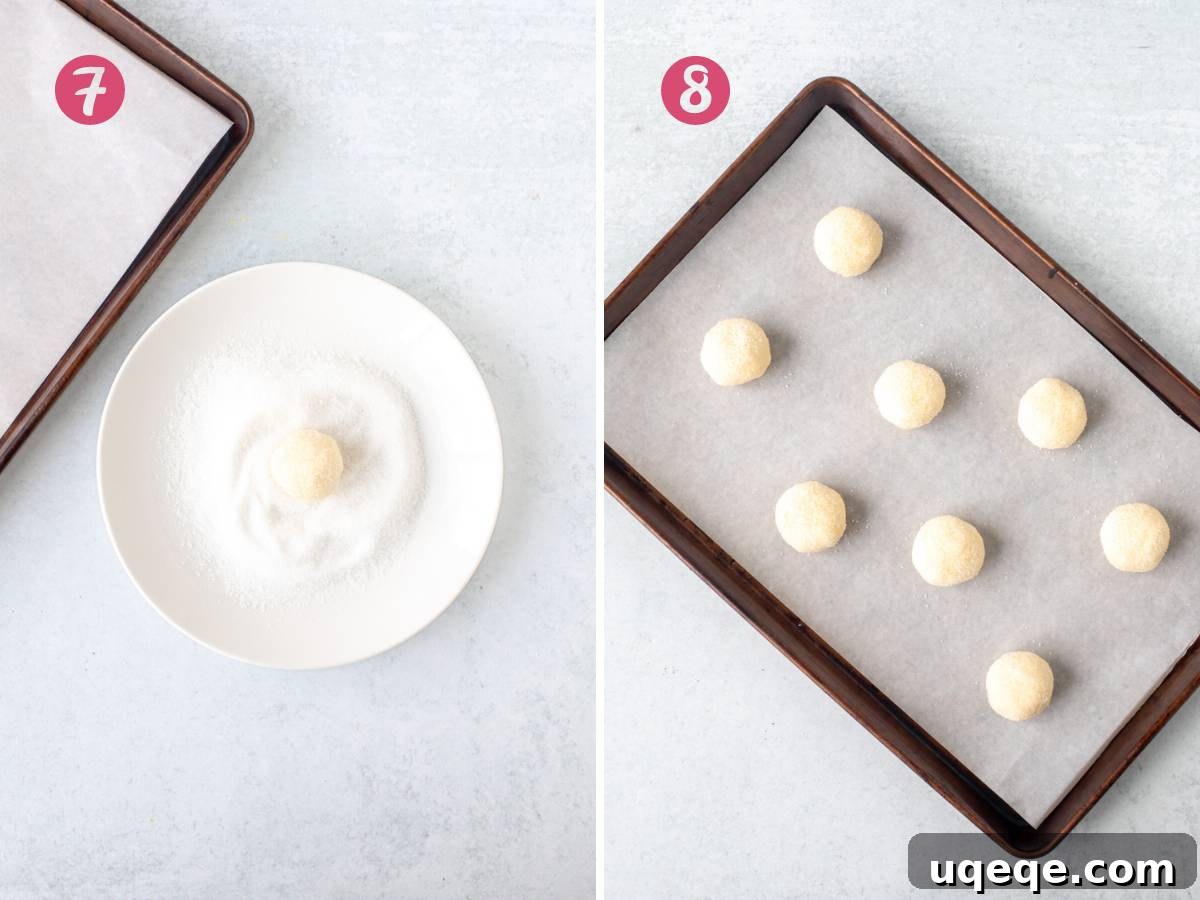
- Pour the remaining 1/3 cup of granulated sugar onto a small plate. Using a cookie scoop (approximately 1 to 1.5 tablespoons of dough per cookie), scoop the dough into uniform balls. Uniformity is important for even baking. Roll each cookie dough ball in the granulated sugar, ensuring it’s evenly coated. This step adds that delightful crunchy texture and sparkle to your finished cookies.
- Place the sugar-coated cookie dough balls about 2 inches apart on your prepared cookie sheets. This spacing is important to prevent them from spreading into each other during baking.
Baking to Golden Perfection
- Bake one cookie sheet at a time in the middle rack of your preheated oven for approximately 9-11 minutes, or until the tops of the cookies look just set and the edges are lightly golden. The cookies might still appear slightly soft in the center, but they will continue to set as they cool. Overbaking can lead to dry, less chewy cookies, so keep a close eye on them.
- Allow the cookies to cool on the baking tray for at least 10 minutes before carefully transferring them to a wire rack to cool completely. This cooling period on the hot tray helps them to firm up without breaking.
Smart Baking: Make-Ahead & Freezing Tips for Lemon Sugar Cookies
These lemon sugar cookies are fantastic for meal prepping or preparing in advance, making them perfect for unexpected guests or sudden cravings. Here’s how you can enjoy fresh-baked cookies with minimal effort, whenever you desire.
Storing Baked Lemon Sugar Cookies
Once baked and completely cooled, your lemon sugar cookies will stay wonderfully fresh in an airtight container at room temperature for approximately 4-5 days. While they are always at their absolute best when freshly baked, they retain their delightful chewiness and lemon flavor for several days, making them an excellent treat to have on hand.
Preparing Lemon Cookie Dough in Advance
Life can be busy, but that doesn’t mean you can’t enjoy homemade cookies. The cookie dough itself can be prepared up to 48 hours in advance. After mixing the dough, cover the bowl tightly with plastic wrap and chill it in the refrigerator. When you’re ready to bake, simply scoop the dough into balls, roll them in sugar, and bake as directed in the recipe. Chilling the dough can even enhance the flavors slightly and reduce spreading during baking.
Freezing Cookie Dough for Future Cravings
For ultimate convenience, you can freeze individual cookie dough balls (already rolled in sugar!) in a freezer bag for up to 2 months. This is a game-changer for having warm, fresh cookies on demand. When a craving strikes, simply place the frozen dough balls on a lined cookie sheet and bake them directly from frozen. There’s no need to thaw them first! You might find they require an extra 1-2 minutes in the oven compared to fresh dough, so keep an eye on them until the tops are set and edges are golden.
Troubleshooting Your Lemon Sugar Cookies: Tips for Success
Even experienced bakers can encounter hiccups. Here are some common cookie problems and how to avoid them to ensure your lemon sugar cookies are perfect every time.
Why Did My Cookies Spread Too Much?
If your cookies turn out flatter than expected, a few factors could be at play:
- Butter Temperature: The most common culprit. If your butter was too warm or melted, it will cause the cookies to spread excessively. Ensure butter is merely softened.
- Measuring Flour: Too little flour can lead to a wet dough that spreads. Always measure flour accurately, ideally by weight (grams) or by spooning it into a measuring cup and leveling it off, rather than scooping directly from the bag.
- Oven Temperature: An oven that’s not hot enough can cause cookies to spread before they set. Use an oven thermometer to verify accuracy.
- Chilling Dough: If your kitchen is warm or the dough feels particularly soft, a brief chill in the refrigerator (15-30 minutes) before baking can help prevent over-spreading.
My Cookies Are Dry and Crumbly, What Went Wrong?
Dry, crumbly cookies are often a sign of one of two things:
- Too Much Flour: Over-measuring flour is a common mistake that leads to dry cookies. Always weigh your flour if possible for precision, or use the spoon-and-level method.
- Overbaking: Even a minute or two too long in the oven can transform a chewy cookie into a dry one. Cookies continue to bake slightly from residual heat after being removed from the oven. Look for just set tops and lightly golden edges, and err on the side of underbaking if unsure.
- Missing Egg Yolk: The extra egg yolk adds crucial moisture and fat. Ensure you don’t omit it!
Creative Variations & Delightful Serving Suggestions
While these lemon sugar cookies are divine as is, a few simple additions or serving ideas can elevate them even further, catering to different tastes and occasions.
Lemon Glaze for Extra Zing
For an extra punch of lemon flavor and a beautiful finish, consider drizzling your cooled cookies with a simple lemon glaze. Whisk together powdered sugar with a small amount of fresh lemon juice (and a tiny bit of lemon zest, if desired) until you reach a smooth, pourable consistency. Drizzle over the cookies and let the glaze set before serving.
Adding Poppy Seeds or White Chocolate
To introduce new textures and flavors, try incorporating some add-ins into your dough:
- Lemon Poppy Seed Cookies: Add 1-2 tablespoons of poppy seeds to your dry ingredients for a classic flavor pairing and a lovely speckled appearance.
- White Chocolate Lemon Cookies: Fold in 1/2 to 1 cup of white chocolate chips or chunks during the last stage of mixing the dry ingredients into the wet. The sweetness of the white chocolate beautifully complements the tartness of the lemon.
Perfect Pairings for Your Lemon Sugar Cookies
These versatile cookies pair wonderfully with a variety of beverages and desserts. Enjoy them with:
- A warm cup of herbal tea or a classic black tea.
- A refreshing glass of cold milk.
- Alongside fresh berries or a scoop of vanilla ice cream for a delightful dessert.
- As part of a springtime dessert platter.
Chewy, satisfying, and bursting with the perfect citrus flavor – these lemon sugar cookies are the quintessential treat for spring or for anyone who harbors a deep love for all things lemon. Bake a batch today and let the sunshine in!
More delicious lemon treats to try:
- Lemon Cupcakes
- No-Bake Lemon Cheesecake
- Lemon Bundt Cake
- Lemon Loaf
Lemon Sugar Cookies Recipe
These lemon sugar cookies boast a delightful sunshine-y lemon flavor and an irresistible chewy texture. Rolled in sugar for a perfect crunchy edge, they’re ideal for spring or any time you’re craving a simple yet special buttery cookie.
Prep Time: 30 minutes
Cook Time: 10 minutes
Total Time: 1 hour
Yields: 32 cookies
Equipment
- Cookie Sheets
- Electric Mixer (stand or hand mixer)
- Large and Medium Mixing Bowls
- Cookie Scoop (optional, but recommended)
Ingredients
- 2 3/4 cups all-purpose flour (344 grams)
- 2 teaspoons cornstarch
- 1/2 teaspoon baking soda
- 1/4 teaspoon salt
- 1 1/3 cups granulated sugar (267 grams)
- 2 tablespoons lemon zest
- 1 cup unsalted butter (226 grams), softened slightly & cut into cubes
- 1 large egg
- 1 large egg yolk, discard the white
- 1 1/2 teaspoons vanilla extract
- 2 teaspoons lemon extract
- 1/3 cup granulated sugar (67 grams), for rolling the cookie balls in
Instructions
- Preheat the oven to 350F (180C) and line cookie sheets with baking paper or silicone baking mats.
- In a medium bowl, whisk together the flour, cornstarch, baking soda, and salt. Set aside.
- In a small bowl, pinch together the 1 1/3 cup sugar and lemon zest. Rub the lemon zest into the sugar for about 30 seconds to release the oils and intensify the lemon flavor.
- In a large bowl, using an electric mixer, beat together the softened butter with the lemon-infused sugar mixture until light and fluffy.
- Beat in the egg, additional egg yolk, vanilla extract, and lemon extract until well combined.
- Gradually mix the dry ingredients into the butter mixture, starting with the mixer on a low speed and gradually increasing to medium speed until just combined. Do not overmix.
- Pour the 1/3 cup granulated sugar onto a small plate. Scoop the dough into balls with about 1 to 1.5 tablespoons of dough each and roll each dough ball evenly in the sugar.
- Place the cookie dough balls about 2 inches apart on the lined cookie sheets.
- Bake 1 sheet at a time in the middle of the oven for about 9-11 minutes, or until the tops look just set and the edges are lightly golden. The centers may still appear slightly soft.
- Cool on the cookie tray for at least 10 minutes before transferring to a wire rack to continue cooling completely.
Notes
- Flour Measurement: For the most accurate results and to avoid dry, thick cookies, measure flour carefully. Use a kitchen scale and weigh in grams, or whisk the flour first, then spoon it into a dry measuring cup and level off the top.
- Lemon Extract: Lemon extract is typically found in the baking aisle near vanilla extract. If unavailable, you can substitute with 1 tablespoon of freshly squeezed lemon juice. Please note that using lemon juice will result in a less prominent lemon flavor and a slightly less chewy cookie texture.
- Storage: Store baked and cooled cookies in an airtight container at room temperature for up to 4 days. While they remain delicious, cookies are always best enjoyed fresh.
- Freezing: Unbaked cookie dough balls (already rolled in sugar) can be placed in a freezer bag and frozen for up to 2 months. Bake directly from frozen, without thawing. They may require an additional 1-2 minutes of baking time.
- Nutrition: The provided nutrition details are an estimate only, based on 1 cookie rolled in sugar and assuming the recipe yields 32 uniform cookies.
Nutrition Information (Estimated per cookie)
- Calories: 135 kcal
- Carbohydrates: 19g
- Protein: 1g
- Fat: 6g
- Saturated Fat: 4g
- Polyunsaturated Fat: 0.3g
- Monounsaturated Fat: 2g
- Trans Fat: 0.2g
- Cholesterol: 27mg
- Sodium: 39mg
- Potassium: 17mg
- Fiber: 0.3g
- Sugar: 10g
- Vitamin A: 194 IU
- Vitamin C: 0.5mg
- Calcium: 6mg
- Iron: 1mg