
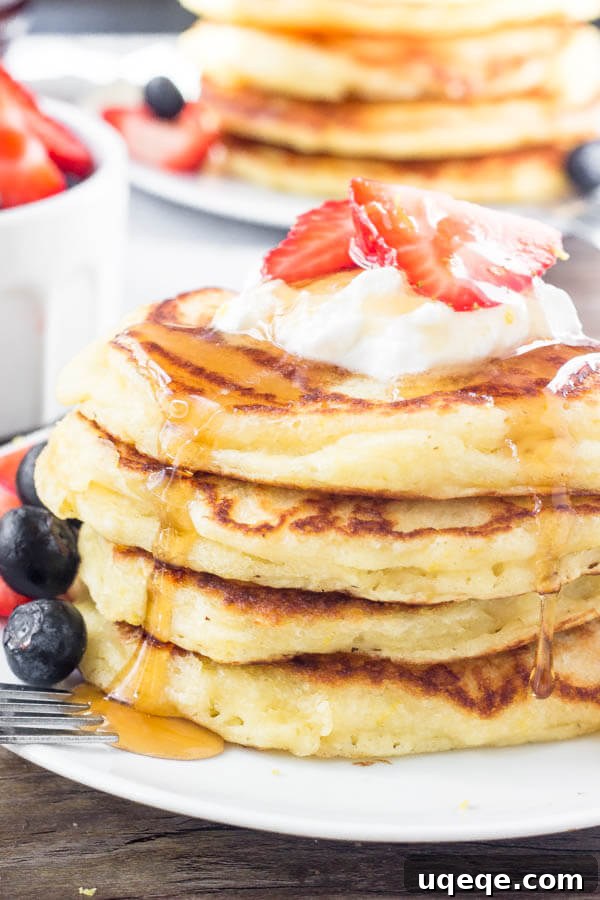
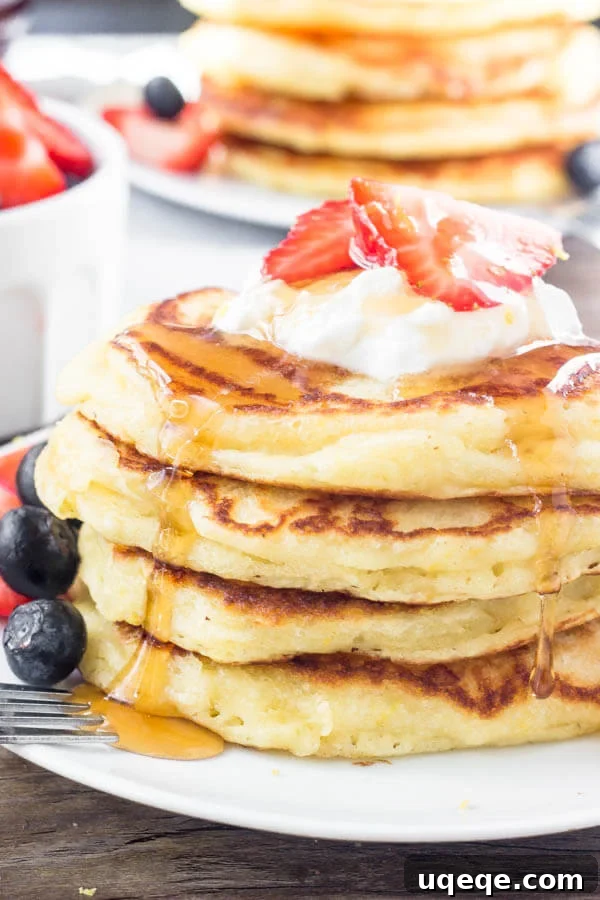
Delightfully Fluffy Lemon Pancakes: Your Ultimate Sunny Breakfast Guide
Imagine waking up to the aroma of freshly made pancakes, but with a vibrant, zesty twist that instantly brightens your day. These lemon pancakes are not just any pancakes; they are a culinary experience, transforming a simple breakfast into something truly extraordinary. Infused with the irresistible tang of fresh lemon juice and fragrant lemon zest, each bite offers a burst of sunshine, making them the ideal choice for a special weekend brunch or a delightful start to any day.
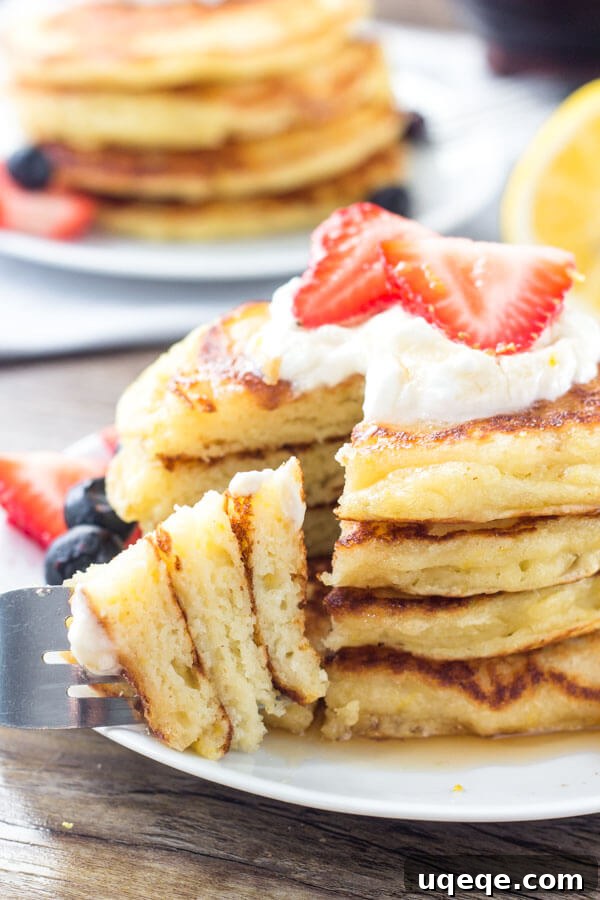
What makes these lemon pancakes so captivating? It’s their perfect balance of textures and flavors. They are incredibly fluffy, with a tender crumb that melts in your mouth, while their edges are perfectly golden and slightly crisp. The lemon flavor is prominent yet perfectly balanced – bright and invigorating without being overly sour. This delightful tang beautifully complements the subtle richness of butter, creating a harmonious symphony that elevates these pancakes beyond the ordinary. If you’ve been searching for a pancake recipe that feels a little more gourmet, a little more memorable, and incredibly easy to achieve, then your quest ends here.
Why These Lemon Pancakes Are a Must-Try
I’ve long envisioned a pancake recipe that captures the essence of a beautiful day, and these lemon pancakes are the embodiment of that dream. They offer a refreshing departure from traditional buttermilk pancakes, introducing a lively citrus note that truly makes them stand out. The secret lies in using fresh lemons, both their juice and zest, to impart a natural, aromatic flavor that bottled lemon juice simply cannot replicate.
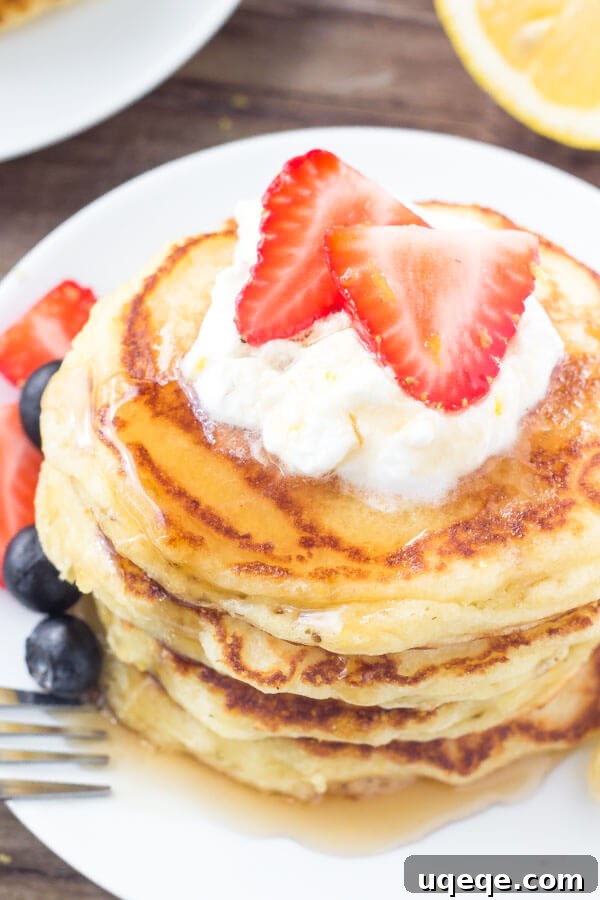
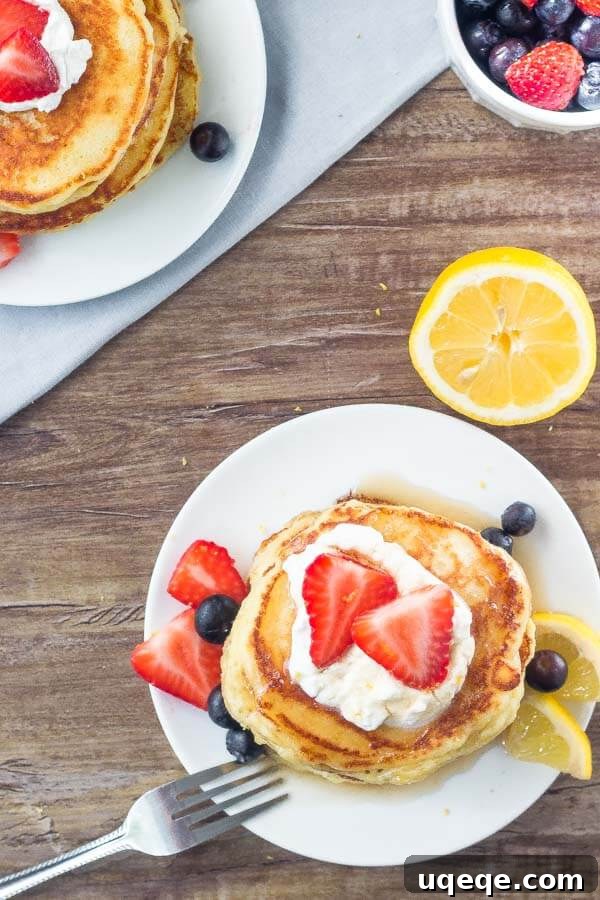
The flavor profile is carefully crafted to be bright and fresh, never veering into an overpowering sourness. It’s a gentle, sunny flavor that highlights, rather than masks, the classic, comforting taste of a perfectly made pancake. This subtle sophistication makes them feel undeniably special, transforming a routine breakfast into a memorable occasion. Served with a medley of fresh summer berries, a drizzle of maple syrup, or a dollop of whipped cream, they become an indulgent treat that everyone will adore.
Crafting Your Perfect Lemon Pancake Recipe
Despite their gourmet appeal, these lemon pancakes are remarkably simple to prepare. The process closely mirrors that of making traditional buttermilk pancakes, ensuring that even novice cooks can achieve fantastic results. The key to their exquisite flavor and texture lies in the quality of your ingredients and a few straightforward techniques.
The Magic of Fresh Lemon
The heart of these pancakes is, of course, the lemon. Using freshly squeezed lemon juice and finely grated lemon zest is absolutely crucial. The zest contains essential oils that provide a vibrant, aromatic flavor, while the fresh juice offers a clean, bright tang. I’ve experimented with various lemons, including standard varieties and sweeter Meyer lemons, and both yield utterly delicious results. However, I strongly advise against using bottled lemon juice, as its often-concentrated sourness can detract from the delicate balance of the pancakes. Always opt for fresh for the best flavor experience.
Enhancing the Flavor Profile
Beyond the lemon, a few other ingredients contribute significantly to the overall deliciousness. A touch of melted unsalted butter adds a rich, comforting depth, enhancing the classic pancake flavor. Granulated sugar provides a hint of sweetness that perfectly complements the lemon, ensuring the pancakes are not too tart. It also plays a vital role in achieving those coveted golden-brown edges during cooking. Finally, vanilla extract adds another layer of warmth and complexity, rounding out the flavors beautifully.
Achieving Your Desired Pancake Thickness
When it comes to pancakes, personal preference for thickness varies widely. My recipe yields wonderfully thick, fluffy pancakes, which is my preferred style. This thickness creates a substantial, satisfying bite that’s perfect for soaking up syrups and toppings. However, if you prefer a slightly thinner pancake, simply adjust the amount of all-purpose flour. Instead of 2 1/4 cups, use 2 cups. This small modification will result in lighter, more delicate pancakes while still retaining all that incredible lemon flavor. Don’t be afraid to experiment to find your ideal consistency!
Essential Tips for Perfect Pancakes Every Time
Making great pancakes is an art, but it’s an art that’s easily mastered with a few simple techniques. Follow these tips to ensure your lemon pancakes turn out perfectly fluffy, golden, and delicious:
- **Room Temperature Ingredients are Key:** For a smooth, evenly mixed batter, it’s best to have your wet ingredients – particularly the eggs and milk – at room temperature. This helps them emulsify properly with the melted butter and other liquids, preventing lumps and ensuring a consistent texture. If you’re short on time, you can quickly bring an egg to room temperature by placing it in a bowl of lukewarm water for about 5 minutes. Similarly, microwave milk on a low setting for 10-20 seconds. Otherwise, simply taking them out of the fridge 10-15 minutes before you start mixing will do the trick.
- **Do Not Overmix the Batter:** This is perhaps the most crucial tip for achieving truly fluffy pancakes. Once you combine the wet and dry ingredients, mix them gently and only until just combined. A few lumps in the batter are not only acceptable but actually desirable! Overmixing develops the gluten in the flour, leading to tough, chewy pancakes instead of light and airy ones. Stir just enough to moisten the dry ingredients.
- **Choose the Right Fat for Your Pan:** When greasing your frying pan or griddle, I highly recommend using oil (like vegetable or canola oil) instead of butter. While butter adds flavor, it has a lower smoke point and tends to burn easily, leaving dark, scorched spots on your pancakes. Oil, with its higher smoke point, ensures a consistent, golden-brown finish without burning. A light coating is all you need.
- **Master Your Heat Settings:** If your pancakes are burning on the outside but remain raw or undercooked in the center, your heat is too high. Conversely, if they take too long to cook and don’t brown properly, your heat is too low. Aim for a medium-low heat on your stovetop or around 350°F (175°C) on an electric griddle. This allows the pancakes to cook through evenly while developing a beautiful golden crust. Adjust as needed – every stovetop is different!
- **Look for Bubbles:** A tell-tale sign that your pancake is ready to flip is when you see small bubbles appearing on the surface, especially around the edges, and the edges look set. This indicates that the bottom is cooked and the pancake is firm enough to turn without falling apart.
- **Keep Them Warm:** To ensure all your pancakes are warm when serving, you can place them on a baking sheet in a preheated oven at its lowest setting (around 200°F / 95°C) while you finish cooking the rest of the batch. This prevents them from getting cold and maintains their perfect texture.
Delicious Serving Suggestions & Variations
These lemon pancakes are a truly versatile dish, perfect for any breakfast or brunch spread. They are incredibly delicious on their own, but pairing them with the right accompaniments takes them to the next level. Here are some of my favorite ways to enjoy them:
- **Classic Pairings:** A generous drizzle of maple syrup is always a winner. For an extra touch of indulgence, a dollop of freshly whipped cream adds a luxurious creaminess that beautifully contrasts the lemon’s brightness.
- **Fresh Fruit Medley:** The vibrant flavor of lemon pancakes makes them an excellent canvas for fresh fruit. Think sweet summer berries like strawberries, blueberries, raspberries, or blackberries. Sliced peaches or segments of oranges also make fantastic additions. A simple fruit salad on the side brightens the entire meal.
- **Homemade Fruit Sauces:** To elevate your pancakes even further, consider a homemade fruit sauce. A luscious strawberry sauce or a sweet and tangy blueberry sauce would be absolutely divine. These sauces add moisture, flavor, and a beautiful presentation.
- **Savory Contrasts:** For those who enjoy a sweet and savory combination, a side of crispy bacon or a few breakfast sausages can be a delightful addition, balancing the sweetness and tang of the pancakes.
- **Lemon Curd or Glaze:** For an intensified lemon experience, spread a layer of homemade lemon curd between the pancakes or drizzle a simple lemon glaze (powdered sugar mixed with lemon juice) over the stack.
These lemon pancakes genuinely taste more special than your everyday pancakes, yet they require no extra effort. They are the perfect way to bring a little gourmet flair to your breakfast table and impress your family and guests. Once you try them, you’ll find yourself reaching for this recipe again and again.

Lemon Pancakes
Rate Recipe
Print Recipe
Ingredients
- 2 1/4 cups all-purpose flour
- 2 tsp baking powder
- 1 tsp baking soda
- 1/4 tsp salt
- 1 1/2 cups milk*
- 1/2 cup lemon juice, freshly squeezed
- 2 large eggs
- 2 tsp vanilla extract
- 3 tablespoons unsalted butter, melted
- 1/4 cup granulated sugar
- 2 tablespoons lemon zest
Instructions
-
In a large bowl, whisk together the flour, baking powder, baking soda, and salt.
-
In a separate bowl, whisk together the milk and lemon juice.
-
In another liquid measuring cup or bowl, whisk together the eggs, vanilla extract, melted butter, sugar, and lemon zest.
-
Then, whisk the milk mixture into the bowl with the eggs.
-
Gently fold the wet ingredients into the dry ingredients. Mix only until just combined; a few lumps are fine.
-
Heat a griddle to 350°F (175°C) or a frying pan to medium-low heat. Lightly grease with oil or non-stick cooking spray.
-
Pour about 1/4 cup of batter onto the griddle/pan for each pancake. Fry until you see a few air bubbles form on the surface and the edges look set. Flip and continue to fry on the second side until both sides are golden brown and cooked through.
-
Repeat with the rest of the batter, greasing the pan lightly between batches if necessary.
Notes