
The Ultimate Homemade Coconut Cake with Fluffy Coconut Frosting
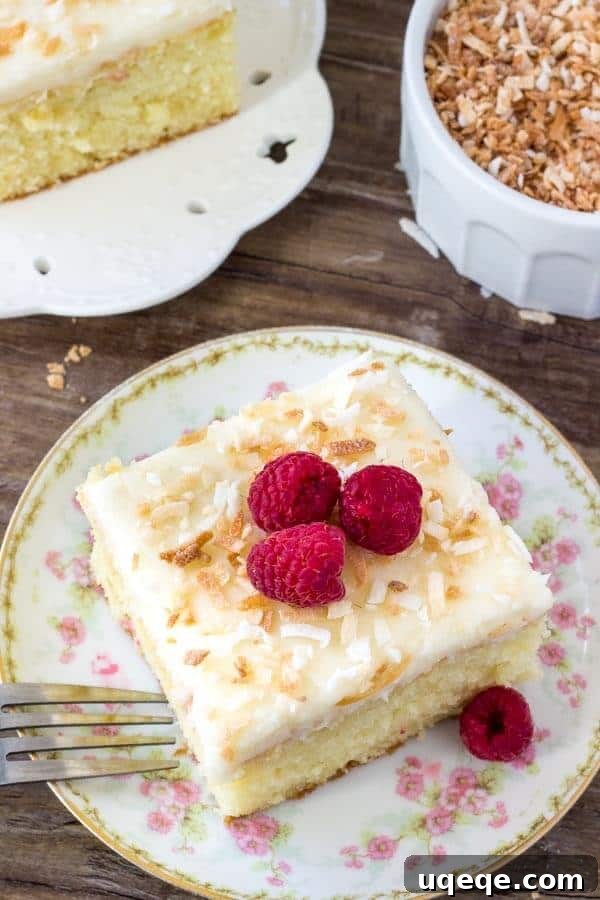
Prepare to indulge in what many call the best homemade coconut cake they’ve ever tasted. This isn’t just any dessert; it’s a culinary escape to a tropical paradise, right in your own kitchen. Our carefully crafted recipe yields a cake that is exceptionally moist, wonderfully tender, and absolutely brimming with genuine coconut flavor. Each slice is a delightful experience, enhanced by a generous layer of light and fluffy coconut frosting, crowned with a sprinkle of perfectly toasted coconut. For anyone who cherishes the unique taste of coconut, this tropical delight is an absolute must-try that promises to impress and satisfy.
Why This Homemade Coconut Cake Stands Out
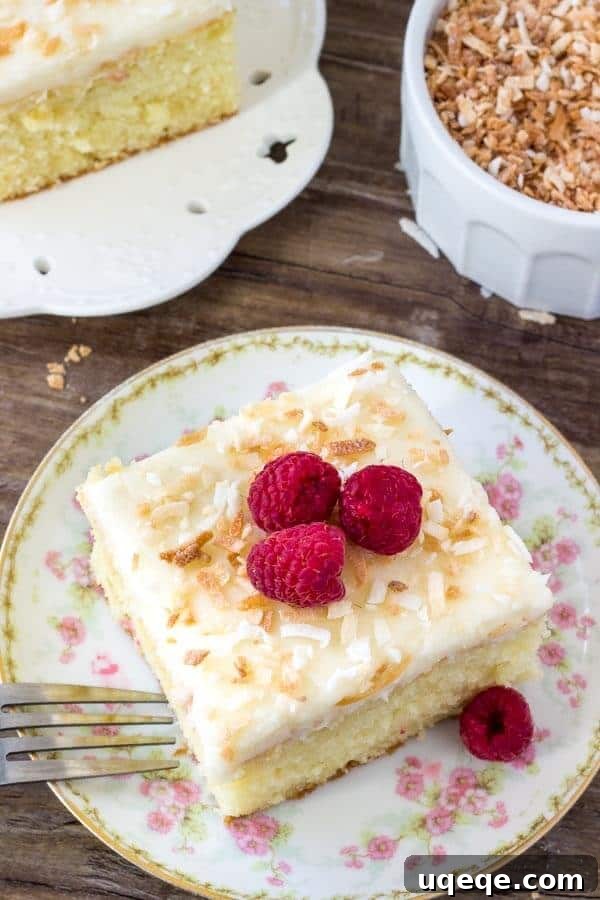
While I generally shy away from strong declarations about my own recipes, this coconut cake genuinely earns its praise. It truly is an exceptional creation, designed to deliver an unparalleled dessert experience. Here’s why this particular moist coconut cake recipe rises above the rest:
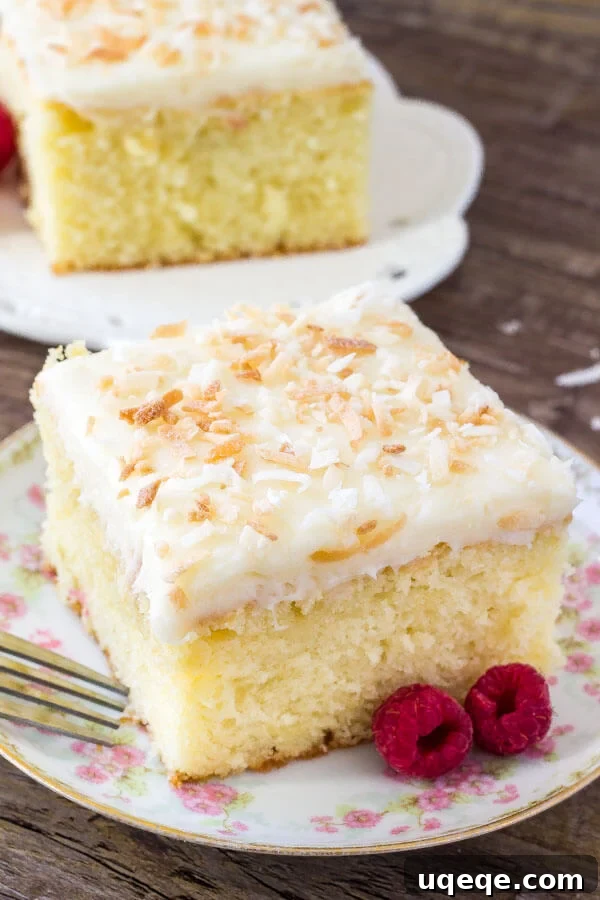
- Incredibly Tender and Moist Crumb: The cake boasts a truly tender, soft, and deliciously moist texture that simply melts in your mouth. This isn’t a dry, crumbly cake; it’s rich, buttery, and perfectly hydrated, ensuring a delightful bite every time. The careful balance of ingredients, including rich sour cream and creamy coconut milk, contributes to this luxurious crumb, making it a joy to eat.
- Authentic and Balanced Coconut Flavor: We’ve perfected a coconut flavor profile that is wonderfully pronounced yet never overpowering. It’s a delicate, natural taste of coconut that shines through without being excessively sweet or artificial. This authentic essence makes the cake deeply satisfying, appealing to true coconut aficionados.
- A Double Dose of Coconut Bliss: For an ultimate coconut experience, this cake is layered with flavor. Beyond the coconut infused into the cake batter itself, it’s generously topped with a rich, fluffy coconut buttercream frosting. This creates a harmonious blend of textures and intensified coconut notes in every single spoonful.
- Textural Delight with Toasted Coconut: To complete this tropical masterpiece, a sprinkling of toasted coconut adorns the top. This not only adds an appealing visual element but also introduces a delightful subtle crunch and a deeper, nuttier dimension to the overall flavor. It’s the perfect finishing touch that elevates the cake from merely good to truly unforgettable.
Mastering the Art of Baking Your Perfect Coconut Cake
Crafting this extraordinary homemade coconut cake is a rewarding process, and while it requires attention to detail, it’s surprisingly straightforward. This recipe is designed to guide you through each step, ensuring a flawless and delicious result. By understanding the purpose behind each instruction, you’ll achieve that coveted tender crumb and rich flavor every time.
- Prepare Dry Ingredients: In a large bowl, thoroughly whisk together the cake flour, baking powder, baking soda, and salt. Whisking ensures these ingredients are evenly distributed, which is crucial for uniform leavening and a consistent cake texture. Cake flour is essential here for its lower protein content, yielding a softer, more tender crumb.
- Whip Egg Whites: Carefully separate the eggs, ensuring no yolk contaminates the whites. In a clean, dry bowl, whisk the egg whites (optionally with a pinch of cream of tartar for stabilization) until stiff peaks form. This aeration is key to incorporating air into the batter, resulting in a lighter, fluffier cake. Set these aside gently.
- Combine Wet Ingredients (Dairy): In a separate small bowl or liquid measuring cup, stir together the sour cream and full-fat coconut milk until well combined. The sour cream adds richness and moisture, while the coconut milk infuses that irresistible tropical flavor.
- Cream Butter and Sugar: In a large mixing bowl, beat the softened unsalted butter and granulated sugar together until the mixture is light, fluffy, and pale in color. This process, known as creaming, creates air pockets that contribute to the cake’s structure. Then, beat in the egg yolks one at a time, followed by the vanilla extract and, crucially, the coconut extract for an intensified flavor boost.
- Alternate Wet and Dry Additions: With the mixer on low speed, gradually add about half of the coconut milk and sour cream mixture to the butter mixture, mixing until just combined. Immediately follow with about half of the whisked dry ingredients, mixing until nearly incorporated. Repeat this process with the remaining wet and dry ingredients, being careful not to overmix, which can lead to a tough cake. Scrape down the sides of the bowl as needed.
- Fold in Egg Whites: Finally, and most importantly, gently fold the whipped egg whites into the cake batter in two separate additions. Use a spatula to carefully incorporate the whites, preserving as much of the air as possible. This step ensures the cake achieves its signature light and airy texture.
Once these steps are completed, your velvety smooth batter is ready for the oven, promising a delightful baking experience and an even more delightful cake.
Crafting the Dreamy Fluffy Coconut Frosting
No homemade coconut cake is complete without the perfect frosting, and this fluffy coconut buttercream is the ideal accompaniment. It’s incredibly easy to make, yet delivers a rich, creamy texture and a burst of coconut flavor that perfectly complements the cake.
This simple buttercream starts with softened unsalted butter, gradually beaten with creamy coconut milk, a pinch of salt to balance the sweetness, and optionally, a touch of coconut extract for an even more intense tropical note. Powdered sugar is added incrementally, allowing you to achieve your desired level of sweetness and thickness. The key to its irresistible fluffiness lies in ensuring your butter is perfectly softened – not melted, but pliable – before you begin. This allows it to cream beautifully, incorporating air for that light, airy consistency.
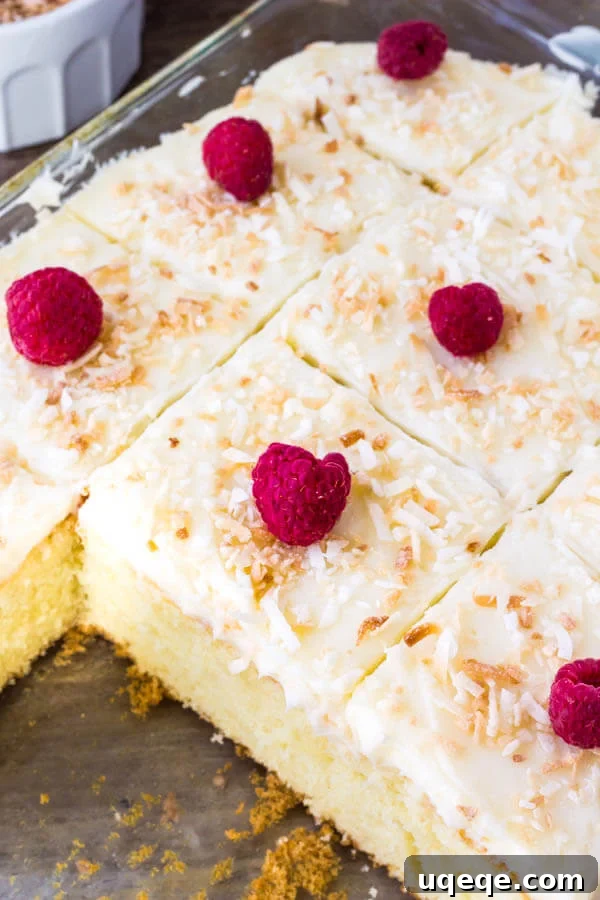
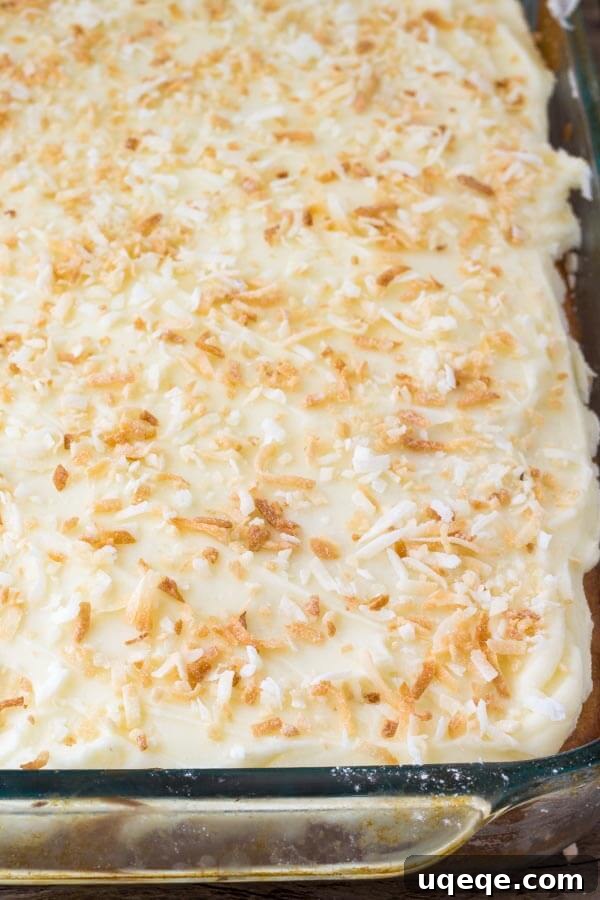
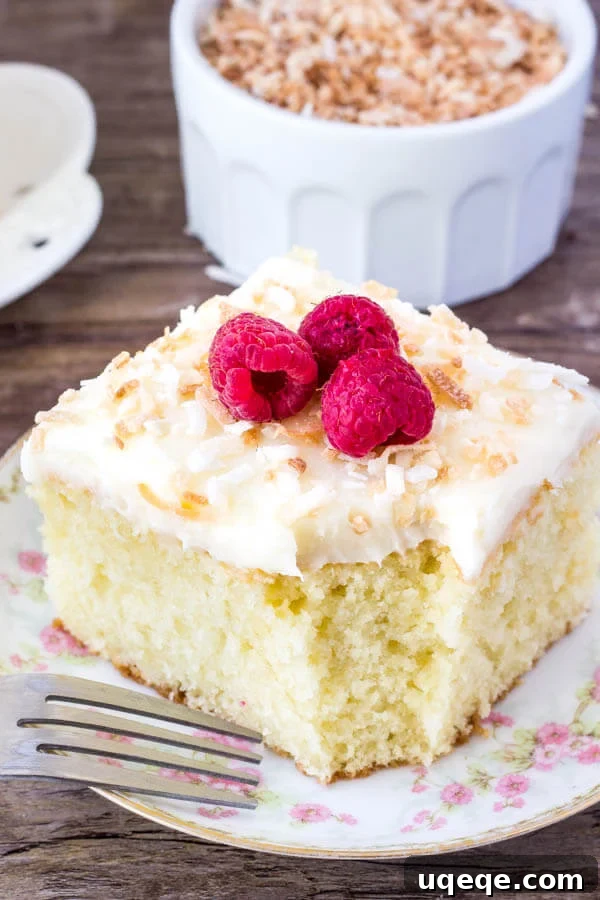
Once frosted, this unbelievably fluffy, moist, and utterly delicious coconut cake becomes a true masterpiece. To finish, I love to adorn it with a generous sprinkle of toasted coconut for added texture and a deeper aroma, often alongside a few fresh berries for a vibrant pop of color and a hint of tartness. It’s a dessert that truly captivates the senses and is guaranteed to be a showstopper at any gathering.
Essential Tips & Frequently Asked Questions About This Coconut Cake
Do I absolutely need to use cake flour for this recipe?
For this specific moist coconut cake recipe, using cake flour is highly recommended for optimal results. Cake flour has a lower protein content compared to all-purpose flour, which results in less gluten development. This directly contributes to the exceptionally tender, soft, and moist crumb that defines this cake. A 1:1 substitution with all-purpose flour will likely yield a drier, tougher, and more crumbly cake texture that lacks the desired delicate quality.
If you’re unable to find cake flour, you can create a reasonable substitute: for every 1 cup of cake flour required, measure out 1 cup of all-purpose flour. Then, remove 2 tablespoons of the all-purpose flour and replace them with 2 tablespoons of cornstarch. Whisk or sift this mixture together at least 3-4 times to ensure the cornstarch is perfectly integrated with the flour, mimicking the fine texture and protein distribution of true cake flour.
Why is it necessary to separate the eggs and whip the whites separately?
Separating the eggs and incorporating the whipped whites separately is a classic baking technique employed to achieve a remarkably light and airy cake texture. When egg whites are beaten, they become aerated, creating a stable foam that traps countless tiny air bubbles. Gently folding these aerated whites into the batter at the final stage adds significant volume and lift. This process results in a cake crumb that is noticeably softer, fluffier, and more delicate than if whole eggs were simply mixed into the batter. It’s a key secret to ensuring your homemade coconut cake has that delightful melt-in-your-mouth quality.
What type of coconut milk is best for this cake?
For the richest flavor and best texture in your coconut cake, I strongly recommend using full-fat coconut milk that comes in a can. Avoid “light” coconut milk, coconut water, or coconut cream, as these have different fat contents and consistencies that will impact the cake’s moisture and flavor intensity. Before measuring, make sure to give the can a very good shake. Coconut milk often separates in the can, with a thick, creamy layer at the top and a watery layer at the bottom. Shaking it vigorously ensures it’s well mixed and you get a consistent, creamy texture throughout your measurement, preventing an imbalance in the batter.
What is the best way to toast coconut for garnish?
Toasting coconut enhances its natural sweetness and adds a deeper, nuttier flavor, along with a delightful crisp texture perfect for topping your fluffy coconut frosting. Here’s a simple method:
- Preheat your oven to 325°F (160°C).
- Spread your flaked or shredded coconut in a single, thin layer evenly across a baking sheet. For easier cleanup, you can line the baking sheet with parchment paper.
- Bake for 5 to 10 minutes. It’s crucial to watch the coconut very carefully during this time. Coconut can go from perfectly golden to burnt in a matter of seconds. Gently toss or stir the coconut halfway through baking to ensure even browning. Remove from the oven as soon as it turns light golden brown and fragrant. Let it cool completely before using, as it will crisp up further.
Where can I find coconut extract? Is it essential?
Coconut extract is a concentrated flavoring agent that delivers a potent boost of natural coconut flavor to your baking. It typically comes in a small vial or bottle, similar to vanilla extract, and can usually be found in the baking aisle or spice section of most major grocery stores. While not strictly essential if you prefer a milder coconut note from the milk alone, adding coconut extract significantly amplifies and brightens the overall coconut flavor, making your homemade coconut cake truly shine. It contributes to the “double dose of coconut” effect that makes this recipe so special.
Can this recipe be adapted to make a layer cake?
Absolutely! This best coconut cake recipe is incredibly versatile and can easily be transformed into a stunning layer cake for special occasions.
- For a three-layer 8-inch round cake: You will need three 8-inch round baking pans. Line the bottoms of the pans with parchment paper and lightly grease the sides. Divide the prepared batter evenly among the three pans. Bake for approximately 20-25 minutes, or until a toothpick inserted into the center comes out clean.
- For a two-layer 8-inch round cake: Use two 8-inch round pans, preparing them as above. Divide the batter evenly. The baking time will be slightly longer, around 25-30 minutes, or until a toothpick comes out clean.
For either layer cake option, you will need to **double the coconut frosting recipe** to ensure you have enough to generously fill and frost all the layers and cover the entire cake beautifully. Allow the cake layers to cool completely on a wire rack before attempting to frost them.
How should I store leftover coconut cake, and can I make it ahead?
This moist coconut cake stores beautifully. Any leftover cake should be kept in an airtight container at room temperature for up to 2-3 days. For longer storage, or if your kitchen is particularly warm, you can refrigerate the cake for up to 5 days. Just be sure to bring it back to room temperature before serving for the best texture and flavor.
You can also make components of this cake ahead of time. The cake layers can be baked, cooled completely, wrapped tightly in plastic wrap, and frozen for up to one month. Thaw them overnight in the refrigerator before frosting. The coconut buttercream frosting can be made up to 3 days in advance and stored in an airtight container in the refrigerator. Before using, let it come to room temperature and re-whip it with an electric mixer until light and fluffy again, adding a splash of coconut milk if needed to achieve the right consistency.
Coconut Cake with Coconut Frosting
This easy homemade coconut cake is moist, tender and filled with real coconut flavor. Then it’s frosted with fluffy coconut frosting and even more toasted coconut.
Ingredients
Coconut Cake
- 2 1/2 cups cake flour
- 1 tsp baking powder
- 1/2 tsp baking soda
- 1/4 tsp salt
- 5 large eggs, separated
- 1/2 cup coconut milk, mix well first before measuring
- 1/2 cup sour cream
- 3/4 cup unsalted butter, softened
- 1 1/2 cups granulated sugar
- 1 tsp coconut extract
- 1 tsp vanilla extract
Coconut Frosting
- 3/4 cup unsalted butter, softened
- 4-6 tbsp coconut milk
- 1/2 – 1 tsp coconut extract, optional
- 1/4 tsp salt
- 3 – 3.5 cups powdered sugar
- 1/4 cup coconut, toasted or not
Instructions
Coconut Cake
- Preheat the oven to 350°F (175°C). Butter and flour a 9×13 inch baking pan.
- Whisk together the flour, baking powder, baking soda, and salt in a large bowl.
- In a separate large bowl, beat the egg whites until stiff peaks form. Set aside.
- Mix together the coconut milk and sour cream in a liquid measuring cup or small bowl.
- In another large bowl, using an electric mixer, beat the softened butter and granulated sugar until light and fluffy. Then, mix in the egg yolks, coconut extract, and vanilla extract until well combined.
- With the mixer on low speed, gradually add about 1/2 of the coconut milk and sour cream mixture into the butter mixture, mixing until just combined. Follow with about 1/2 of the dry ingredients, mixing until nearly incorporated. Repeat with the remaining coconut milk and sour cream, and dry ingredients, being careful not to overmix.
- Gently fold the whipped egg whites into the batter, adding about 1/2 at a time, until just combined. Be careful not to deflate the whites.
- Pour the batter into the prepared pan and bake for 30-35 minutes, or until a wooden skewer or toothpick inserted into the center comes out clean.
- Allow the cake to cool completely on a wire rack before frosting.
Coconut Frosting
- In a large bowl, beat the softened butter with an electric mixer until light and fluffy.
- Then, mix in 4 tablespoons of coconut milk, the optional coconut extract (if using), and salt until combined.
- Gradually beat in the powdered sugar, about 1 cup at a time, until the frosting reaches your desired sweetness and consistency. Add an additional tablespoon or two of coconut milk, if needed, to achieve a smooth, spreadable frosting.
- Once the cake is completely cooled, frost it generously with the coconut buttercream. Sprinkle with toasted coconut (or untoasted, if preferred) and garnish with fresh berries if desired.
Notes
Like this delicious homemade coconut cake recipe? Please take a moment to rate it and leave a comment below!