The Ultimate Guide to Red Velvet Cake: History, Characteristics, and Best Recipes
Welcome to the definitive guide on red velvet cake! This comprehensive resource dives deep into the fascinating history, unique characteristics, and irresistible flavor profile that make red velvet a beloved classic. Beyond the captivating color, there’s a world of culinary delight to explore. We’re sharing tons of details about its origins, delicious characteristics, and, most importantly, all my favorite red velvet recipes – from classic cakes and cupcakes to creative cookies and delightful, out-of-the-box treats. Get ready to embark on a sweet adventure into the heart of red velvet!
Red velvet cake has undeniably captured the hearts and palates of dessert enthusiasts worldwide. Its striking appearance and distinctive flavor profile have solidified its place as a true culinary icon. But beyond its undeniable popularity, do you truly know what makes red velvet so delicious and unique? Today, we’re pulling back the curtain on this iconic cake, exploring its defining features, essential ingredients, and shedding light on its intriguing past. And of course, we’ll be sharing an extensive collection of the absolute best red velvet recipes around. So, grab your baking apron – because we’re about to dive into the wonderful world of red velvet!
What is Red Velvet Cake? A Deep Dive into its Deliciousness
At its core, red velvet cake is a classic American dessert revered for a specific set of characteristics that distinguish it from any other cake. It’s not just a cake with red food coloring; it’s a symphony of textures and subtle flavors. The cake is celebrated for its incredibly moist and tender texture, often described as velvety smooth, which gives the cake its name. It possesses a mild, yet distinct, cocoa flavor that is less intense than a traditional chocolate cake, perfectly balanced by a delightful tanginess. This subtle tang is crucial and comes from the unique combination of buttermilk and vinegar in the batter. Finally, its most visually arresting feature is its rich, vibrant red hue, which has become synonymous with the dessert. Traditionally, red velvet cake is crowned with a luscious, tangy cream cheese frosting, providing a perfect counterpoint to the cake’s sweetness and depth of flavor.
What are the Key Ingredients That Define Red Velvet?
The magic of red velvet lies in a precise combination of ingredients, each playing a vital role in creating its signature taste, texture, and color. When reviewing red velvet cake recipes, you’ll consistently find four essential components that are non-negotiable for an authentic experience:
- Cocoa Powder: Unlike intensely chocolate cakes, red velvet uses a smaller amount of cocoa powder. Historically, natural cocoa powder reacted with the acidic ingredients to produce a reddish-brown hue. Today, it still contributes a subtle, complex chocolate note that’s distinct from a full-bodied chocolate cake.
- Buttermilk: This acidic dairy product is paramount. Buttermilk not only contributes to the cake’s extraordinary moistness and tender crumb by breaking down gluten, but its acidity also reacts with the baking soda, creating a lighter, airier texture and enhancing the tanginess.
- Vinegar: White vinegar (or sometimes apple cider vinegar) further boosts the acidity in the batter. It works in conjunction with the buttermilk and baking soda to create the distinctive tang and contributes to the cake’s airy rise and soft texture.
- Red Food Coloring: While historically the red color was a subtle reaction, modern red velvet relies heavily on red food coloring to achieve its iconic, vibrant hue. This is what truly makes it “red” in the dramatic way we’ve come to expect.
These ingredients, when combined thoughtfully, create the irresistible hint of chocolate, the characteristic tang, the luxuriously soft texture, and the undeniably beautiful bright red color that defines red velvet cake.
So, is Red Velvet Cake Just a Chocolate Cake? Absolutely Not!
This is a common misconception, but red velvet cake is distinctly different from a traditional chocolate cake. The primary difference lies in the quantity and type of cocoa powder used, as well as the balance of other ingredients. Chocolate cake typically boasts a much higher percentage of cocoa powder, often two to three times more than a red velvet recipe, resulting in a rich, deep, and sometimes bitter chocolate flavor profile. Furthermore, chocolate cakes are frequently made with boiling water or hot coffee, which intensifies the chocolate flavor, and do not necessarily require buttermilk or vinegar in their recipes. Red velvet, on the other hand, embraces its mild cocoa flavor, allowing the buttermilk and vinegar’s tang and moisture to take center stage, creating a more complex and balanced flavor that stands apart from its chocolatey cousin.
What Makes Red Velvet Red? A Journey from Science to Spectacle
The characteristic red color of red velvet cake has a fascinating evolution. Originally, the red hue was much more subdued, a natural phenomenon rather than an added pigment. In the early days, when non-Dutched (natural, acidic) cocoa powder was more common, the anthocyanin pigments present in the cocoa would react with the acid from ingredients like vinegar and buttermilk. This chemical reaction would cause the cocoa powder to exhibit a reddish-brown tint, giving the cake a subtle, rustic “red” appearance. This natural red inspired the cake’s name. However, as tastes evolved and artificial food colorings became readily available, bakers began to exaggerate this natural tint. Over time, red velvet recipes started calling for significant amounts of red food coloring to achieve the brilliant, eye-catching scarlet hue that we associate with the cake today. While the scientific reaction still contributes a tiny bit, it’s the food coloring that provides the dramatic, unmistakable color.
Where Did Red Velvet Cake Originate? Tracing its Enigmatic Roots

The exact history and origin of red velvet cake are shrouded in a bit of mystery and are often debated among culinary historians. Some claim its roots are firmly planted in the Southern United States, a region famous for its rich culinary traditions, while others point to a more northern, perhaps even Canadian, beginning. However, the conceptual idea of a “velvet” cake dates back much further, to Victorian times.
During the Victorian era, most cakes had a coarser, drier crumb texture due to less refined flour and baking techniques. The desire for a more refined dessert led to the creation of “velvet cakes,” which were prized for their extra tender, smooth, and finely crumbed texture, achieved by using ingredients like cocoa and cornstarch to soften the flour. These cakes were a luxurious treat, contrasting sharply with the common fare.
Around the early 20th century, this idea of a luxuriously textured velvet cake began to intertwine with lightly flavored chocolate cakes. This fusion slowly gave rise to the early concept of red velvet cake. Its name, “red velvet,” was often used in contrast to “Devil’s Food cake,” which was known for its deep, dark brown color and intense chocolate flavor. The subtle reddish tint, as described earlier, likely contributed to the “red” part of its moniker, distinguishing it from darker chocolate varieties. As the cake gained popularity, people increasingly wanted the “red” to be more pronounced to match the evocative name, leading to the widespread addition of red food coloring.
Several institutions and companies lay claim to popularizing, if not inventing, the modern red velvet cake. The **Adams Extract Company** in Texas is often credited with introducing a recipe that prominently featured red food coloring during the Great Depression, using it as a marketing tactic for their dyes. Similarly, the **Waldorf-Astoria Hotel** in New York City also has a popular legend attached to it, where an anonymous guest reportedly requested the recipe and then shared it widely. Regardless of its precise point of origin, what we know for certain is that the iconic red velvet cake we adore today became widely popularized sometime between the 1920s and 1950s across the United States, cementing its status as an American culinary treasure.
Mastering the Art of Red Velvet: Essential Baking Tips
To ensure your homemade red velvet cake achieves that perfect balance of moistness, tenderness, and vibrant color, consider these expert tips:
- Room Temperature Ingredients: Always use room temperature butter, eggs, and buttermilk. This allows them to emulsify properly, creating a smoother, more uniform batter and a finer crumb.
- Measure Accurately: Baking is a science. Especially with ingredients like cocoa powder and leavening agents, precise measurements are crucial for flavor balance and texture.
- Don’t Overmix: Overmixing the batter can develop the gluten in the flour too much, leading to a tough, dense cake. Mix until just combined.
- Quality Food Coloring: For the best vibrant red, use a high-quality gel food coloring instead of liquid drops. You’ll need less, and the color will be more intense without affecting the batter consistency significantly.
- Pan Preparation: Properly grease and flour your cake pans, or line them with parchment paper, to prevent sticking and ensure easy release.
- Don’t Skimp on the Frosting: Cream cheese frosting is an integral part of the red velvet experience. Ensure it’s rich, tangy, and generously applied for the full flavor profile.
Your Go-To Collection of the Best Red Velvet Recipes
Now that you know ALL about the rich history, unique characteristics, and essential ingredients of red velvet cake, it’s time to get baking! Whether you’re craving a classic layer cake, delightful cupcakes, chewy cookies, or an innovative twist, this collection has something for every red velvet lover. Each recipe promises that signature moist crumb, subtle tang, and irresistible flavor profile.
Classic Red Velvet Cakes & Cupcakes
These recipes celebrate the classic forms of red velvet, perfect for celebrations or a comforting treat. From impressive layer cakes to perfectly portioned cupcakes, these are the heart of red velvet baking.
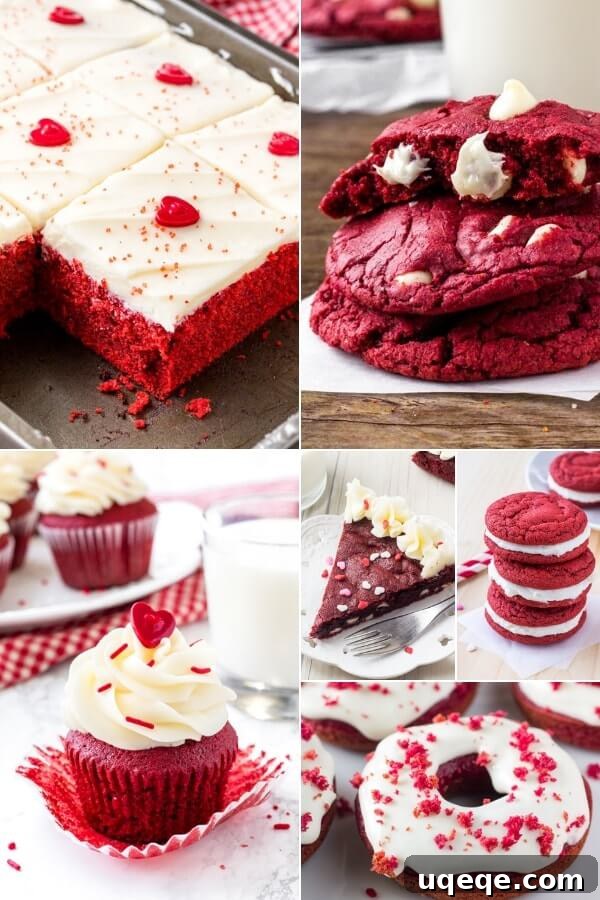
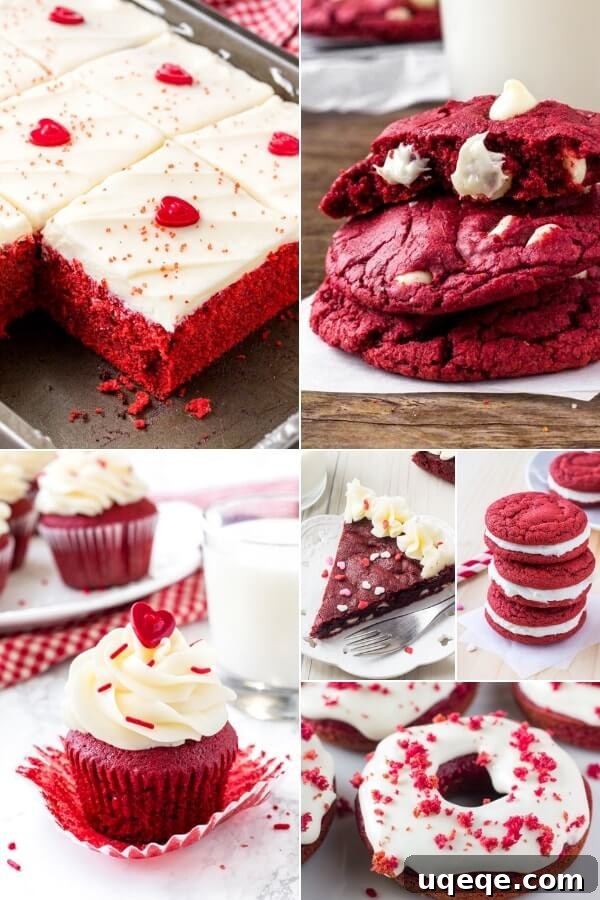
- Easy Red Velvet Cake – This incredibly moist and tender cake, pictured above, comes together effortlessly and is crowned with a dreamy cream cheese frosting. A perfect starting point for any baker.
- Red Velvet Cupcakes – Bite-sized versions of the classic, these cupcakes are fluffy, rich, and topped with a generous swirl of tangy cream cheese frosting, ideal for parties or individual indulgence.
- Red Velvet Layer Cake from Cafe Delites – A truly decadent and show-stopping layer cake recipe, perfect for making a grand impression at any gathering.
- Red Velvet Cheesecake from Recipe Girl – A luxurious fusion of two beloved desserts, combining the rich flavor of red velvet with the creamy texture of cheesecake.
- Red Velvet Poke Cake from Brown Eyed Baker – An easy-to-make cake where a sweet, creamy filling soaks into the cake, enhancing its moisture and flavor.
Irresistible Red Velvet Cookies
Expand your red velvet repertoire beyond cakes with these fantastic cookie recipes. From chewy delights to cream cheese-filled wonders, these cookies bring the distinctive red velvet flavor to a handheld format.
- Red Velvet Sandwich Cookies – Pictured above, these homemade “Red Velvet Oreos” feature chewy red velvet cookies filled with a sweet and tangy cream cheese frosting, a true fan favorite.
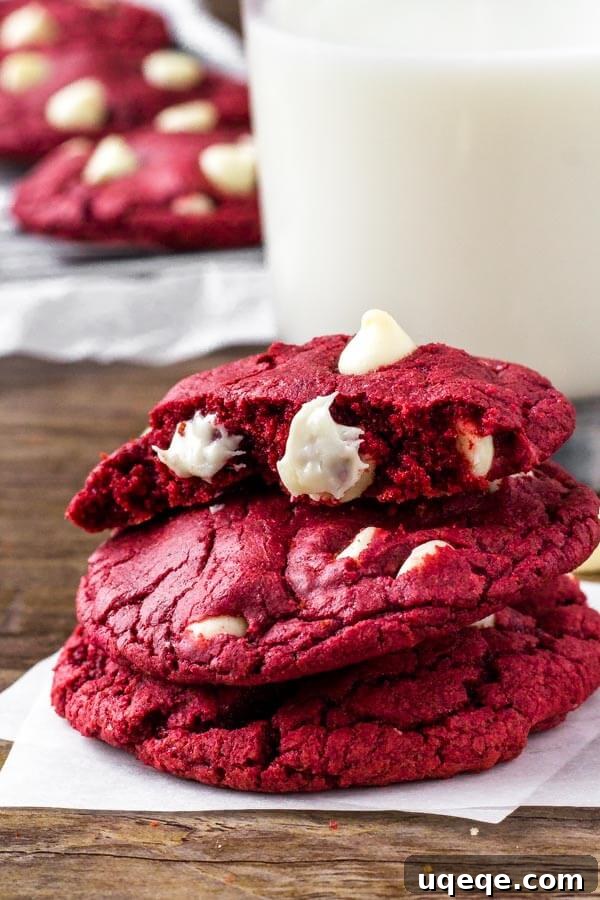
- Red Velvet Chocolate Chip Cookies – The best of both worlds! Soft, chewy red velvet cookies studded with rich chocolate chips for an extra layer of indulgence.
- Cake Mix Red Velvet Cookies – For a super quick and easy treat, these cookies use a cake mix base to deliver delicious red velvet flavor with minimal effort.
- Red Velvet Cookies with Cream Cheese Frosting – These delightful cookies are baked to perfection and then generously topped with a dollop of classic cream cheese frosting, mirroring the traditional cake.
- Red Velvet Cookie Cake – A giant, shareable red velvet cookie that’s perfect for celebrations, offering all the beloved flavors in a fun, new format.
- Cream Cheese Stuffed Red Velvet Cookies from Sally’s Baking Addiction – Experience an explosion of flavor with these cookies, featuring a delightful cream cheese filling baked right into the center.
Creative & Unique Red Velvet Treats
Beyond cakes and cookies, the versatility of red velvet shines through in these creative recipes. Explore innovative ways to enjoy the iconic flavor in breakfast items, warm drinks, and more, proving that red velvet is truly for any time of day!
- Red Velvet Doughnuts – Start your day (or enjoy a snack) with these baked doughnuts, boasting a soft red velvet crumb and often finished with a sweet glaze or cream cheese drizzle.
- Red Velvet Hot Chocolate from The Salty Marshmallow – A comforting and decadent drink that brings the essence of red velvet to a warm beverage, perfect for cozy evenings.
- Red Velvet Pancakes from Taste & Tell – Elevate your breakfast or brunch with these fluffy red velvet pancakes, often served with a cream cheese drizzle for an extra special touch.
- Red Velvet Cream Cheese Muffins from The Recipe Critic – Enjoy a quick and easy red velvet fix with these tender muffins, often featuring a surprise cream cheese swirl inside.