
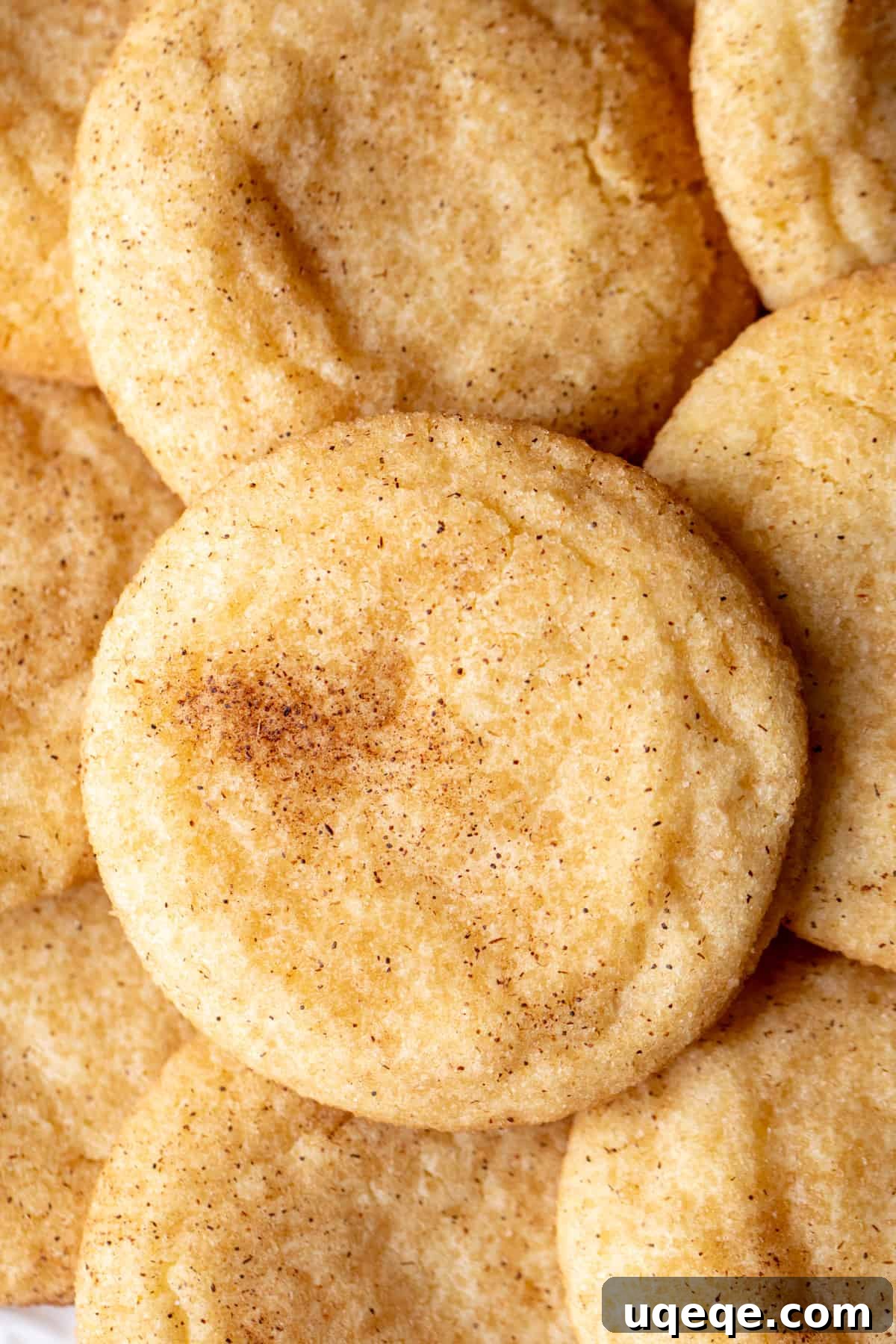
These snickerdoodles are famously soft and delightfully chewy, encased in a delectable cinnamon sugar coating that adds the perfect crunch. This straightforward recipe is designed for ease, requiring absolutely no dough chilling. This means you can swiftly transition from gathering ingredients to savoring warm, freshly baked cookies in minimal time. Consistently earning glowing reviews, these cookies are truly irresistible and will undoubtedly have you reaching for another.
**This post was updated November 26, 2023, to include enhanced photos and new recipe tips for an even better baking experience.**
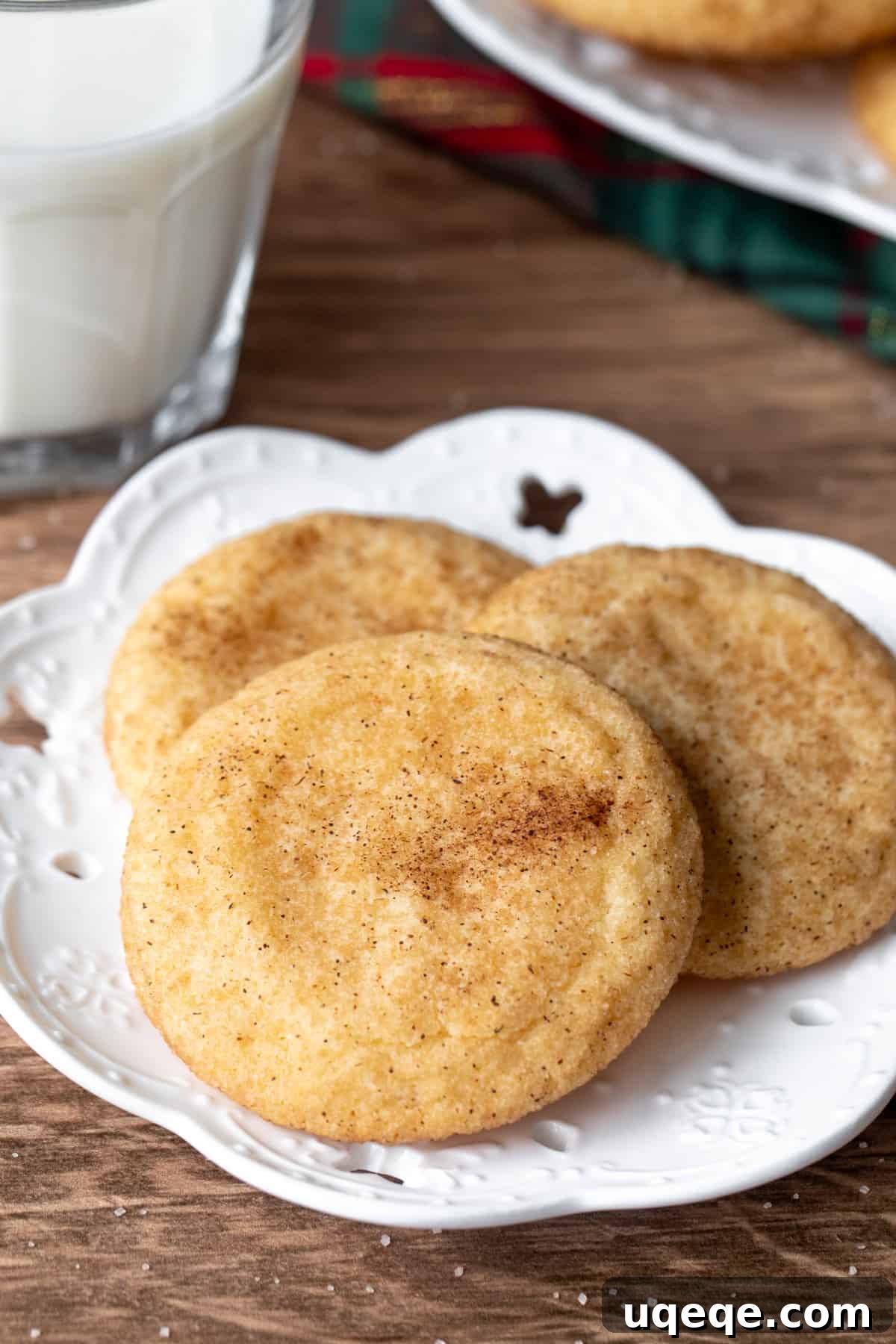
If your quest is for the quintessential chewy snickerdoodle cookie recipe, then your search ends here. Our snickerdoodles boast a pillowy soft texture and just the right thickness, striking a perfect balance between substantial and tender. Each bite delivers a rich, buttery vanilla flavor, complemented by a subtle, tangy undertone that is the hallmark of truly authentic snickerdoodles. The exterior is generously coated in a shimmering cinnamon sugar mixture, which crisps up beautifully during baking, creating a delicious textural contrast around the edges. This combination results in absolute perfection.
Every baker’s repertoire should include a collection of timeless cookie recipes – staples like classic peanut butter chocolate chip cookies, indulgent bakery-style chocolate chip cookies, and wholesome soft oatmeal raisin cookies. This incredible snickerdoodle cookie recipe is an essential addition to that esteemed list, promising to become a cherished favorite in your household.
The Best Chewy Snickerdoodle Cookies: Your New Go-To Recipe
What Exactly is a Snickerdoodle and Why That Name?
The snickerdoodle, a beloved American classic, is often described as a sugar cookie with a delightful twist. Its signature characteristics include an extra soft and chewy texture, a distinctive tangy flavor, and a generous coating of cinnamon sugar. But where does the charmingly whimsical name “snickerdoodle” come from? According to culinary experts like those at the Joy of Cooking, the name might trace its origins to German heritage, possibly derived from “Schneckennudel,” a type of sweet, rolled bun. However, another popular theory suggests that “snickerdoodle” is simply a whimsical, made-up name, much like “hoodwink” or “wiffle-waffle,” with no deep etymological root. Regardless of its true origin, in the universal language of delicious desserts, “snickerdoodle” unequivocally means pure joy and irresistible flavor!
The Secret to Perfect Snickerdoodles: Key Ingredients and Their Roles
While often compared to sugar cookies, snickerdoodles distinguish themselves through a couple of crucial ingredients that contribute to their unique taste and texture. Our recipe exclusively uses butter for an unparalleled flavor, avoiding shortening or oil blends often found in other recipes. Here’s a closer look at the key players that make these cookies exceptional:
- Butter: We use unsalted butter, softened but not melted. Butter is crucial for flavor and helps create that rich, melt-in-your-mouth texture. The temperature of your butter is vital for proper creaming.
- Granulated Sugar: Essential for sweetness and the delicate crispness around the edges, especially in the cinnamon sugar coating.
- All-Purpose Flour: The structural backbone of our cookies. The initial recipe calls for 2 3/4 cups, but we also offer a tip for slightly thicker cookies by using 3 cups, allowing for personal preference in texture.
- Eggs (Whole Egg + Extra Yolk): This recipe calls for one large whole egg plus an additional large egg yolk. The extra egg yolk is a secret weapon, significantly enhancing the chewiness and richness of the cookies, making them truly decadent.
- Vanilla Extract: A staple in most cookie recipes, vanilla extract deepens the flavor profile, adding warmth and sweetness that complements the butter and cinnamon perfectly.
- Cream of Tartar: This is the star ingredient that sets snickerdoodles apart! More on its magic below, but it’s responsible for the characteristic tang and ultra-soft, pillowy texture.
- Baking Soda: Works in tandem with cream of tartar as a leavening agent, ensuring the cookies rise beautifully and maintain their soft crumb.
- Cornstarch: A fantastic addition for ensuring your snickerdoodles stay extra soft and chewy for longer. It helps tenderize the dough and prevents the cookies from becoming dry or crumbly.
- Salt: Balances the sweetness and enhances all the other flavors, bringing a professional touch to your baking.
- Cinnamon: The heart of the iconic cinnamon sugar coating, providing warmth and aromatic spice.
Making the Magic Happen: A Step-by-Step Guide to Baking Snickerdoodles
Snickerdoodles are essentially an elevated sugar cookie, celebrated for their distinct tangy flavor, incredibly soft texture, and a generous roll in cinnamon sugar. While some recipes experiment with various fats, we find that using only high-quality butter yields the most superior flavor and texture. Here’s a detailed guide to crafting these perfect cookies:
-
Prepare Your Workspace: Preheat and Line
Start by preheating your oven to 350°F (180°C). Line your cookie sheets with parchment paper or silicone baking mats. A key advantage of this recipe is that the cookie dough doesn’t require chilling, so you can preheat your oven right at the beginning of your baking process, saving you valuable time.
-
Whisk Together Dry Ingredients for Even Distribution
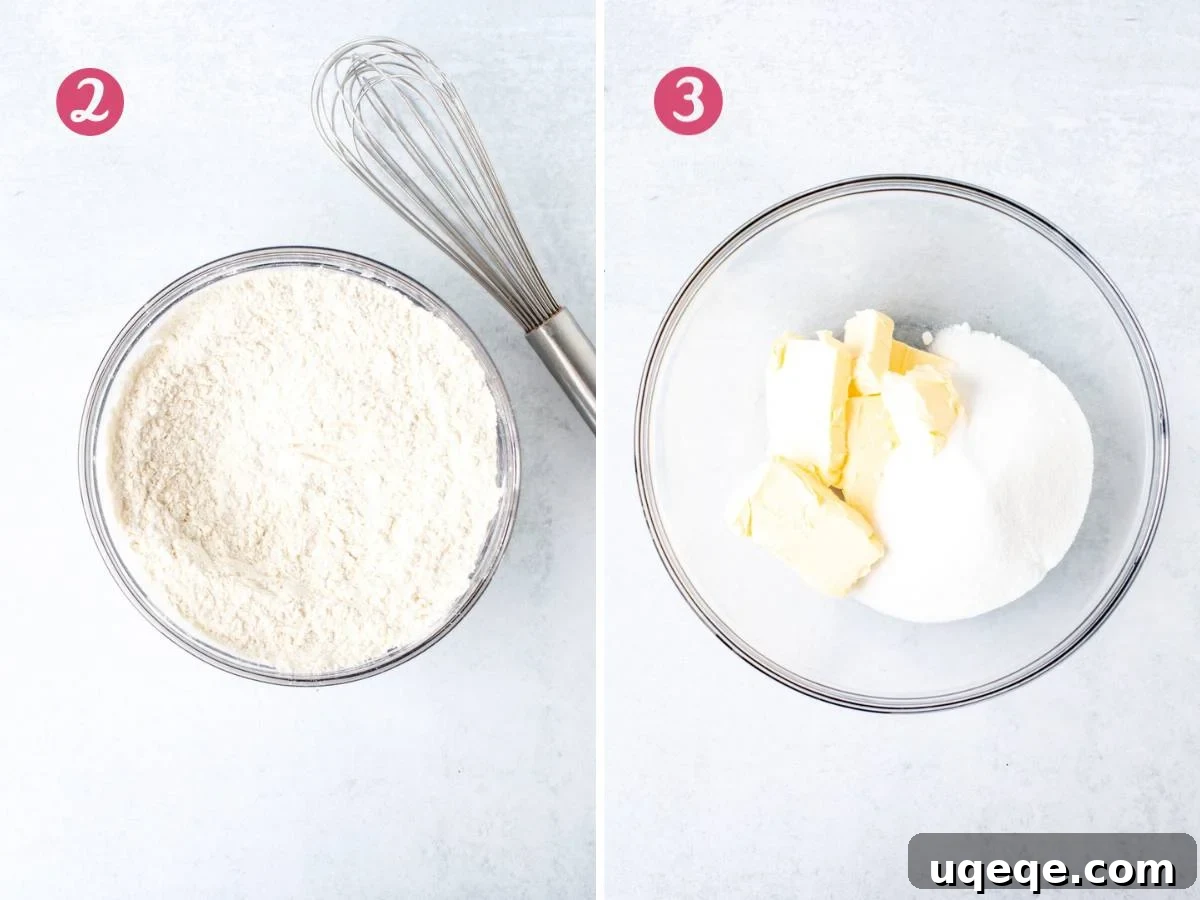
In a medium bowl, thoroughly whisk together the all-purpose flour, cornstarch, cream of tartar, baking soda, and salt. Whisking ensures that all the leavening agents and flavor enhancers, especially the cream of tartar, are evenly distributed throughout the dry mixture. This prevents pockets of unmixed ingredients and guarantees a consistent texture and rise in every cookie. We’ll delve deeper into the importance of cream of tartar shortly.
-
Cream Butter and Sugar Until Light and Fluffy
In a separate large bowl, using an electric mixer, beat together the softened unsalted butter and granulated sugar until the mixture is light, pale, and creamy. It’s crucial that your butter is slightly softened – pliable enough to indent with a finger, but not beginning to melt. Over-softened or melted butter can lead to flat, greasy cookies. Continue beating until there are no visible lumps of butter, but be careful not to overmix. Excessive creaming (for example, beating for 5 minutes or more) can incorporate too much air, which might actually cause your cookies to spread too thin and go flat during baking.

-
Incorporate Eggs and Vanilla for Richness and Chewiness
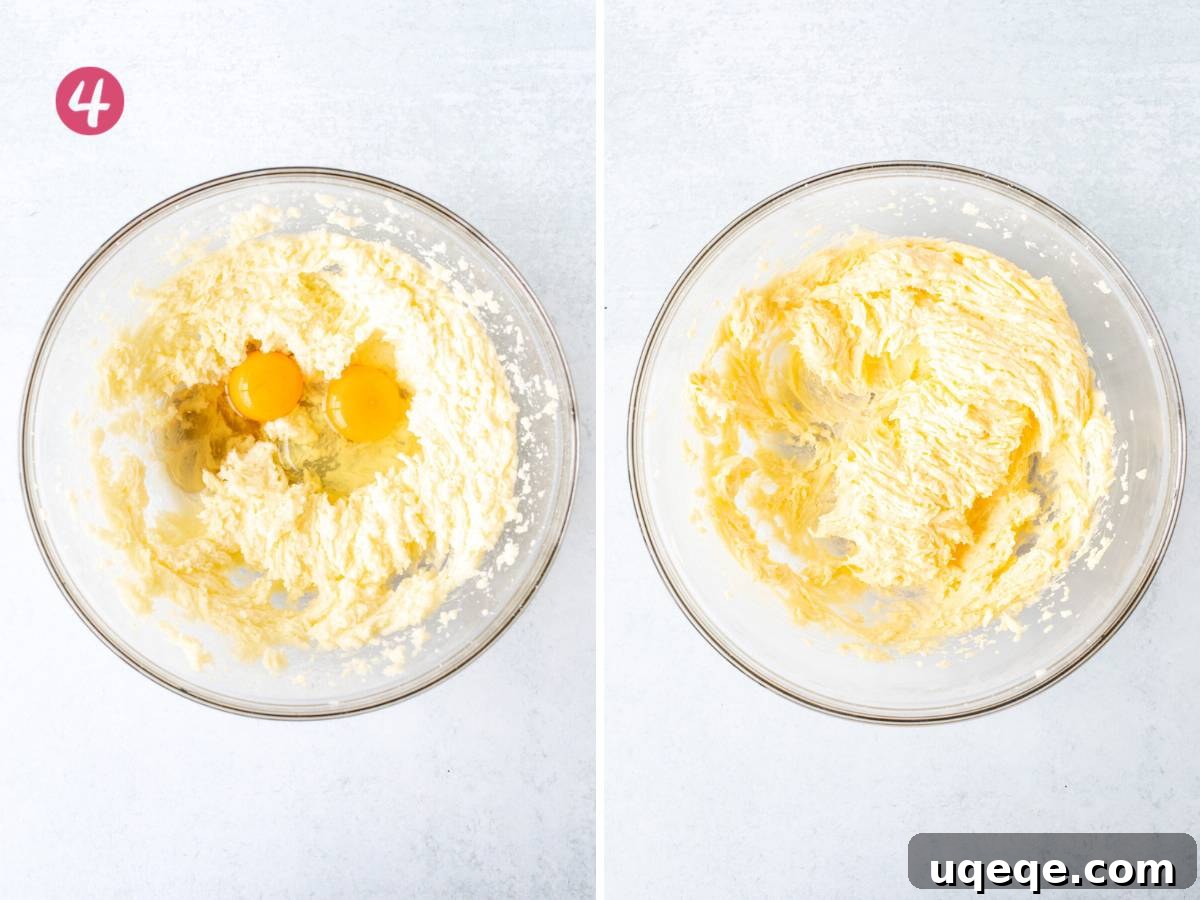
Add one large egg, one additional large egg yolk, and the vanilla extract to the creamed butter and sugar mixture. Beat until just combined and fluffy. The extra egg yolk plays a vital role here, contributing significantly to the luxurious chewiness that defines these snickerdoodles. You’ll notice the mixture becoming noticeably lighter and fluffier after this step, indicating proper emulsification.
-
Gently Combine Wet and Dry Ingredients to Form Dough
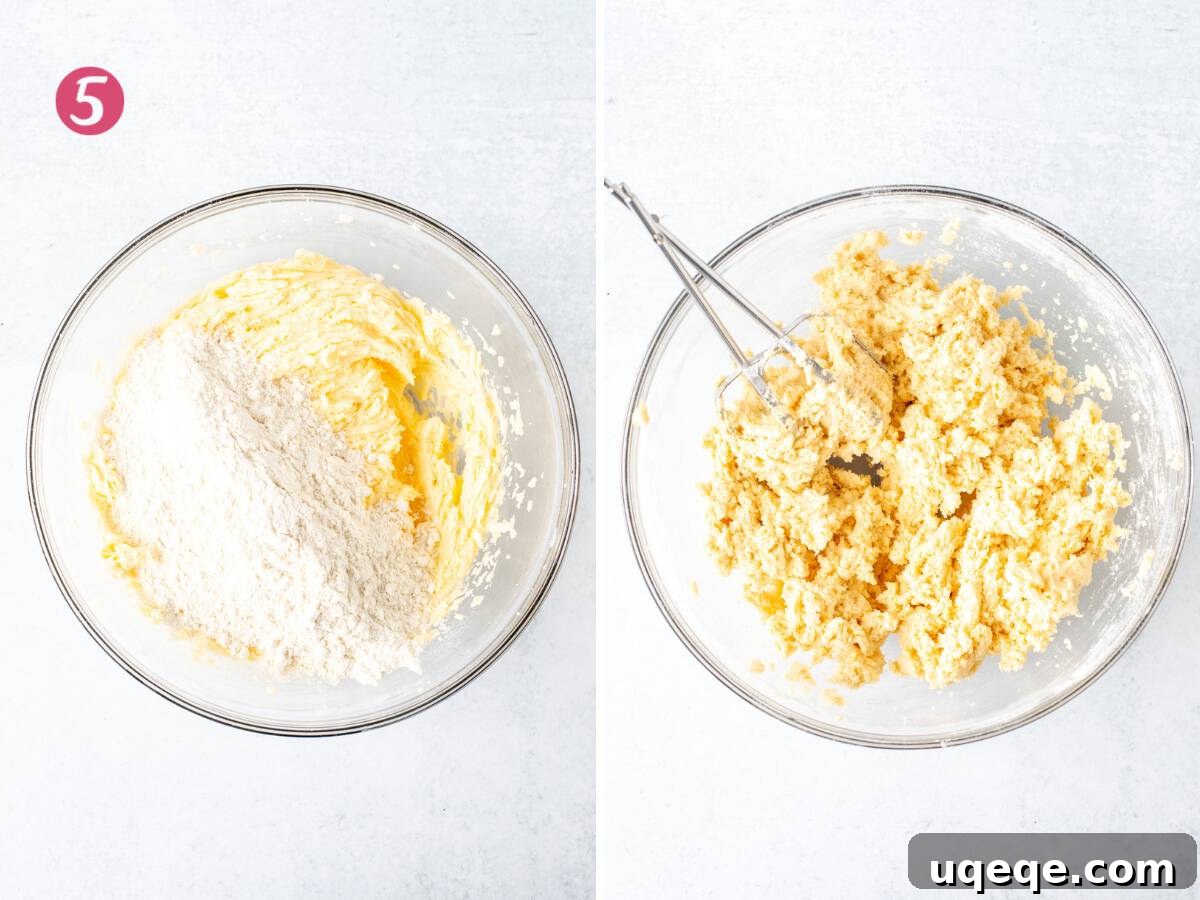
Carefully add the whisked dry ingredients into the butter mixture. If your dry ingredients appear lumpy, sifting them first is highly recommended to ensure a smooth dough. Begin mixing on the lowest speed to prevent flour from scattering, then gradually increase to medium speed until just combined. Overmixing at this stage can develop too much gluten, resulting in tough cookies. The finished dough should be soft but not sticky; when you squeeze a small amount in your hand, it shouldn’t cling to your fingers. If the dough feels overly sticky, or if you prefer an exceptionally thick snickerdoodle, incorporate an additional 1 to 4 tablespoons of flour, mixing until just combined.
-
Prepare the Irresistible Cinnamon Sugar Coating
For the iconic cinnamon sugar coating, simply stir together the granulated sugar and ground cinnamon in a small, shallow plate or bowl. Ensure they are thoroughly mixed, creating a uniform, fragrant blend. This coating is what gives snickerdoodles their signature sparkle and irresistible spiced flavor.
-
Scoop, Roll, and Space Your Cookie Dough
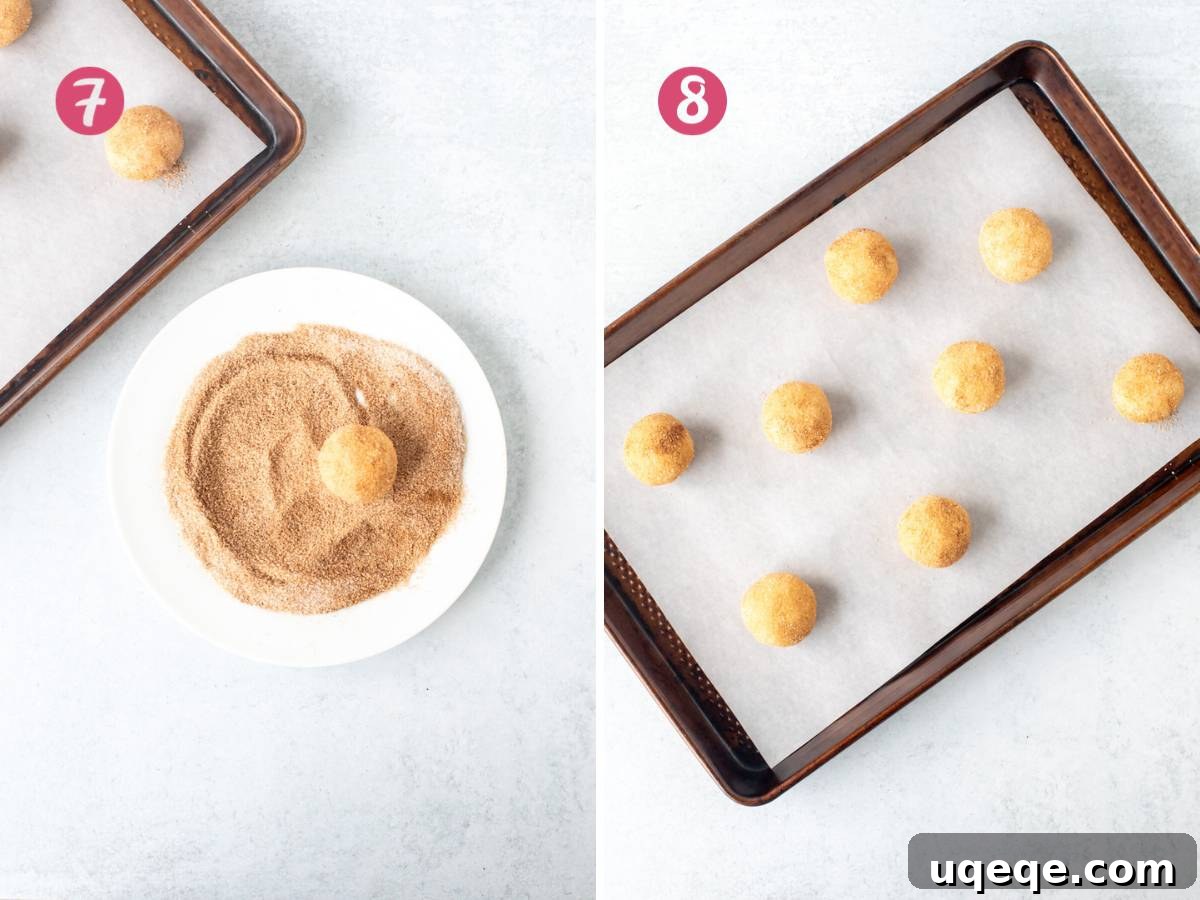
Using a cookie scoop (approximately 1 to 1.5 tablespoons in size) helps ensure uniform cookies that bake evenly. Scoop the dough into balls, then generously roll each dough ball in the prepared cinnamon sugar coating until it’s entirely covered. This creates a beautiful, crunchy exterior. Arrange the coated dough balls on your lined cookie sheets, spacing them about 2 inches (5 cm) apart to allow for spreading during baking.
-
Bake to Golden Perfection
Bake your cookie sheets one at a time, positioned in the middle rack of the oven, for approximately 9-11 minutes. Baking one sheet at a time ensures even heat distribution and consistent results. The cookies are done when the tops appear just set, and you might begin to see characteristic crinkles on their surfaces. They should no longer look doughy in the center. Avoid overbaking, as this can lead to dry cookies.
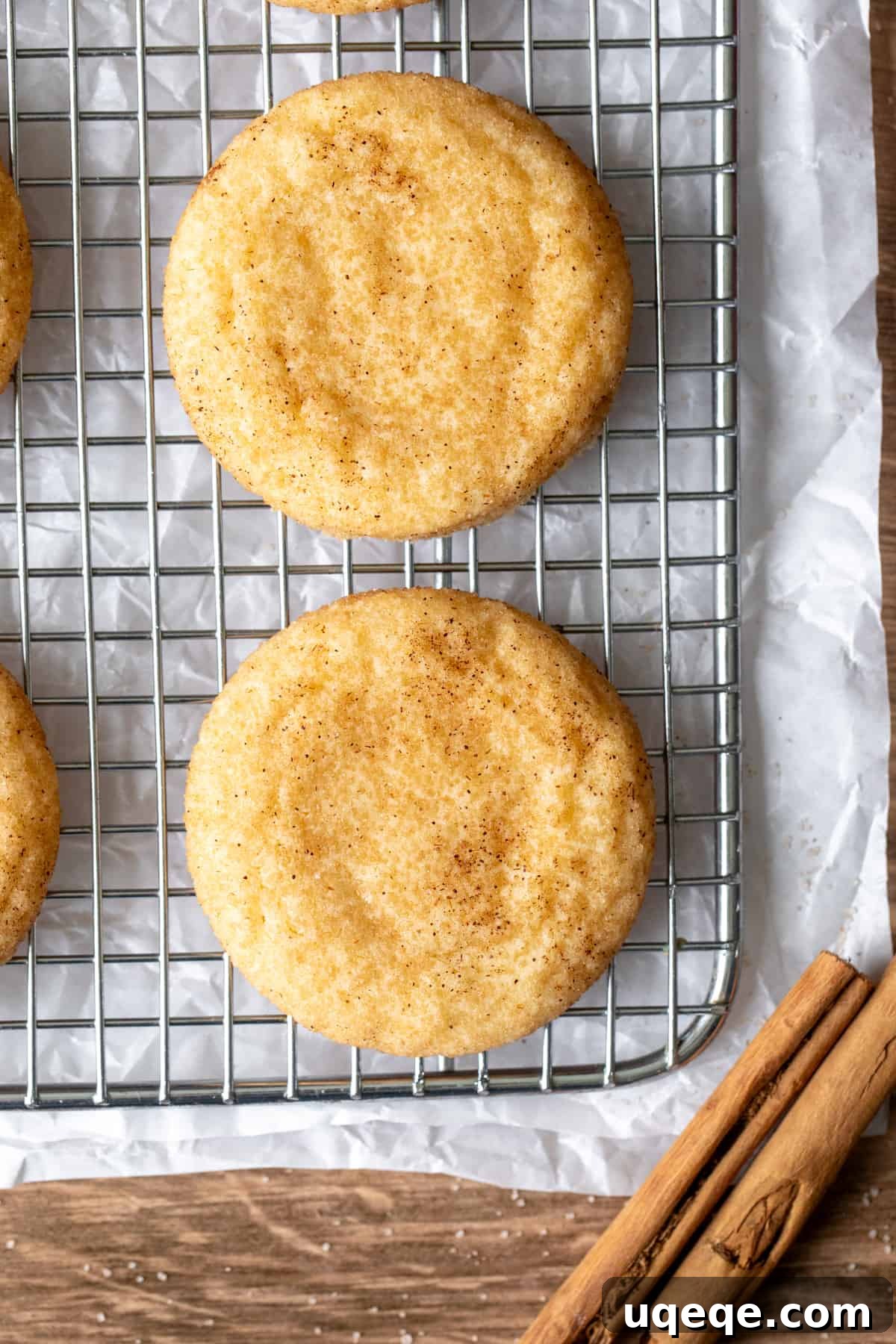
Once baked, immediately remove the cookie sheets from the oven. Crucially, allow the cookies to cool on the baking tray for at least 5 minutes. This step is essential as the residual heat from the tray will continue to bake the cookies slightly, allowing them to set properly and develop their full chewiness without becoming fragile. After this initial cooling period, carefully transfer the snickerdoodles to a wire rack to cool completely. Cooling on a rack ensures air circulation, preventing the bottoms from becoming soggy and maintaining their delightful texture.
The Unsung Hero: Why Cream of Tartar is Essential for Snickerdoodles
Many novice bakers might wonder about the unusual inclusion of cream of tartar in a cookie recipe. This humble ingredient, a powdered form of tartaric acid, is absolutely indispensable for authentic snickerdoodles. It serves a dual purpose:
- Distinctive Tanginess: Cream of tartar imparts a subtle, yet unmistakable, tangy flavor that beautifully balances the sweetness of the cookie and the warmth of the cinnamon. Without it, a snickerdoodle simply tastes like a sugar cookie rolled in cinnamon sugar – still delicious, but lacking its signature, addictive character.
- Pillowy Soft Texture: Working synergistically with baking soda, cream of tartar acts as a leavening agent. It reacts with the baking soda to produce carbon dioxide gas, which helps the cookies rise and achieve their characteristic light, airy, and pillowy soft texture. This acidic component also contributes to the tender crumb and prevents the cookies from becoming too crisp or crumbly.
If you’ve ever found yourself reaching for “just one more” snickerdoodle, it’s very likely the magic of cream of tartar that’s responsible for that irresistible allure!
Can You Make Snickerdoodles Without Cream of Tartar? (Substitutions)
While cream of tartar is highly recommended for the most authentic snickerdoodle experience, it’s understandable if you don’t always have it on hand. If you find yourself without cream of tartar, you can use a substitution: replace both the cream of tartar AND the baking soda with 2 teaspoons of baking powder. Baking powder is a combination of baking soda and an acid (like cream of tartar), so it acts as a self-contained leavening system. Be aware that while this substitution will still result in a delicious cookie with a good rise, it won’t yield quite the same level of distinctive tanginess or the exact pillowy softness as when using cream of tartar and baking soda separately. It’s the best available alternative, but the original combination truly creates the quintessential snickerdoodle.
Expert Tips for Snickerdoodle Success
- Butter Temperature is Key: Ensure your butter is softened to room temperature, but not melted. It should be pliable enough to leave an indentation when pressed, but still hold its shape. This is crucial for proper creaming with sugar.
- Don’t Overmix: After adding the flour, mix only until just combined. Overmixing develops gluten, which can lead to tough cookies.
- Uniform Scooping: Using a cookie scoop helps ensure all your cookies are the same size, which means they’ll bake evenly and consistently.
- Don’t Overbake: Snickerdoodles are meant to be soft and chewy. They might look slightly underbaked when you pull them from the oven, but they will continue to set as they cool. Overbaking leads to dry, crisp cookies.
- Cooling Time Matters: Allow cookies to cool on the baking sheet for at least 5 minutes before transferring to a wire rack. This helps them firm up and prevents them from breaking.
- Adjust Flour for Thickness: If you prefer thicker, chewier snickerdoodles, increase the flour amount to 3 cups (375 grams). This small adjustment can make a big difference in texture.
Freezing Snickerdoodles: Dough and Baked Cookies
Snickerdoodles are fantastic for meal prepping or making ahead, as both the cookie dough balls and baked cookies freeze exceptionally well. This makes them perfect for holiday baking or unexpected cravings!
-
Freezing Snickerdoodle Cookie Dough Balls:
- After forming the dough into balls and rolling them thoroughly in the cinnamon sugar mixture, place them in a single layer on a parchment-lined cookie sheet or plate.
- Cover the sheet loosely with plastic wrap and refrigerate the dough balls until they are firm, typically about 60 minutes. This step helps them hold their shape.
- Once firm, transfer the cookie dough balls into a single layer in an airtight freezer bag or container. Label with the date.
- You can freeze them for up to 2 months.
- When ready to bake, place the frozen dough balls directly onto your lined cookie sheets. Do not thaw them beforehand, as thawing can cause the cookies to become soggy and spread excessively.
- Bake from frozen, following the recipe directions, but add an additional 1-2 minutes to the baking time to ensure they cook through evenly.
-
Freezing Baked Snickerdoodles:
- Ensure the baked snickerdoodles are completely cooled before freezing.
- Place a sheet of wax paper or baking paper between layers of cookies to prevent them from sticking together.
- Store them in an airtight freezer bag or container, again labeling with the date.
- They can be frozen for up to 1 month for best quality.
- To thaw, transfer the cookies to the refrigerator first, allowing them to gradually come to temperature. Once thawed, you can bring them to room temperature or gently warm them in the oven for a “freshly baked” experience.
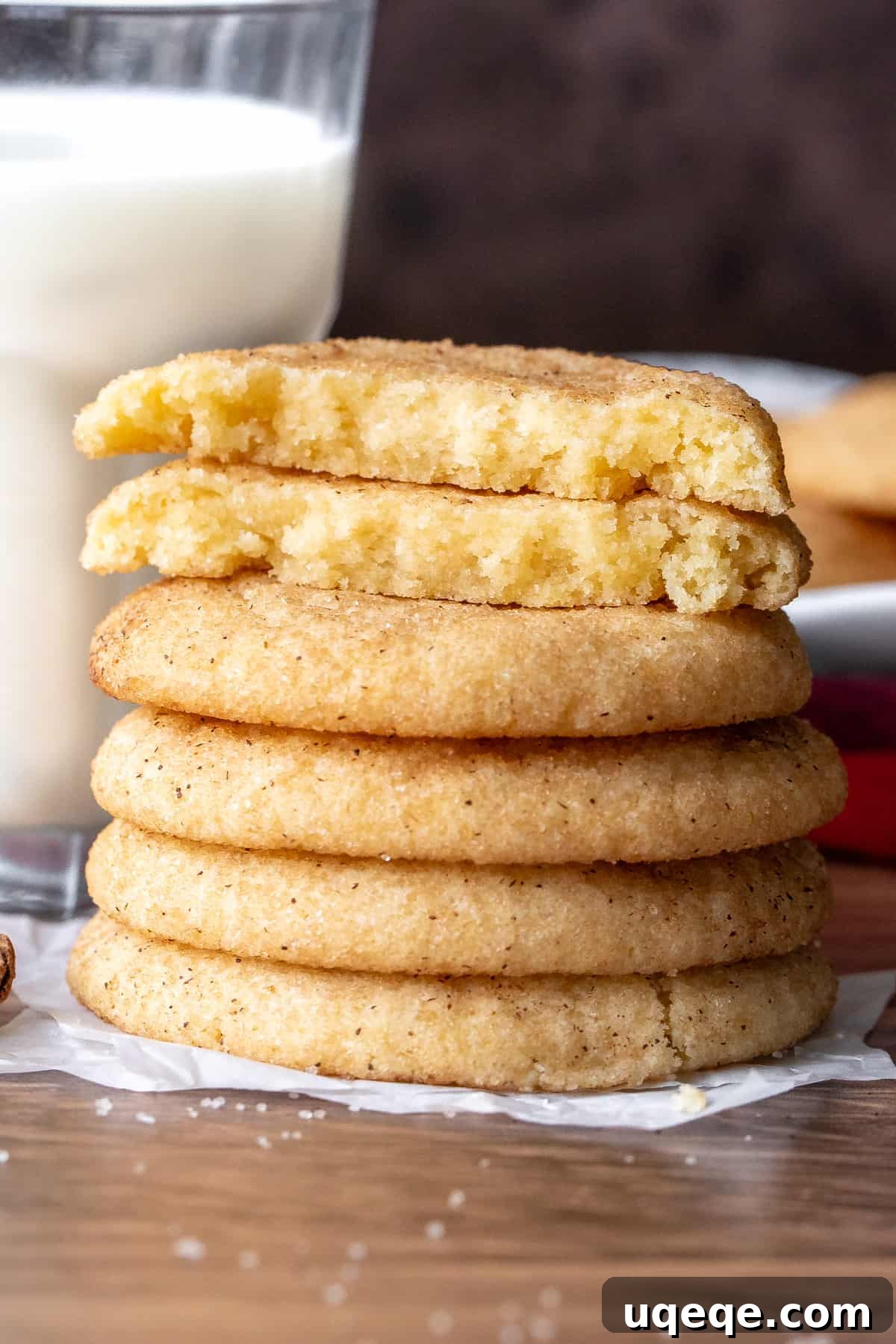
Snickerdoodles are such a versatile and universally loved cookie recipe, perfect for any time of year. However, there’s something uniquely comforting about the warm cinnamon sugar coating, especially during the festive holiday season. This particular snickerdoodle recipe is also fantastic for its sheer convenience – there’s absolutely no need to chill the cookie dough, meaning instant gratification for your cookie cravings!
So, if you’re searching for that ideal snickerdoodle that checks all the boxes, delivering:
- An irresistibly soft and tender interior
- A satisfyingly chewy texture that delights with every bite
- A rich, comforting buttery vanilla flavor profile
- That unique, subtle tanginess that truly defines a snickerdoodle
- A delightful, slightly crunchy cinnamon sugar coating
- And is incredibly quick and easy to make from scratch
Then these are the cookies you’ve been dreaming of!
The Ultimate Chewy Snickerdoodles Recipe
Chewy Snickerdoodles
By: Fiona Dowling
These snickerdoodles are famously soft and delightfully chewy, encased in a delectable cinnamon sugar coating. The dough is a simple sugar cookie recipe elevated with cream of tartar to achieve that signature soft and chewy perfection.
Prep Time: 30 mins
Cook Time: 8-11 mins
Total Time: Approximately 45 mins
Yields: 30 cookies
Equipment
- Cookie Sheets
- Parchment Paper or Silicone Baking Mats
- Electric Mixer (stand or hand-held)
- Large and Medium Mixing Bowls
- Cookie Scoop (1 to 1.5 tablespoons)
- Wire Cooling Rack
Ingredients
Cookie Dough
- 2 3/4 cups all-purpose flour (344 grams) (For extra thick cookies, feel free to use 3 cups / 375 grams)
- 2 teaspoons cornstarch (AKA cornflour in the UK and Australia)
- 2 teaspoons cream of tartar
- 1 teaspoon baking soda
- 1 cup unsalted butter (226 grams), softened but not melted
- 1 1/3 cup granulated sugar (267 grams)
- 1 large egg
- 1 large egg yolk
- 2 teaspoons vanilla extract
Cinnamon Sugar Coating
- 3 tablespoons granulated sugar
- 1 tablespoon cinnamon
Instructions
- Preheat your oven to 350°F (180°C). Line cookie sheets with parchment paper or silicone baking mats.
- In a large bowl, using an electric mixer, beat together the softened butter and 1 1/3 cup granulated sugar until the mixture is light, pale, and fluffy.
- Beat in the large egg, the additional large egg yolk, and the vanilla extract. Continue mixing until the mixture appears noticeably fluffier and well combined.
- In a separate medium bowl, whisk together the flour, cornstarch, cream of tartar, baking soda, and salt until evenly distributed.
- Gradually add the whisked dry ingredients into the butter mixture. If the dry ingredients appear lumpy, sift them first. Start mixing on a low speed to prevent flour from scattering, then gradually increase to medium speed, mixing only until just combined and a soft dough forms. Avoid overmixing.
- On a small plate or in a shallow bowl, stir together the 3 tablespoons granulated sugar and 1 tablespoon cinnamon for the coating.
- Scoop the cookie dough into balls, using about 1 to 1.5 tablespoons of dough for each (a cookie scoop works perfectly for this). Roll each dough ball generously in the cinnamon sugar mixture until it’s entirely covered.
- Place the coated dough balls on your prepared cookie sheets, spacing them approximately 2 inches (5 cm) apart to allow for spreading during baking.
- Bake one sheet at a time in the middle of the oven for about 9-11 minutes, or until the tops of the cookies look just set and slightly crinkled. Do not overbake.
- Once baked, cool the cookies on the cookie sheets for at least 5 minutes before carefully transferring them to a wire rack to cool completely.
Recipe Notes
- Eggs: This recipe uses a total of two eggs, but one is a whole egg and the other is just the yolk. This extra yolk is key to the chewy texture.
- Flour Adjustment: For those who love an extra thick cookie, increasing the flour amount to 3 cups (375 grams) provides a denser, more substantial snickerdoodle.
- Cream of Tartar (Importance & Substitution): Cream of tartar is vital for the signature tangy flavor and soft, pillowy texture of snickerdoodles. If you absolutely cannot find it, you can substitute it and the baking soda with 2 teaspoons of baking powder. However, please note that the results will not be exactly the same, as the unique tang may be less pronounced.
- Storage: Store your freshly baked snickerdoodles in an airtight container at room temperature for up to 5 days. While they remain delicious, remember that cookies are always best enjoyed fresh!
- Nutrition: The provided nutritional details are an estimate based on a single cookie, assuming the recipe yields approximately 30 uniform cookies. This information is for general guidance only.
Nutrition Information (Estimated per cookie)
Calories: 141kcal
Carbohydrates: 19g
Protein: 2g
Fat: 7g
Saturated Fat: 4g
Polyunsaturated Fat: 0.3g
Monounsaturated Fat: 2g
Trans Fat: 0.2g
Cholesterol: 29mg
Sodium: 40mg
Potassium: 52mg
Fiber: 0.5g
Sugar: 10g
Vitamin A: 207IU
Vitamin C: 0.01mg
Calcium: 8mg
Iron: 1mg
Like this recipe? We’d love to hear your thoughts! Rate and comment below!
For more delightful rolled cookie recipes and seasonal treats, be sure to explore:
- Irresistibly Chewy Rolled Sugar Cookies
- Cozy Pumpkin Snickerdoodles
- Festive Eggnog Snickerdoodles
- Perfectly Soft & Chewy Ginger Molasses Cookies